A clinic is not an office with extra sinks. Patients arrive unwell, exam rooms see use all day, and some surfaces carry far more risk than others. Clinic cleaning protocols deal with that by setting out who cleans what, how, how often and with which products.
Everest provides cleaning for health clinics across Canada, and the clinics that run smoothly share one habit: they write their clinic cleaning protocol down before the first visit. This guide covers what a good protocol includes, where cleaners stop and clinical staff take over, and what to ask before you hire.
One note first. Infection prevention and control (IPAC) rules differ by province and by profession. Your regulatory college and your provincial public health guidance come first, so your cleaning protocol should follow them.
Who does what in your clinic cleaning protocols
Two different jobs often get blurred together. Environmental cleaning covers the building itself: floors, surfaces, washrooms and waste. Clinical cleaning covers instruments and patient-care equipment, including anything that needs reprocessing.
A cleaning company typically handles the first. Trained clinical staff handle the second, working to IPAC standards. Ontario’s physician regulator, for example, advises clinics to define cleaning responsibilities clearly so everyone involved understands them.
That is why the first line of any clinic cleaning protocol should say who owns each task. If nobody owns the exam table between patients, nobody cleans it.
Public spaces and clinical spaces need different clinic cleaning protocols
Public Health Ontario’s infection control committee, PIDAC, splits a clinic into two kinds of space. For public spaces, such as the waiting room, offices and staff lunch room, it sets a basic standard based on visual assessment, often called hotel clean. For clinical spaces, such as exam rooms, washrooms and reprocessing areas, it adds disinfection and extra measures like more frequent cleaning and auditing. You can read the full guidance in Public Health Ontario’s best practices for environmental cleaning.
Most clinics outside Ontario use the same split, even where their own province publishes different guidance. Here is how it plays out room by room.
Clinic cleaning protocols for waiting rooms and reception
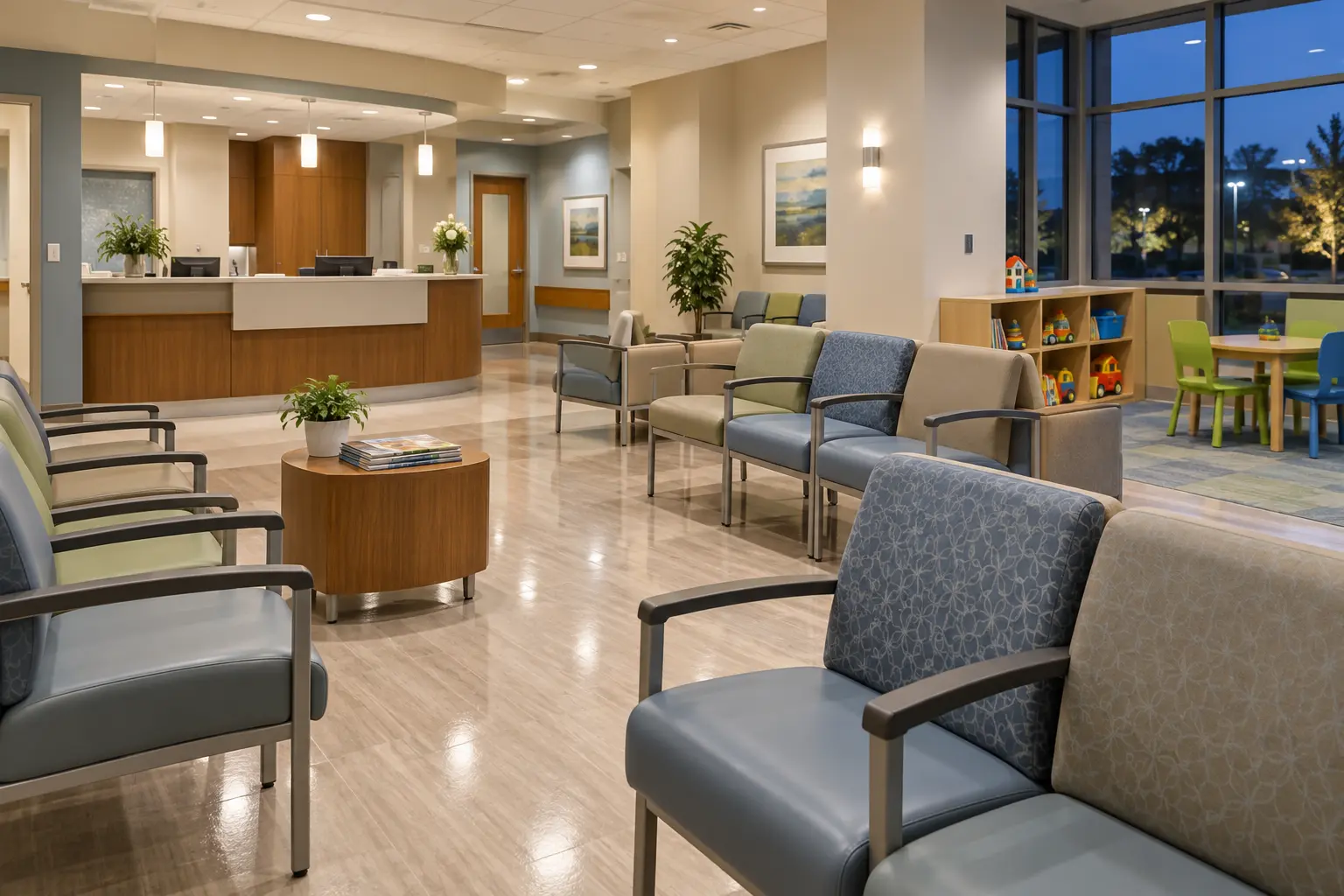
Waiting rooms see the most visitors, so they need the most visible care. That usually means chair arms, door handles, counters, pens, magazine racks, children’s play areas and the floor. Patients and visitors also touch reception counters and payment terminals constantly, so list them by name.
Clinic cleaning protocols for exam and procedure rooms
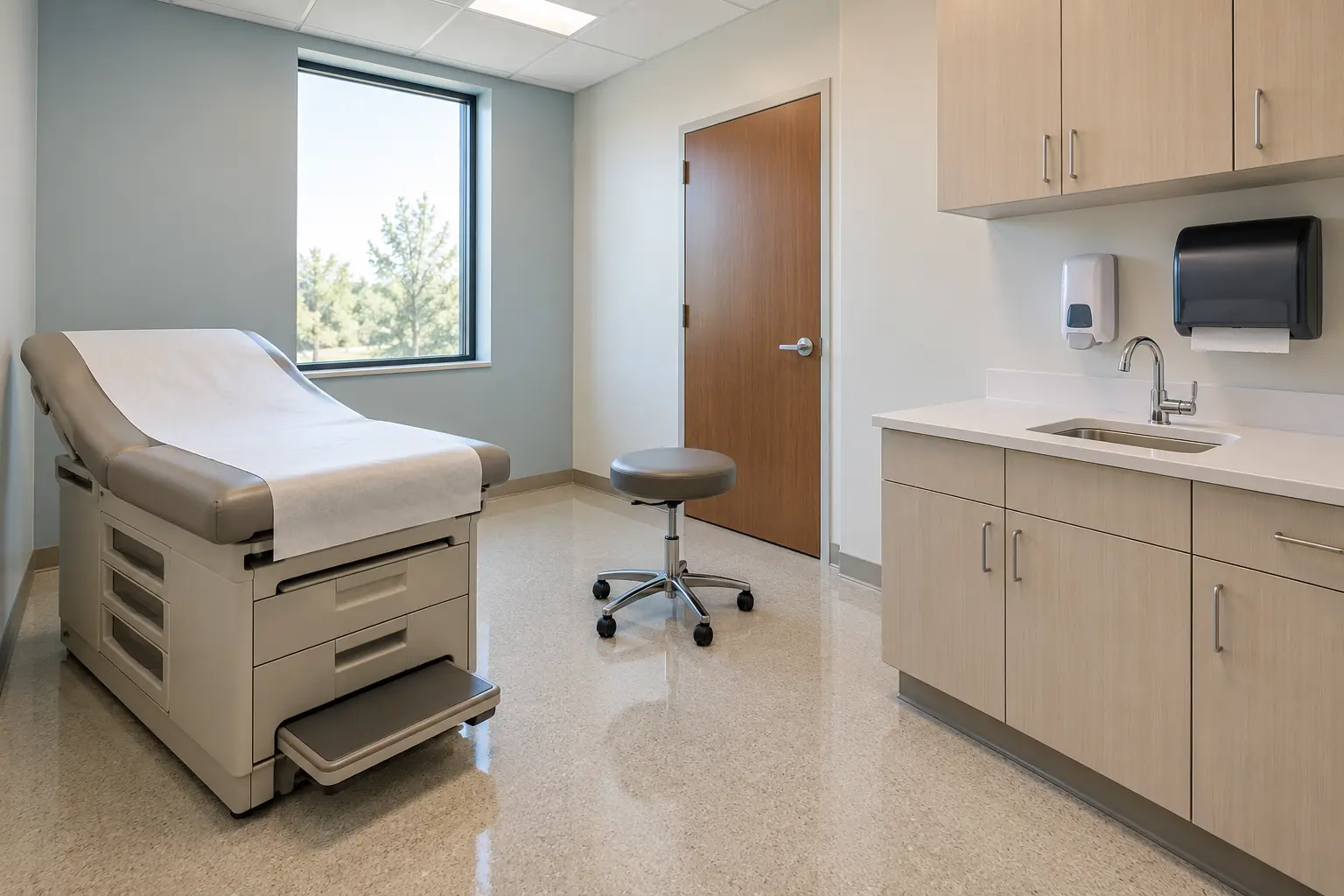
These rooms carry the highest risk, so they get the strictest protocol. The crew cleans and disinfects surfaces near the patient, such as exam tables, chairs, counters, switches and sink fixtures, on a set schedule. Between patients, clinical staff usually wipe the surfaces that touch the patient. At night, the crew handles everything else, including floors, waste and the surfaces staff don’t have time for.
Clinic washroom cleaning procedures
Patient washrooms are clinical spaces in most protocols. Toilets, sinks, taps, handles, dispensers, grab bars and floors all need cleaning and disinfection. Spell out restocking, and decide up front who supplies soap, paper and sanitary bins.
A clinic cleaning plan for staff areas and kitchens
Staff rooms and kitchens are public spaces in most clinics, but they still collect germs. Fridge handles, microwave buttons, kettles and shared tables belong on the checklist. Keep staff food and personal items out of the scope unless someone asks.
Floors and corridors
Floors are low-touch surfaces, so a clinic cleaning plan usually relies on detergent cleaning for them. Hard floors need regular mopping and the right finish. Carpet in waiting areas needs a vacuum schedule and periodic extraction. If your corridor floor is vinyl tile, our guide to when to strip and wax VCT floors and when to recoat explains how to plan it around clinic hours.
Clinic cleaning procedures: clean first, then disinfect
Cleaning and disinfecting are separate steps, and the order matters. Disinfectants work poorly on dirty surfaces, so a good set of clinic cleaning procedures follows a sequence:
- Remove visible soil with detergent and water, or a product designed to do both.
- Apply the disinfectant to the clean surface.
- Keep the surface wet for the full contact time on the label.
- Work from clean areas to dirty areas, and from high surfaces to low ones.
- Use fresh cloths between rooms so nothing travels with the crew.
Products matter too. In Canada, hard-surface disinfectants carry a Drug Identification Number (DIN) on the label, and Health Canada’s hard surface disinfectant requirements set out what a product needs to earn one. Ask which products your cleaner uses, check that they suit a healthcare setting, and ask to see the safety data sheets. Our disinfection services page explains when a separate disinfection visit makes sense.
What cleaners should leave to clinic staff
The easiest way to keep a clinic safe is to say what the crew does not touch. In most clinic cleaning protocols, that list includes:
- Instruments, trays and anything awaiting reprocessing
- Sharps containers and biomedical waste
- Patient records, charts and computers in use
- Medication cabinets, vaccine fridges and locked storage
- Equipment that staff are using or calibrating
- Any room staff mark as occupied or off limits
If a crew has the training and agrees to handle any of these, write that into the protocol too. Without a clear line, the crew has to guess, and guesses cause incidents.
Blood and body fluid spills
Spills are the one situation you cannot improvise, so every clinic cleaning protocol should cover them. Decide in advance who responds, which products and protective gear they use, and who documents it. A clinic might want its own staff to respond during open hours and the cleaning crew to follow a written procedure at night.
The general principle is simple. Remove the spill with proper protection, clean the surface, then disinfect it. Because organic matter weakens disinfectants, skipping the cleaning step undermines the rest.
How often your clinic cleaning plan should run
Most clinics clean after hours so patients and staff aren’t working around equipment. If you also hold evening clinics or weekend hours, your clinic cleaning plan needs to follow them. Scope and frequency also drive the price, so ask every cleaner to quote the same rooms, the same nights and the same protocol.
Checklists, logs and audits for clinic cleaning protocols
A clinic cleaning protocol is only as good as its follow-through. Written checklists tell the crew what to do each night, and signed logs show that it happened. Periodic audits, whether by your own staff or by a supervisor, catch drift before it becomes a problem.
Ask your regulatory college and your public health unit what records they expect, because requirements differ by profession and province. Then make sure your cleaner can supply them in the format you need. Many clinics also keep a copy of the checklist in each room, so staff can see at a glance what the crew did.
What to put in your clinic cleaning protocols
Before the first visit, write down the following so your clinic cleaning protocols are clear from night one:
- Which rooms are public spaces and which are clinical spaces
- Who cleans what, including between-patient tasks
- Which products the crew may use, with contact times and safety data sheets
- Which items and rooms the crew must not touch
- How staff and the crew handle spills of blood and body fluids
- How often the crew cleans each space
- Which checklists and logs the crew completes
- Access arrangements, alarms and keys
- How to report a problem or request an extra clean
Questions to ask before you hire a cleaner
- Have your crews worked in clinics before, and what training do they have for healthcare settings?
- Which disinfectants do you use, and can I see the safety data sheets?
- How do you separate cloths and equipment between rooms?
- What happens if a crew member finds a spill, sharps or an unlabelled item?
- What records do you keep, and who checks the work?
Not sure what your clinic needs? Book a free consultation, and we’ll walk through your rooms with you.
Frequently asked questions
What are clinic cleaning protocols?
They are a written plan that sets out who cleans each space, how, how often and with which products. Good clinic cleaning protocols also say what the crew leaves alone and how to handle spills.
Can a regular commercial cleaner clean a medical clinic?
Often, yes, but only if the protocol is clear and the crew understands the difference between public and clinical spaces. Ask about healthcare experience, products and training before you sign.
Do cleaners sterilize instruments?
No. Reprocessing instruments and patient-care equipment belongs to trained clinical staff working to your profession’s IPAC standards. A cleaning crew handles the surrounding environment.
What disinfectant should a clinic use?
Use a product with a Health Canada DIN that suits a healthcare setting, and follow the label for dilution and contact time. Your regulatory college or public health unit can also tell you what it recommends.
How often should a clinic be cleaned?
Clinical spaces generally need daily cleaning and disinfection, while public spaces can follow a standard commercial schedule. We set the frequency with you based on patient volume and your hours.
Put your clinic cleaning protocols in writing
A good protocol defines the rooms, responsibilities, products, restricted items and records before the crew arrives. Everest works with clinics and medical offices in Winnipeg, Calgary, Toronto, Ottawa, Kitchener–Brantford and Vancouver to build plans around patient hours, staff routines and your regulatory requirements.
If you’re looking for professional cleaning for your clinic, book a free consultation. We’ll walk the space, identify what needs service, and put together a plan that fits.