To remove salt stains from commercial carpet, vacuum the dry residue first, then lift what is left with a light damp treatment and extract it. Do not scrub it in. Too much water carries the salt deeper and the white mark returns as the carpet dries. Heavy or repeat staining at an entrance is a job for extraction.
Below is the order of work, a safe way to test a spot and the point where it is time to call for commercial carpet cleaning. Road salt and grit are a daily fact in Toronto and Ottawa. This is the guide for those buildings.
What is a salt stain, and why does it come back?
Road salt dissolves in melting snow, and boots carry that water into the pile. When the water dries, the salt stays behind as a pale tide mark near the tips of the fibres. The pile can feel stiff or crunchy underfoot.
It returns because the salt sits deep in the carpet. The next wet boot rewets it, and it wicks back to the surface. Wiping the top does not remove what is below.
Step one: vacuum dry before any water
Can you vacuum up dried salt? Yes, and you should do it first. A commercial vacuum with a good beater bar lifts loose crystals and grit. Go over the area in two directions, slowly.
Skipping this step turns dry grit into paste once water goes down. That paste is harder to remove than the salt. We use HEPA vacuums on carpet because they hold the fine dust instead of blowing it back out.
Step two: treat a test spot
Check the carpet maker’s care guidance first. Choose a hidden patch, such as under a desk or in a closet, and test whatever you plan to use there. Wait for it to dry and look for colour change or a rough texture.
If the test spot is fine, mist the stain lightly with the approved solution, give it a short time to work and blot with a clean white cloth. Work from the outside of the mark toward the middle so it does not spread. Repeat in small passes rather than one wet one.
Why scrubbing and soaking make it worse
- Scrubbing frays the pile and leaves a dull patch that shows in raking light
- Soaking pushes salt down toward the backing, where it later wicks back up
- Heavy wetting can leave a brown ring around the original mark
A small, damp, patient approach beats a big wet one every time. If the stain is larger than a dinner plate, stop spot treating and move to the next step.
When extraction is the right job
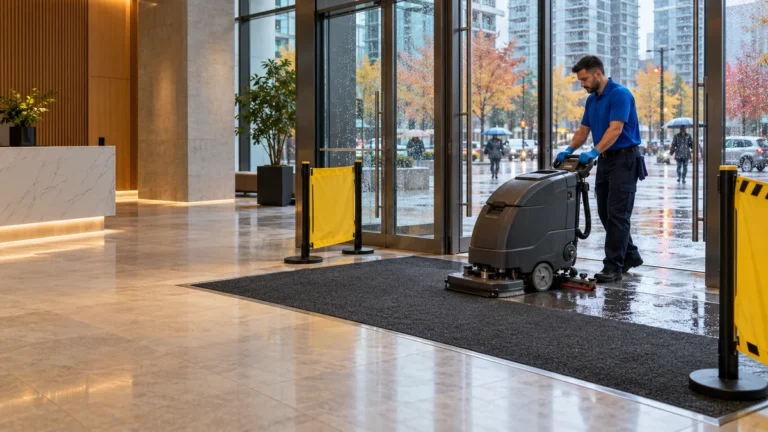
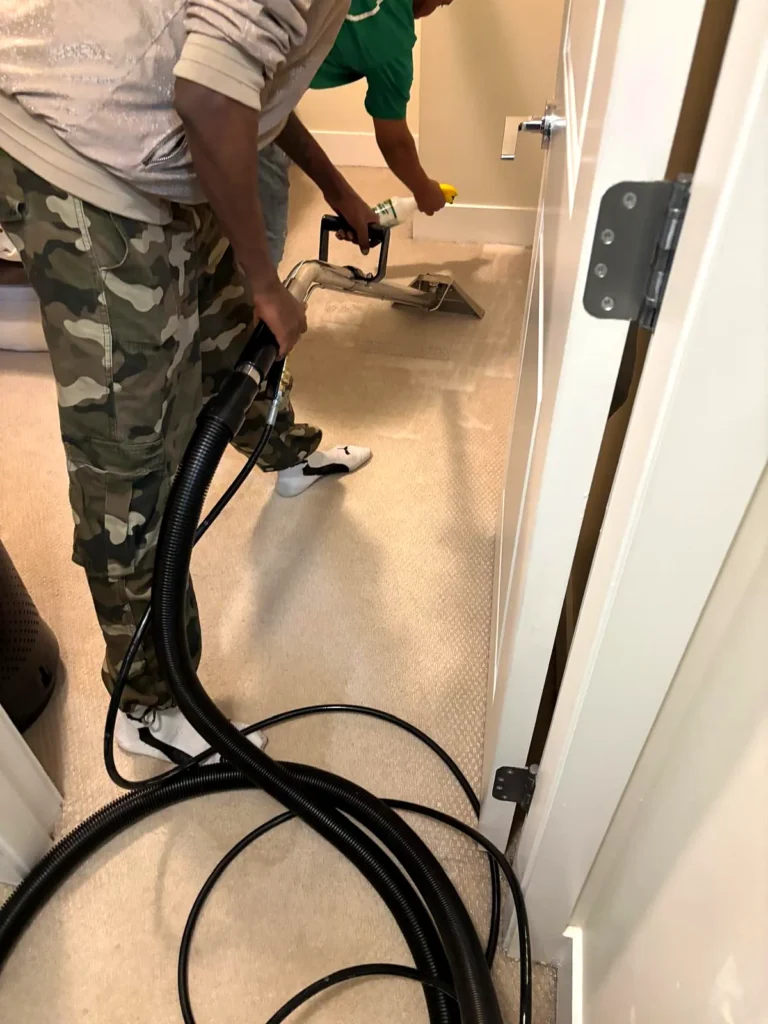
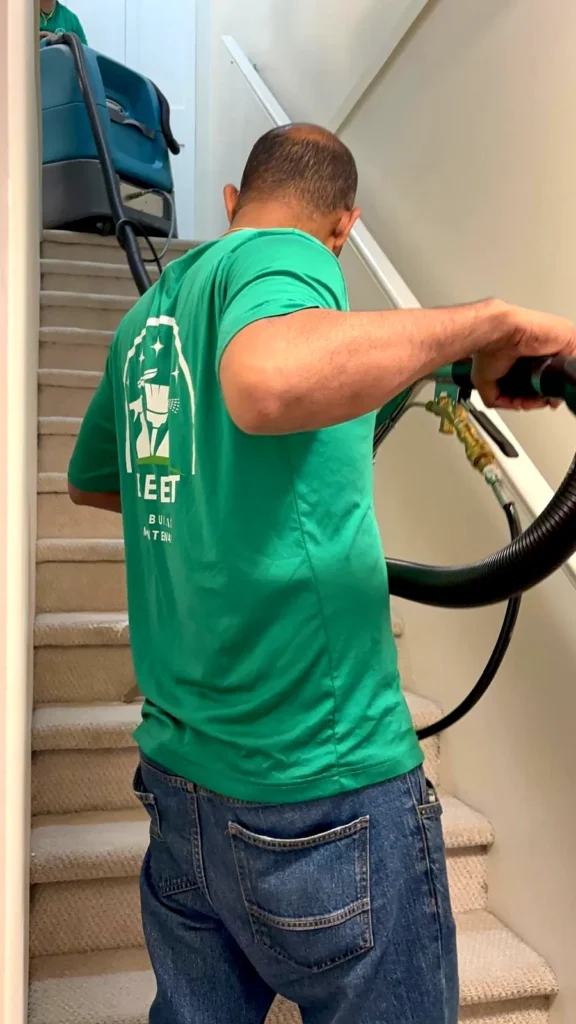
Extraction flushes the carpet with a controlled amount of water and pulls it back out in the same pass, taking the dissolved salt with it. It suits entrance runners, the corridor from the door to the elevators, and any stain that returns within a week of spot treatment.
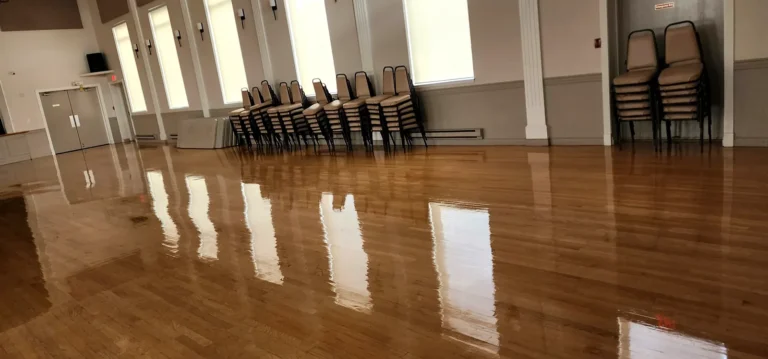
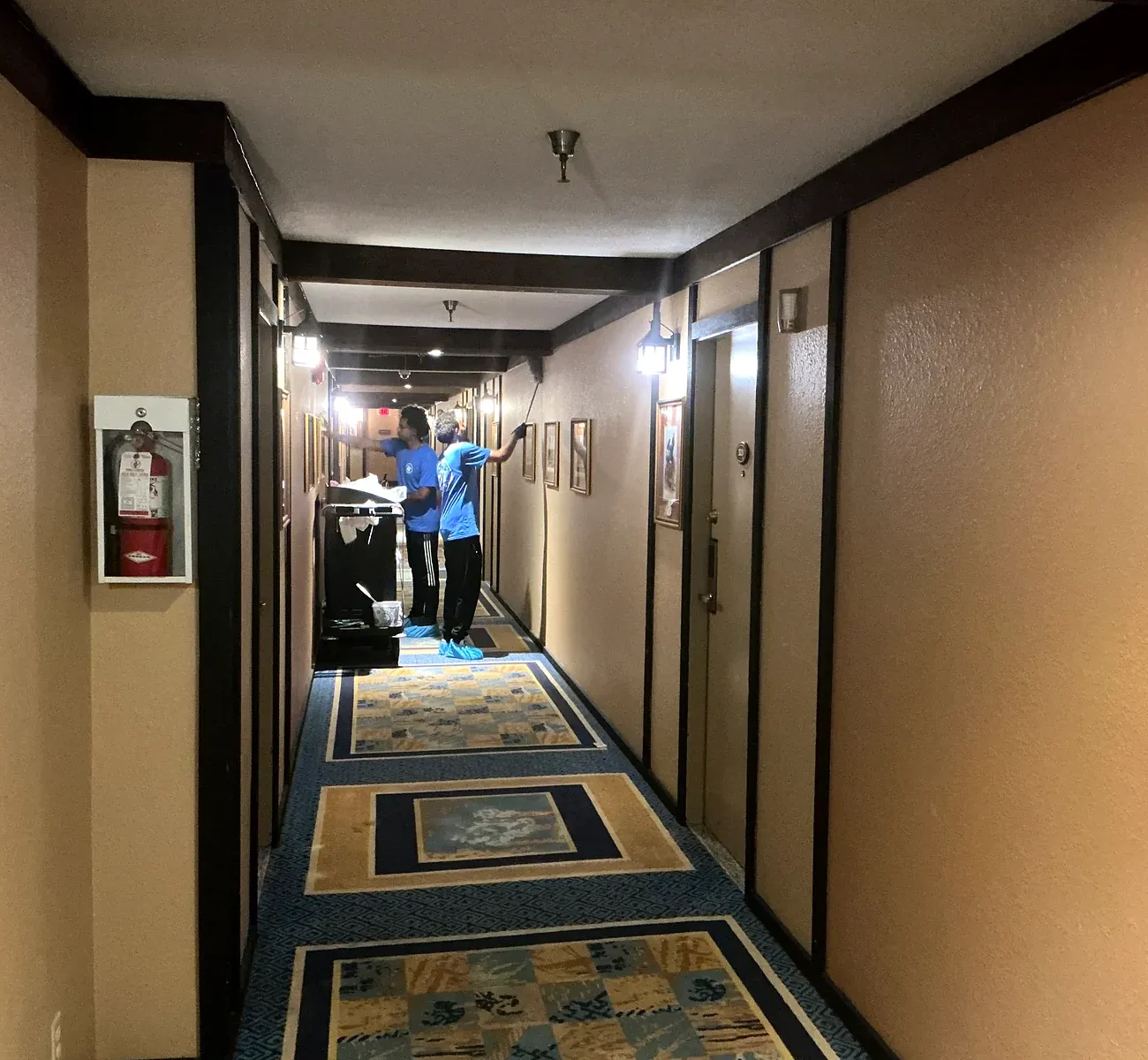
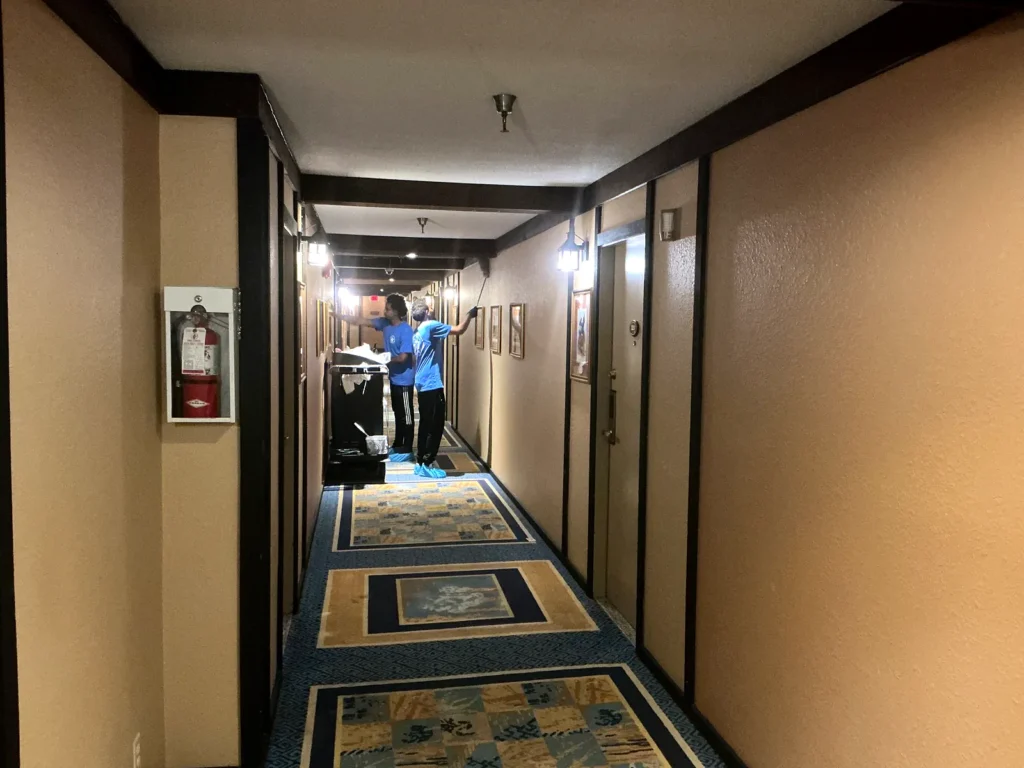
We run extraction as a close-night job, so the pile is dry before the next shift arrives. It covers corridor, office and hotel carpet. It does not cover residential rugs or sofas. If there is a white haze on the hard floor beside the carpet, it needs a different fix, and our strip and wax services page explains it.
Where salt, grit and sand show up
The mix changes by city. Road salt and slush drive the work in Toronto and Ottawa. Winnipeg and Calgary see sand and grit, with chinook freeze-thaw swings in Calgary. The snowbelt around Kitchener–Guelph–Hamilton brings heavy snowfall, and Winnipeg runs the longest cold season of the group.
In Vancouver and the Lower Mainland the wet season is mostly rain and mud, so the plan looks different. Our rainy season guide for Vancouver offices covers it.
How to stop salt reaching the carpet
The cheapest fix is the mat. A scraper mat outside and an absorbent mat inside take most of what boots carry, and our guide to commercial entrance matting shows how to place them.
Vacuum entrance lanes every day in salt season, and extract them when the white marks start coming back. The broader schedule is in our winter floor care guide, and our winter floor care services page lists the jobs a crew can take on. For carpet versus hard floor decisions, see carpet cleaning vs floor waxing.
What not to use
Skip steam and very hot water unless the carpet maker allows them, and keep strong chemicals away from any carpet you have not tested. Do not use a household wet vacuum on a large entrance. It will not recover enough water, and the carpet stays damp for days.
If the carpet is old or the backing is damaged, extraction alone may not clear the stain. A crew can tell on site whether the salt sits in the pile or in the backing, and say so before any work starts.
Frequently asked questions
Why does salt leave white marks on commercial carpet?
Salt dissolves in melted snow and soaks into the pile. When the water dries, the salt stays behind as crystals near the fibre tips and shows as a pale mark. Rewetting dissolves it again, so the mark returns after each wet day unless the salt is extracted.
How do you get salt stains out of office carpet?
Vacuum the dry residue first, then test a hidden spot with the carpet maker’s approved solution. Mist lightly, blot with a white cloth and repeat in small passes. Large or returning stains need extraction, not more scrubbing.
Can you vacuum up dried salt?
Yes, and it should be the first step. A commercial vacuum with a beater bar lifts loose crystals and grit. Doing it before any liquid stops the grit from turning into paste and makes the later steps work better.
When should salt-stained carpet be extracted instead of spot-cleaned?
When the stain is bigger than a spot, comes back within a week or sits along a whole entrance lane. Extraction flushes the pile and recovers the water in one pass. We schedule it overnight so the carpet is dry by morning.
How do I stop salt tracking onto carpet?
Put a scraper mat outside and an absorbent mat inside every door, and keep them dry. Vacuum the entrance lane daily in salt season. Extract the lane when white marks return, before the salt builds up deeper in the pile.
Get the carpet looked at
If the stains keep returning, send us photos of the worst lane and the carpet type, if you know it. We will say whether it needs extraction or a change in the mat plan. See commercial carpet cleaning, or get a free quote. A free site assessment is available if we need to see the floor first.