Churches and religious facilities operate on a different rhythm than most commercial buildings. For example, worship services, weekday programs, funerals, weddings, community events, and volunteer activities can all affect when cleaning takes place. As a result, cleaning schedules need to stay flexible and adapt to how each space is used.
Everest provides church cleaning services that follow your congregation’s routine. Some facilities want a full clean after Sunday services. Others, however, have volunteers handle weekend cleaning while a professional crew takes over during the week. Either approach can work well. Still, you and Everest should define the schedule and responsibilities clearly before the first visit.
Our religious facility cleaning plans can cover sanctuaries, pews, aisles, fellowship halls, offices, classrooms, washrooms, entrances and other shared spaces.
What a church cleaning plan usually covers
The scope varies by building, but most plans start with the same spaces. Each one also has a few things to decide first.
- Sanctuary: floors, under and around pews, bulletins, spills and high-touch surfaces. Decide first: the altar area, candles, hymnals and memorial items.
- Fellowship hall and kitchen: floors, tables, surfaces, waste and vacuuming. Decide first: volunteer tasks like coffee urns and stacking chairs.
- Offices and classrooms: floors, waste and shared surfaces. Decide first: paperwork, teaching materials and projects.
- Washrooms: cleaning and restocking. Decide first: which washrooms we clean, and who supplies paper and soap.
- Entrances and hallways: floors, high-touch points and debris. Decide first: winter salt and slush, and which doors people use after hours.
Cleaning after services
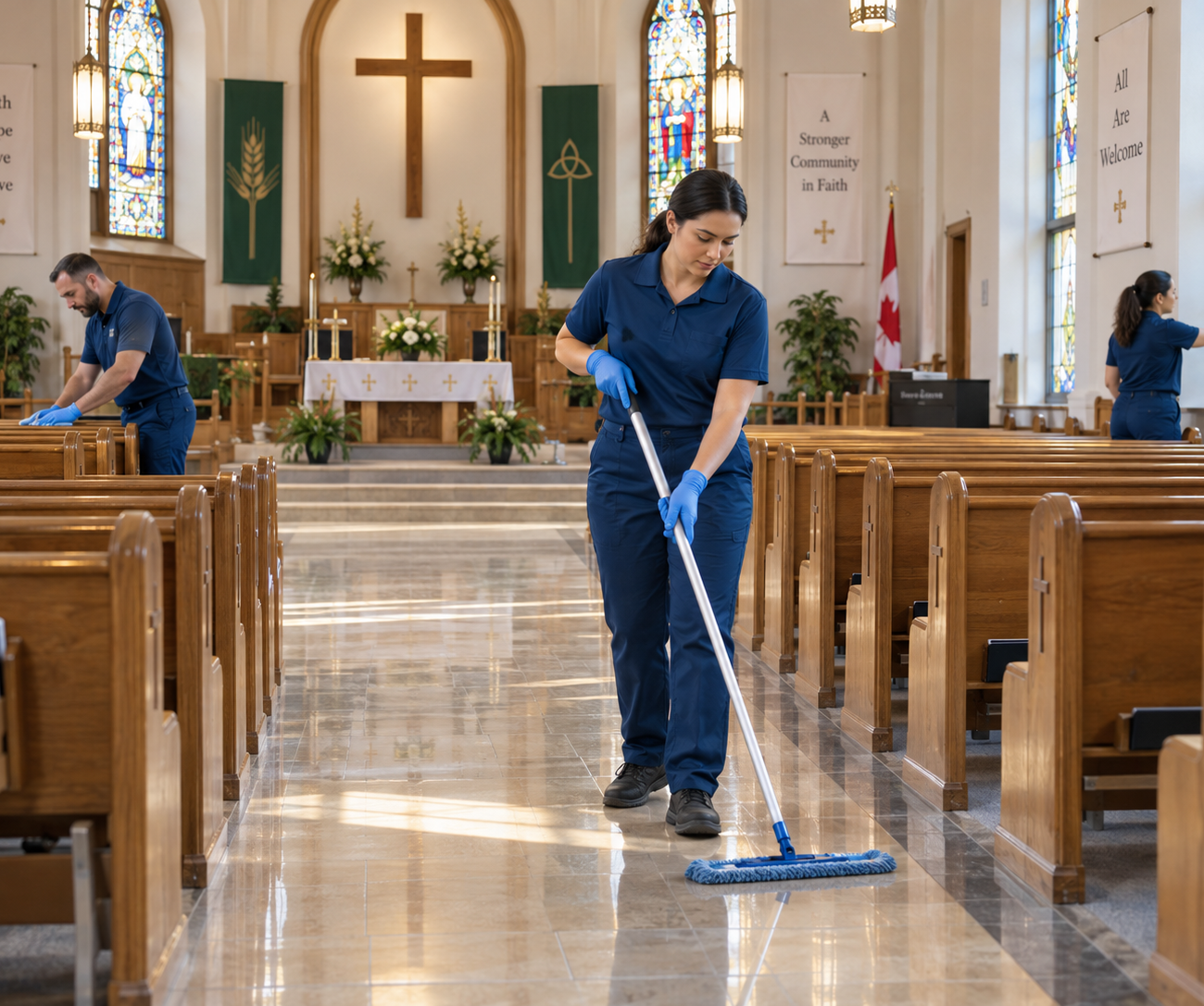
After a service, the most visible areas are usually the sanctuary, aisles, pews, entrances and gathering spaces. Because of that, cleaning after services can include vacuuming under and around pews, collecting discarded bulletins, cleaning floors, wiping high-touch surfaces, and dealing with spills or debris.
However, some items need extra care. For example, we don’t move altar cloths, candles, communion vessels, hymnals, memorial items or other religious materials without clear instructions from the facility.
In short, a workable plan answers three questions: what the crew cleans, what stays untouched, and where an item goes if the crew finds it out of place.
Fellowship hall and community space cleaning
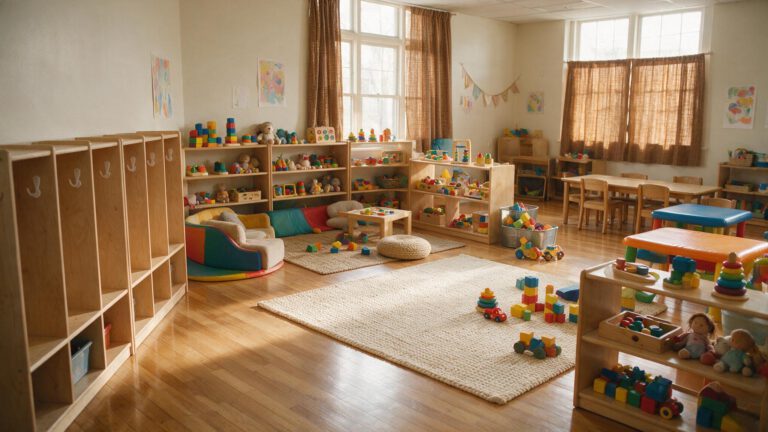
Fellowship halls, kitchens, meeting rooms and community spaces get heavy use after services and events. For that reason, we can handle floors, table and surface wiping, waste removal, vacuuming and general cleanup after coffee hours, meetings, classes and gatherings.
If volunteers already take care of certain jobs, like washing the coffee urns or stacking chairs, we build the scope around that. That way, we never do the same job twice, and everyone knows whose task is whose.
Weekday church cleaning
Many churches prefer professional cleaning during the week instead of right after Sunday services. In that case, weekday cleaning can cover offices, classrooms, hallways, washrooms, entrances, fellowship spaces and, where needed, light sanctuary cleaning.
A typical weekday visit includes:
- Vacuuming and mopping floors
- Emptying waste and recycling
- Cleaning tables and shared surfaces
- Wiping door handles, light switches, counters and other high-touch areas
- Cleaning and restocking washrooms
- Vacuuming classrooms and meeting rooms
- Cleaning entrances and common areas
Likewise, we don’t move paperwork, teaching materials, projects or personal items unless the plan says to.
Special events, funerals and weddings
Funerals, weddings, holiday services, concerts and community events add cleaning that the regular weekly visit doesn’t cover. As a result, if a large event falls between scheduled visits, you may need an extra service for the sanctuary, hall, washrooms, entrances or whatever the event affected.
If you give us the dates in advance, we can build event cleaning into the schedule. That way, the building is ready for the next service. For that reason, we don’t assume the regular plan covers an event, and neither should you.
Areas that need special instructions
Every religious facility has spaces and items with their own rules. For instance, some churches want hymnals back on the racks, while others prefer them left in the pews. Memorial flowers, likewise, may need to stay put. Votive candle areas, choir lofts, communion tables and religious displays often have specific rules too.
Because these rules differ so much, settle the following before cleaning starts:
- Where hymnals and bulletins go
- Which altar or worship items the crew must leave alone
- Whether the crew can move memorial flowers
- Whether the crew should remove candle wax
- Which rooms are off limits
- Which doors to use after hours
- Which areas have alarms or locks
Therefore, written instructions matter. They let the crew respect the building and still finish the work.
Floors in a church
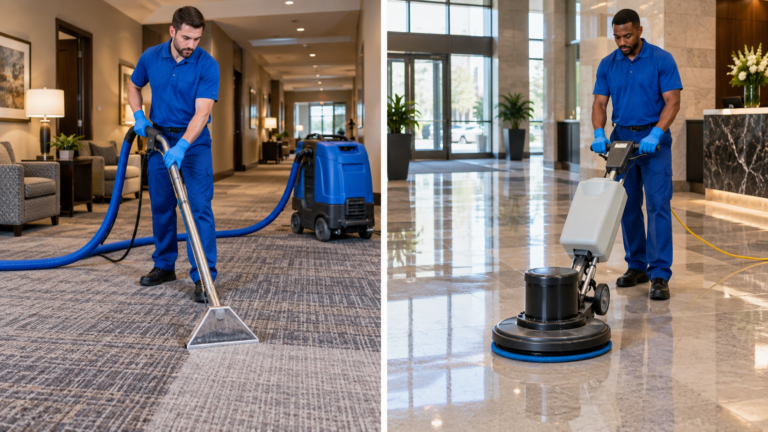
Many sanctuaries have carpet, while halls and kitchens often have hard floors, so one facility can need more than one kind of floor care. Routine vacuuming and mopping are part of regular cleaning. However, carpet extraction and strip and wax are separate services with their own dry times. Our guide to carpet cleaning vs floor waxing explains how to book them.
In winter, for example, salt and slush come in at the entrances and spread from there. If that’s a problem at your doors, put it in the plan.
Church cleaning schedules
We clean around your building’s actual schedule: daytime, evening, overnight and weekends. Some churches need Sunday evening cleaning, but others prefer Tuesday or Thursday, after volunteers have finished their weekend tasks. Facilities with multiple services or regular community programs, meanwhile, may need a mix of both.
Because no schedule fits every church, yours should follow how the building gets used.
What to put in your church cleaning plan
Before the crew starts, write down:
- Which rooms the plan includes
- The days and times of service
- What volunteers handle
- Which items and areas are off limits
- Which rooms have restricted access, alarms or locks
- Which doors to use after hours
- Where you store supplies
- How to book extra cleaning around events
Frequently asked questions
Can you clean after Sunday services?
Yes. Some churches want a clean after each service, while others prefer a weekday visit. Either way, we plan around what your building needs.
Will your crew move religious items?
Not without clear instructions. Instead, altar cloths, candles, communion vessels, hymnals and memorial items stay where they are unless the plan says otherwise.
Can you work alongside our volunteers?
Yes. We build the scope around the tasks your volunteers already handle, so we never do a job twice or miss one.
Do you only clean churches?
Our plans cover churches and other religious facilities. However, each building has its own rules for sacred items and restricted areas, so we write those into the plan.
What about funerals, weddings and other events?
We can schedule an extra visit if you give us the dates in advance. However, we don’t assume regular cleaning covers them.
Build a plan around your building
A good church cleaning plan defines the rooms, schedule, responsibilities, restricted areas and event needs before the crew arrives. To that end, Everest works with churches and religious facilities to build plans around worship schedules, volunteer routines, community programs and building access.
If you’re looking for professional cleaning for your church or religious facility, book a free consultation. Then we’ll review the spaces, the schedule and your cleaning priorities with you.