Running a restaurant means managing much more than food and service. Dining areas, washrooms, entrances, staff spaces, floors, and back-of-house areas all need regular attention to keep the facility clean, organized, and ready for customers.
Professional restaurant cleaning services in Canada can help restaurant owners and managers maintain consistent standards without adding more cleaning responsibilities to their internal team.
The right provider should understand how restaurants operate, work around service hours, and build a cleaning plan around the areas that matter most to your business.
Why Professional Restaurant Cleaning Matters
Restaurants deal with a combination of high foot traffic, food preparation, spills, grease, waste, and frequent customer turnover.
Routine cleaning helps keep customer-facing spaces presentable while supporting cleaner staff areas and back-of-house operations.
A professional cleaning plan may include:
- Dining room floors
- Entrances and vestibules
- Washrooms
- Tables and shared surfaces
- Staff areas
- Hallways
- Waste and recycling areas
- High-touch surfaces
- Selected kitchen and back-of-house areas
The exact scope should always be defined before service begins.
Dining Area Cleaning
The dining room is one of the first areas customers notice.
Floors, tables, chair bases, entrances, windowsills, and high-touch surfaces can quickly show signs of daily traffic.
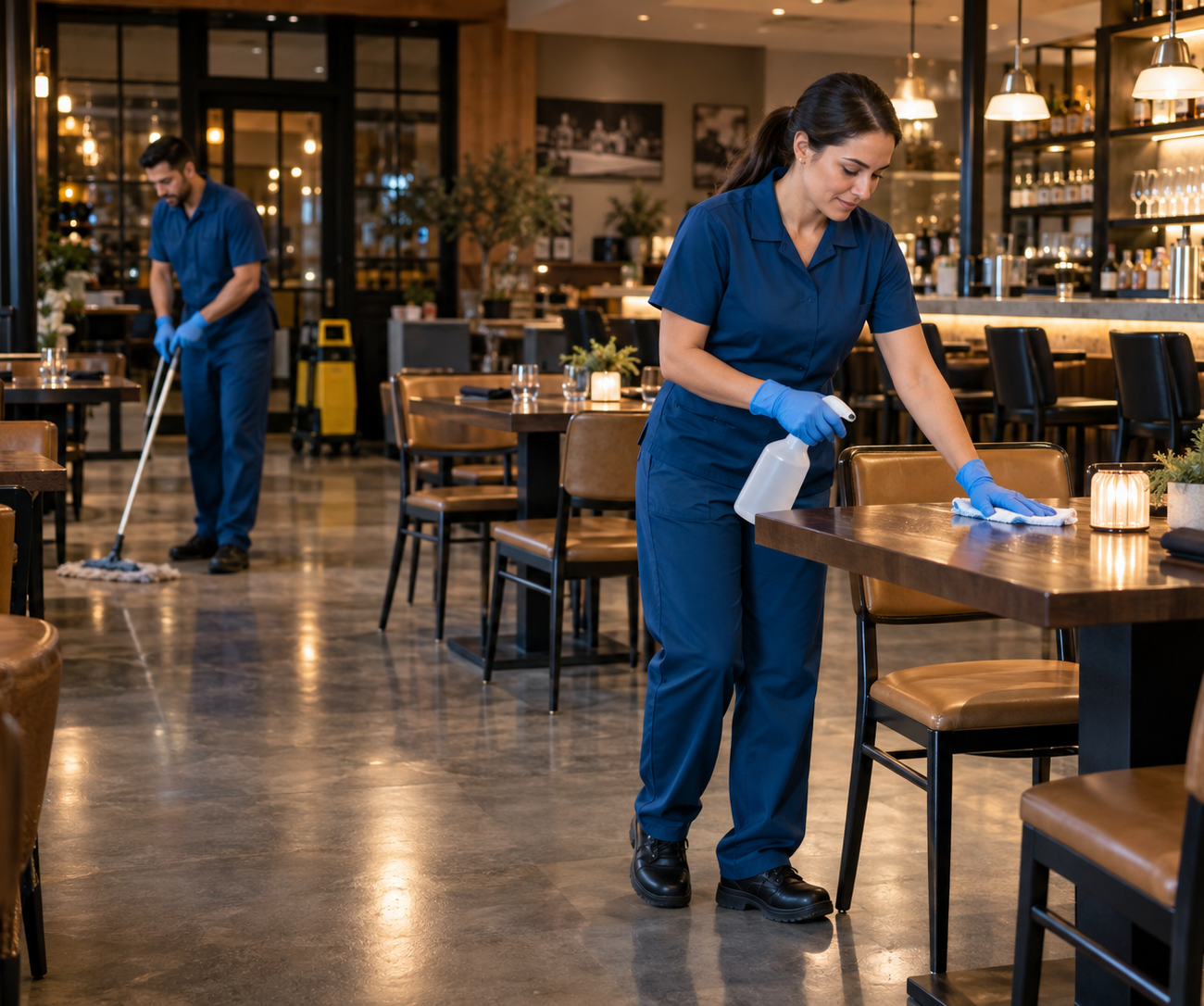
Professional restaurant cleaners can work around opening hours to help reset these areas before the next service period.
Depending on the restaurant, this may include vacuuming, mopping, spot cleaning, waste removal, and wiping shared surfaces.
Washroom Cleaning
Washrooms can strongly influence how customers perceive a restaurant.
A regular cleaning schedule can include toilets, sinks, mirrors, floors, counters, fixtures, waste bins, and high-touch areas.
Soap and paper products can also be restocked when supplies are provided.
High-traffic restaurants may need washroom attention more than once per day, so frequency should be based on actual customer volume rather than a fixed template.
Back-of-House and Kitchen Support
Restaurant cleaning can include selected back-of-house areas, but it is important to define exactly what is included.
Routine janitorial cleaning is different from specialized commercial kitchen work.
For example, general cleaning may include floors, staff areas, waste removal, and accessible surfaces. Services such as hood cleaning, grease-duct cleaning, appliance servicing, or specialized food-contact sanitation may require separate providers or a dedicated scope.
A clear service agreement helps avoid confusion.
Flexible Cleaning Around Restaurant Hours
Restaurants rarely operate on a standard office schedule.
Cleaning may need to happen:
- Before opening
- After closing
- Overnight
- Between service periods
- On selected weekdays
- After events
- During scheduled deep-cleaning windows
A good restaurant cleaning provider should be able to build the schedule around your operating hours rather than interrupting them.
High-Traffic Areas Need More Attention
Not every part of a restaurant needs the same cleaning frequency.
Entrances, washrooms, dining floors, bar areas, and staff corridors often require more attention than lower-traffic spaces.
Service frequency should be based on factors such as:
- Daily customer volume
- Floor type
- Restaurant size
- Operating hours
- Seasonal traffic
- Event schedules
- Staff use of shared areas
This approach helps create a more practical cleaning plan.
Choosing a Restaurant Cleaning Company
When comparing restaurant cleaning services in Canada, focus on how the company will manage your facility rather than only on price.
Ask questions such as:
- What areas are included?
- What is excluded?
- Can service be scheduled after closing?
- How are missed tasks reported?
- Who supplies equipment and chemicals?
- Are staff trained for commercial environments?
- Can periodic deep cleaning be added?
- How is quality checked?
- Who is the main contact if service needs to change?
A walkthrough is usually the best way to define the cleaning scope before work begins.
Experience With Restaurant Environments
Restaurant cleaning has different demands from office cleaning.
Crews need to work around dining areas, staff zones, food-service schedules, high-traffic floors, and restricted spaces.
Experience matters because the cleaning team should understand what can be cleaned during normal janitorial service and what requires specialized handling.
That distinction helps protect the restaurant’s operations and reduces confusion.
Customer Reviews and Reputation
Reviews can be useful when evaluating a cleaning provider, but look beyond star ratings.
Pay attention to comments about:
- Reliability
- Communication
- Consistency
- Response time
- Staff professionalism
- Ability to work around business hours
- Quality control
Reviews from commercial clients are usually more relevant than residential feedback when choosing a restaurant cleaning company.
Environmentally Responsible Cleaning Options
Some restaurants prefer cleaning programs that use lower-impact products or support broader sustainability goals.
Depending on the facility, this may include:
- Microfiber systems
- Proper chemical dilution
- Lower-impact cleaning products
- Efficient equipment
- Reduced unnecessary product use
If sustainability matters to your restaurant, include it in the service discussion from the beginning.
Regular Cleaning Helps Protect Your Facility
Routine cleaning does more than improve appearance.
Dirt, grit, grease, and spills can gradually affect flooring, furniture, fixtures, and other surfaces.
Consistent maintenance can help keep these materials in better condition and reduce avoidable wear.
Restaurants may also need periodic services such as:
- Carpet cleaning
- Floor scrubbing
- Strip-and-wax floor care
- Deep cleaning
- Post-renovation cleaning
These services can be scheduled separately from routine janitorial work.
Supporting a Better Customer Experience
Customers notice cleanliness.
A clean entrance, dining room, washroom, and common area can help create a more professional and welcoming environment.
Cleanliness alone does not define the dining experience, but it is an important part of how customers perceive the restaurant.
Consistency matters more than occasional deep cleaning.
Build a Cleaning Plan Around Your Restaurant
Every restaurant operates differently.
A small café may need a very different cleaning schedule from a large dining room, hotel restaurant, food court location, or multi-level venue.
Everest can build a restaurant cleaning plan around your hours, layout, customer traffic, flooring, staff areas, and cleaning priorities.
The goal is to create a clear scope that supports your restaurant without interfering with service.
If you are looking for professional restaurant cleaning, book a free consultation to review your facility and build a schedule that works around your operation.