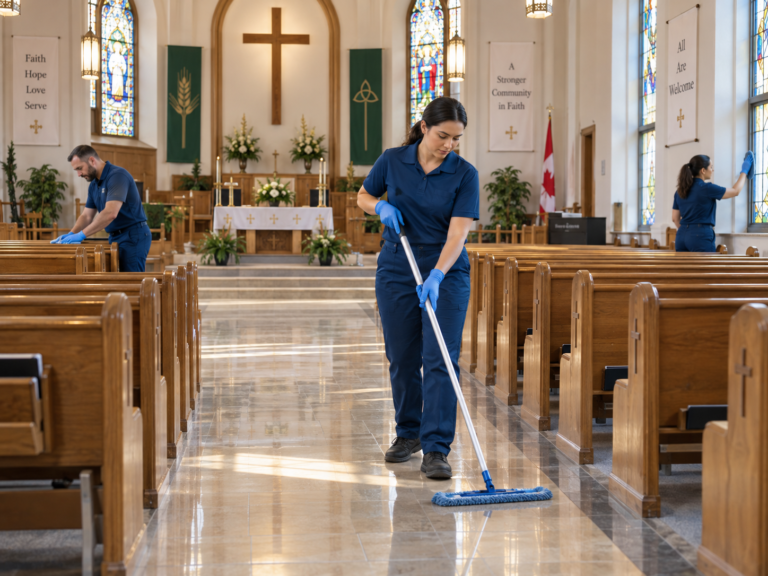
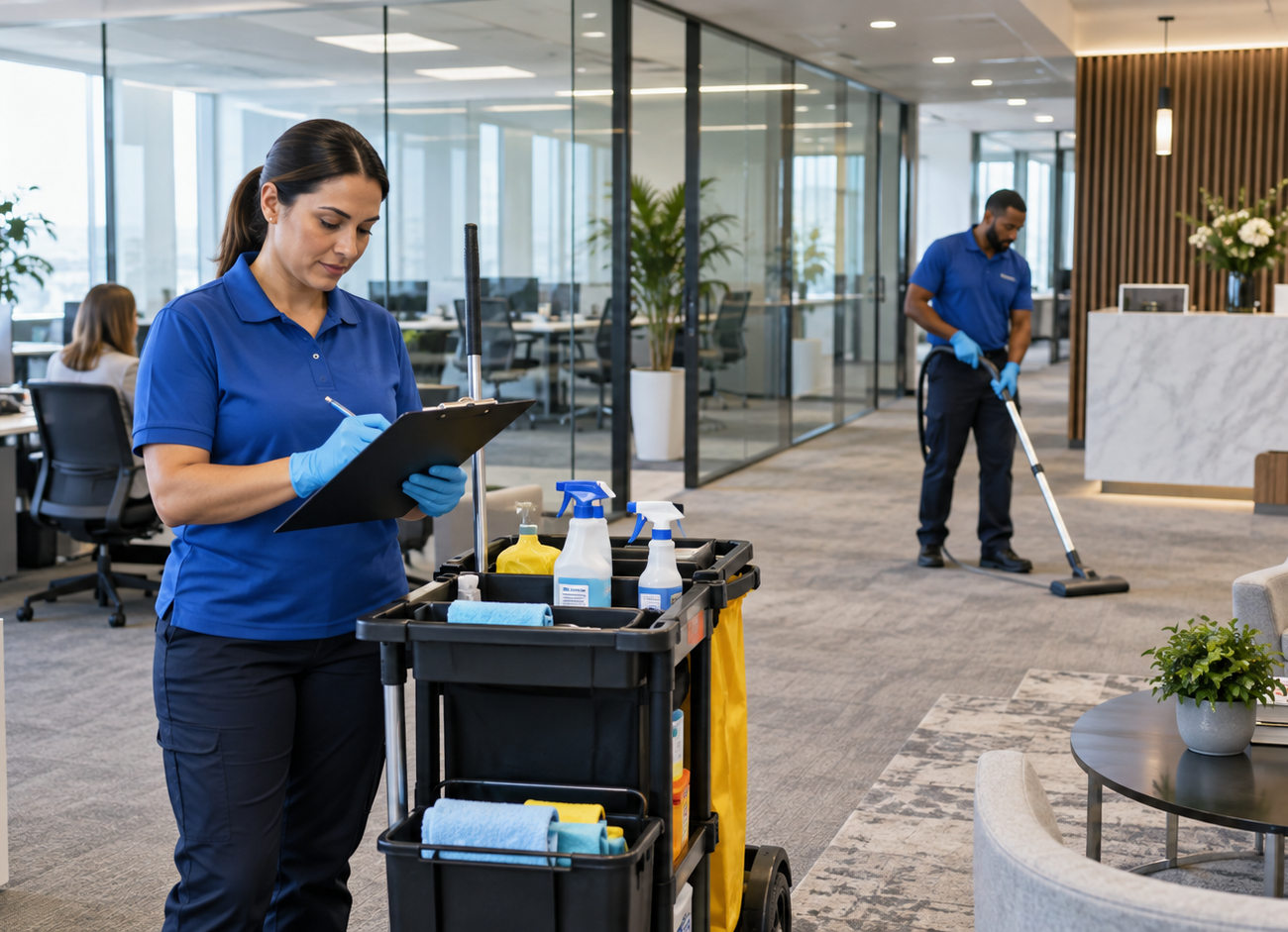
The list said common areas. Four words at the bottom of a one-page spec. I printed it. Then I found a gym on 3 with a spin bike still wet and a water cooler that wasn’t on the sheet.
This commercial cleaning checklist is for that walk. Offices mean desks, kitchens and washrooms. Common areas mean the rooms the building actually has, written by name. Leave them as one line, and someone skips the gym or spends an hour in a lobby that needed a vacuum and a wipe of the glass.
Everest books the work from our commercial cleaning services page. This is the room list I use when a manager wants a nightly spec that matches what’s really there. If you’re still sorting out what a nightly covers and what counts as an extra, start with what commercial cleaning includes.
Desks and workstations
- Wipe the open surface
- Wipe keyboards and mice that are clear of notes
- Vacuum the chair well
- Empty the bin
- Skip any bay where someone is still working, and come back
Screens that are on stay on. Drawers stay shut. Paper stays in the pile you left. People have asked us to “neaten” a stack, and I won’t. The last time I moved one, a signed cheque was in it, and I spent twenty minutes on a voicemail I didn’t want to leave.
Chair wells collect crumbs and hair. Wipe the desktop and leave the well, and a clean-looking floor still feels dirty when someone rolls in at 8:10.
Kitchens
- Wipe the machine area and the coffee grounds around it
- Clean the microwave plate
- Wipe the fridge handle and the sink rim
- Wipe counters after the sink
- Empty the compost if there’s a bin we’re allowed to dump
- Sweep and mop last, so we aren’t walking crumbs back in
We don’t run a dishwasher unless it’s on the ticket. I once started a cycle and came back to a note saying the machine was “staff only” because someone stored soap in it. If the tile is still sticky after one pass, put that on the night note. Sticky usually means a spill that sat, not a crew that skipped the room.
The boardroom fridge
I still don’t have a rule for this one. Some floors want leftovers pulled every Friday. Others want them left because catering is coming back Monday and the trays are labelled. So I ask, and I write the answer on the booking. I won’t guess a default and then take a complaint that we threw out a client’s lunch.
Washrooms
- Toilets, seats, bowls and around the base
- Counters, taps and the door latch everyone hits
- Mirrors and floors
- Restock from the marked cupboard
- Write down any empty supply cupboard
We don’t raid another floor’s stash unless you said we could. The stall that always smells is usually a trap, not the bowl. I can wipe a bowl twice, but I can’t snake a drain on a nightly. Call a plumber, and we’ll keep the surfaces clean in the meantime.
Sanitary bins are often a separate pickup. If your building contract covers that, tell us, so we don’t double-bag something that’s already on a route.
Lobby
- Glass at entry height
- Reception ledge
- Chair arms
- Floor mats, shaken or vacuumed
- Directory boards and fire-panel glass, if they’re in reach and not alarmed
Mats hold grit, and in winter they hold salt. Skip them and you mop a dirty outline the next morning. I don’t open a fire cabinet to “be thorough.”
The lobby plant
A ficus in one lobby leaked into its planter, and the water stained the stone. The manager wanted the leaves dusted. The building operator said to leave the planter alone because the plant service comes Tuesdays. I dusted the leaves and left the soil. The stain was still there in the photo they sent me the next week. Plants belong on your spec with a name next to them: ours, or the plant service’s.
Elevators and stairs
- Call plates, cab rail and cab floor
- Vacuum a carpeted cab, or mop a hard floor after the lobby
- Vacuum the treads and wipe the rail on the stairs people use
Mop the cab after the lobby so we aren’t walking lobby grit into the box. For stairs, we do the ones people actually take, like the ones by the smoking door, not the pretty marble ones nobody uses. The unused stair can wait for a weekly if you say so.
Boardrooms after the late meeting
- Table
- Chairs pushed in
- Glass
- Credenza
- Bin
Catering leftovers follow whatever rule you set for the fridge.
The gym on 3
If the building has a gym, name it. Don’t bury it under common areas. The list is:
- Bikes and benches
- The fountain
- The floor around the rubber mats
- Change-room benches
- The shower, if staff use it
Rubber floors hold sweat in the seams. A dry mop won’t get that. A damp mop with the product you’ve already approved will.
I still don’t know who “owns” that gym on 3. Fitness staff said they wipe the equipment. The property manager said janitorial does the floor and the change room. The tenant on 2 said they pay for the amenity, so it should look like a club. That’s three answers. I wrote all three on the quote and asked them to pick one before we started. I’d rather hold a night than mop a bike someone just sprayed with their own bottle, then take a complaint that we used the wrong product.
No gym? Skip this section. If there’s a yoga room, a mother’s room or a locker hall, list those the same way. Named rooms get done, and unnamed rooms get a question on the night note.
Put five things next to every room
- The name people use for it
- Its floor type: carpet, VCT, rubber or tile
- Who might still be in it after lockup
- What’s included nightly
- Who to ask if something’s missing
Frequently asked questions
What should an office cleaning checklist include?
Desks, kitchens, washrooms, the lobby, elevators, stairs and boardrooms, plus any amenity room like a gym. List each by name.
Does a commercial cleaning checklist cover the gym?
Only if the gym is named. Say who wipes equipment and who handles the floor and change rooms.
Who handles the boardroom fridge?
Whoever your booking says. “Friday pull” or “leave it” both work, as long as it’s written down.
Get the rooms written down
We’ll tell you whether this is one nightly or a nightly plus a weekly for the amenity floor. Book a free consultation and we’ll walk the rooms or the photos before we lock a spec.