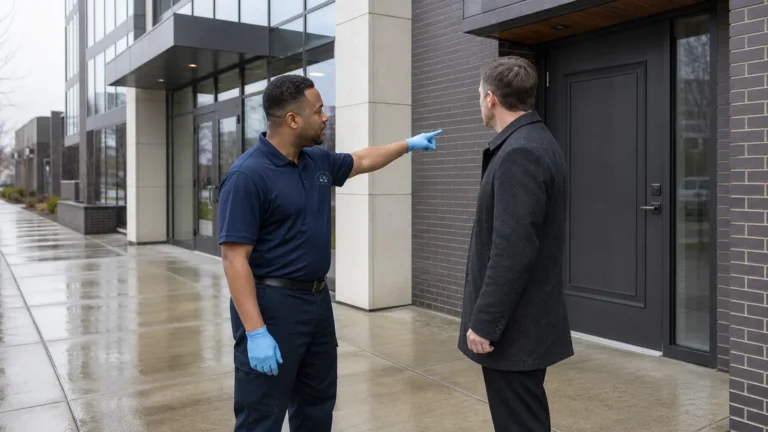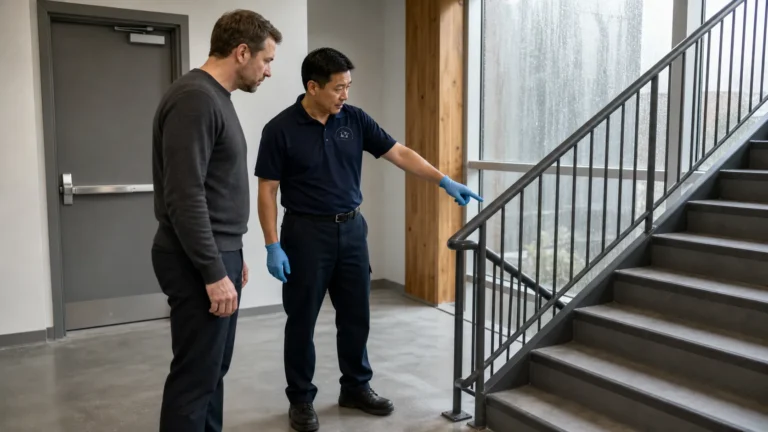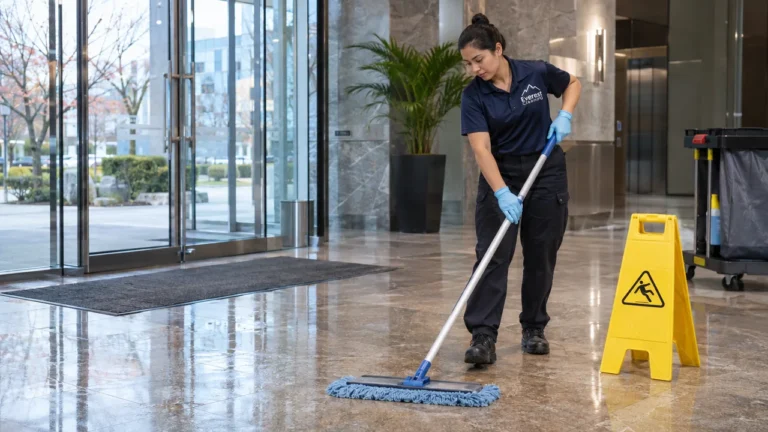
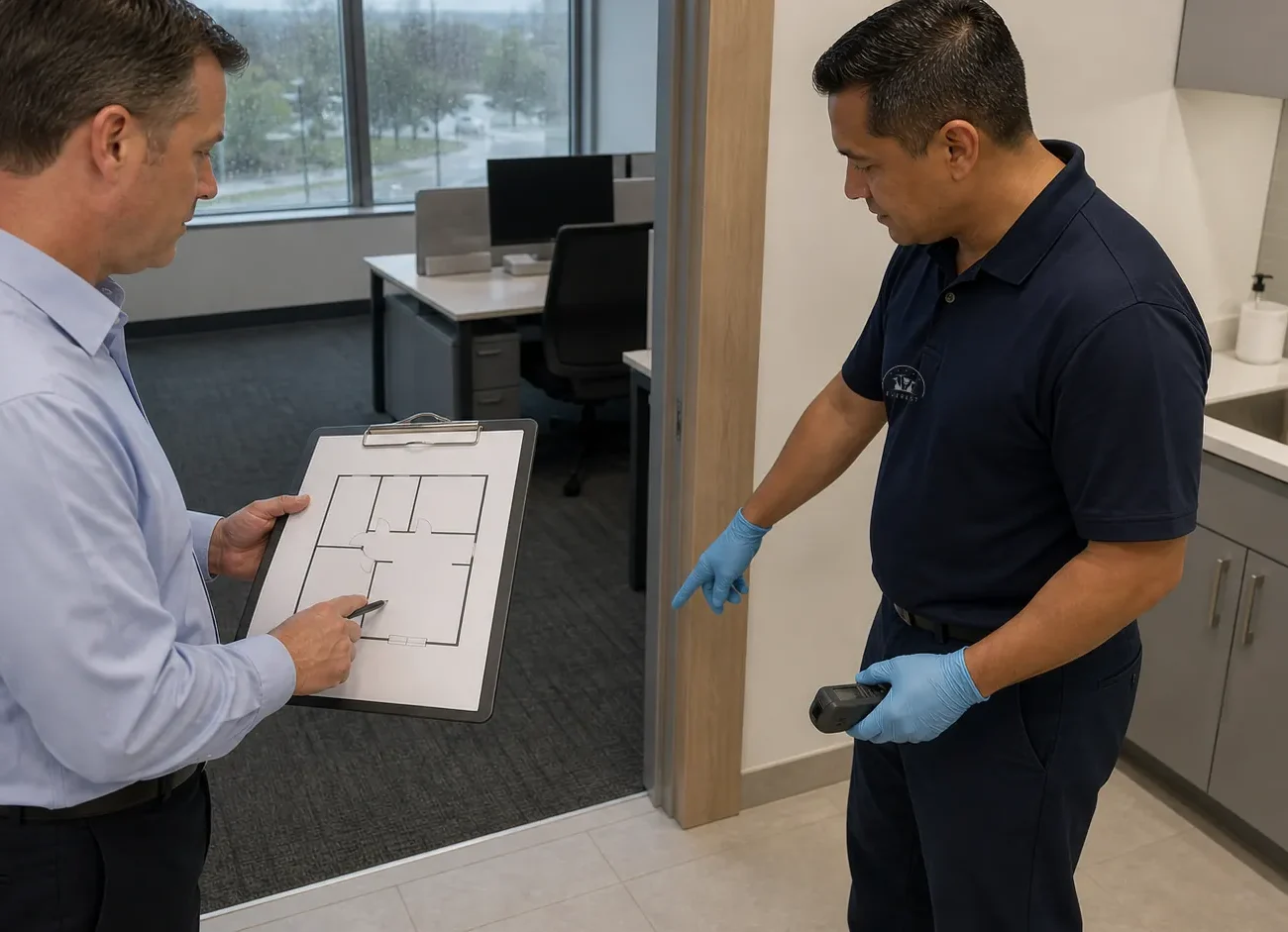
A Vancouver office cleaning quote should turn a site walk into named areas, tasks and visit days, with the cleaning window and extras stated separately. Check that washrooms, kitchenettes and floor surfaces each have a clear entry. Before approving the price, match those entries to the rooms and access conditions you actually showed the estimator.
By Everest Cleaning. This worksheet interprets Everest's published quoting process. It is a buyer's checking tool, not a copy of an Everest quotation or a record of a customer visit.
The service specification for office cleaning services Vancouver is the reference for the inclusions below. For the broader pricing method, use our guide to office cleaning costs. Here, the job is to carry observations from a Vancouver office walk into a written quote you can check.
What should you bring to the site walk?
Bring the address, approximate floor area, floor types and the hours the office is empty. Everest asks for those details before reviewing visit frequency and shift. Add a room list so the supervisor can check the physical space against your request, rather than relying on the floor-area total alone.
Mark rooms you want included and rooms you cannot release to the crew. Note which washrooms and kitchenette belong to your suite. If the building handles a shared space, ask the property manager to confirm that boundary before you ask the office cleaner to price it.
You do not need to send alarm codes with a quote enquiry. Identify the access contact and describe the available window; settle the actual access arrangements through the agreed handover process.
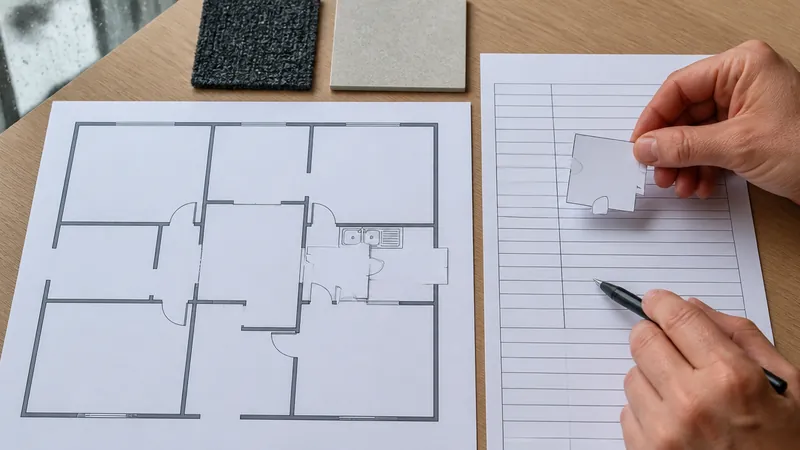
Which line items should the walk produce?
The walk should produce an area-and-task list with visit days, an access note and separately identified extras. Use the worksheet below to record what must appear in the returned quote. These are buyer checks based on Everest's published office scope, not a promise that each row receives a separate price.
| Quote entry | Record on the walk | Check in the written quote |
|---|---|---|
| Areas and workstations | Name the suite, reception, meeting rooms and excluded rooms | Which desktops, ledges and shared tables are included? |
| Frequency | Note occupied days and the requested service days | Are visit days stated, with periodic tasks on their own cycle? |
| After-hours access | Identify the agreed entrance, empty hours and access contact | Does the cleaning window match the space you can release? |
| Washrooms | Identify each room and its dispensers | Are fixtures, mirrors and floors listed? Is soap and paper restocking included, and who supplies them? |
| Kitchenettes | Point out counters, sinks, tables and appliances | Are appliance exteriors distinguished from any interior cleaning you request? |
| Floors | Mark carpet and hard-floor areas on the room list | Are vacuuming, sweeping and mopping identified separately from extraction or strip and wax? |
| Extras | Flag interior glass, vents or a one-time deep clean you want priced | Is each accepted extra included on a stated cycle or quoted separately? |
Waste and recycling need a destination as well as a bin list. Everest's office scope follows the building's disposal rules. Have the quote identify the bins being serviced and confirm the route on the walk, especially if the suite's bins and the building's recycling room have different access.
Leave pricing to the provider. A quote can group routine work into one amount and still identify its tasks clearly. The useful test is whether you can tell what the amount buys.
How does a room observation become a quote line?
Turn the observation into a named location, an action and a frequency, then identify anything still undecided. Take a kitchenette: seeing a microwave during the walk does not establish whether its interior is included. Everest's routine office scope names appliance exteriors. An interior-cleaning request needs its own explicit decision.
Here is a hypothetical worksheet entry, not a client example or Everest's standard quote wording:
West kitchenette: counters, sink, table and appliance exteriors on the agreed visit days. Microwave interior requested separately; provider to confirm inclusion and frequency. Fridge interior excluded unless added to the written scope.
The buyer can now check the returned quote against that note. If it says only “kitchen cleaning”, ask the estimator to resolve the microwave request before approval. You have a specific unanswered item without reopening the whole room list.
Do the same for a floor transition. Mark where carpet ends and hard floor begins. Routine vacuuming and mopping belong to the recurring scope; Everest books carpet extraction and strip and wax separately. A floor plan helps the estimator assign those tasks to the right surface without implying either treatment is included throughout the suite.
Where do Vancouver access details belong?
Put the agreed entrance and cleaning window beside the visit schedule, with a named person who can confirm building access. Everest's Vancouver service page specifically identifies security desks, fobs and shared elevators on downtown tower floors. Entrance, fob and alarm arrangements are settled at the free site assessment.
A note such as “after hours” leaves the available hours unclear. Give the estimator the time each area empties and any building-imposed access limit. Ask them to reflect those conditions in the proposal rather than assuming all rooms open together. This is a scheduling input, not evidence of an automatic after-hours surcharge.
For the route once the crew is inside, see the Vancouver after-hours scope guide. Choosing between daytime upkeep and an evening reset belongs in the day porter versus night cleaning guide; this worksheet only records the option being quoted.
What should change between the initial quote and the approved plan?
Any detail settled on the walk should appear in the plan you approve: tasks, visit days, price and the agreed access window. Everest can review your submitted details and send an initial written quote before a walkthrough, or assess the site first. Its office process agrees the start date after the walkthrough.
Keep your walk notes beside the returned version. Check the excluded rooms, the requested microwave interior and any separately booked floor treatment. Ask for a revised written entry where the proposal differs. An unresolved request should remain visibly undecided rather than becoming an assumed inclusion.
If you still need to choose a frequency, use the existing guide to how often an office should be cleaned, then bring that decision back to this worksheet.
Request a free estimate with the address, floor details and available hours. Everest's estimate page states a written quote within one business day, or after the site assessment when one is needed. A free site assessment is available on request.
FAQ
No. You can check named tasks and frequencies even when routine work has one combined price. Ask which extras are included in that amount and which require a separate booking or quote.
Yes, if you want restocking included. Everest's office scope makes soap and paper restocking conditional on the written scope. Confirm who provides the supplies as well; cleaning the fixtures does not settle that arrangement.
Do not assume a surcharge. Everest offers evening, overnight and weekend office work and considers the shift when quoting. Give the estimator your actual access hours and check the written proposal for the agreed price and window.
Confirm that with the estimator. Everest can quote from submitted details or assess the site first. If the walk changes a room, task or access assumption, ask for the approved written plan to reflect it before agreeing the start.