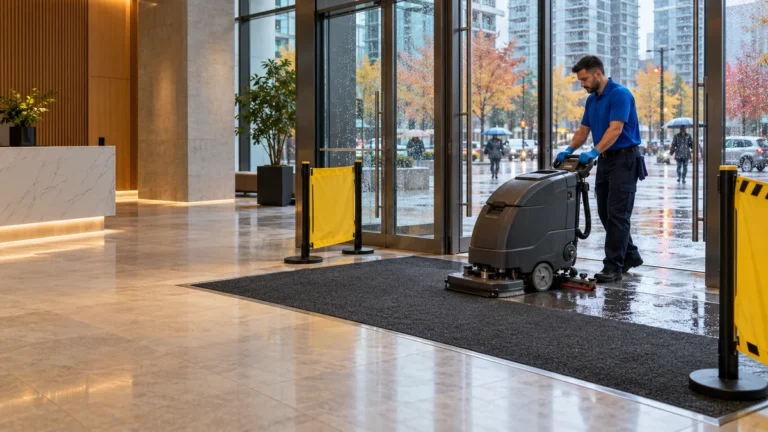
A lobby can be clean when the evening crew leaves and wet again before the morning rush. Rainy season office cleaning in Vancouver comes down to what happens between visits. Someone has to check the entrance, swap a soaked mat and get the water off the floor.
Below: entrances, hard floors and carpet for offices in Vancouver and the Lower Mainland. It leads with rain, not road salt. For salt and the rest of the cold-weather list, see our guide to winter floor care for commercial buildings.
Start with the entrance people actually use
Look beyond the main lobby. Staff may come in through the parkade, delivery drivers through a side door and visitors through the front. Each route carries water and grit into a different part of the building.
Walk those routes on a wet morning. Note where footprints carry on past the mats, where umbrellas drip and where water pools beside a door. That tells you where mats belong and when someone needs to check the floor.
- Use entrance mats that suit the floor and the traffic. Keep them flat and secure, with no curled edges and nothing catching the door.
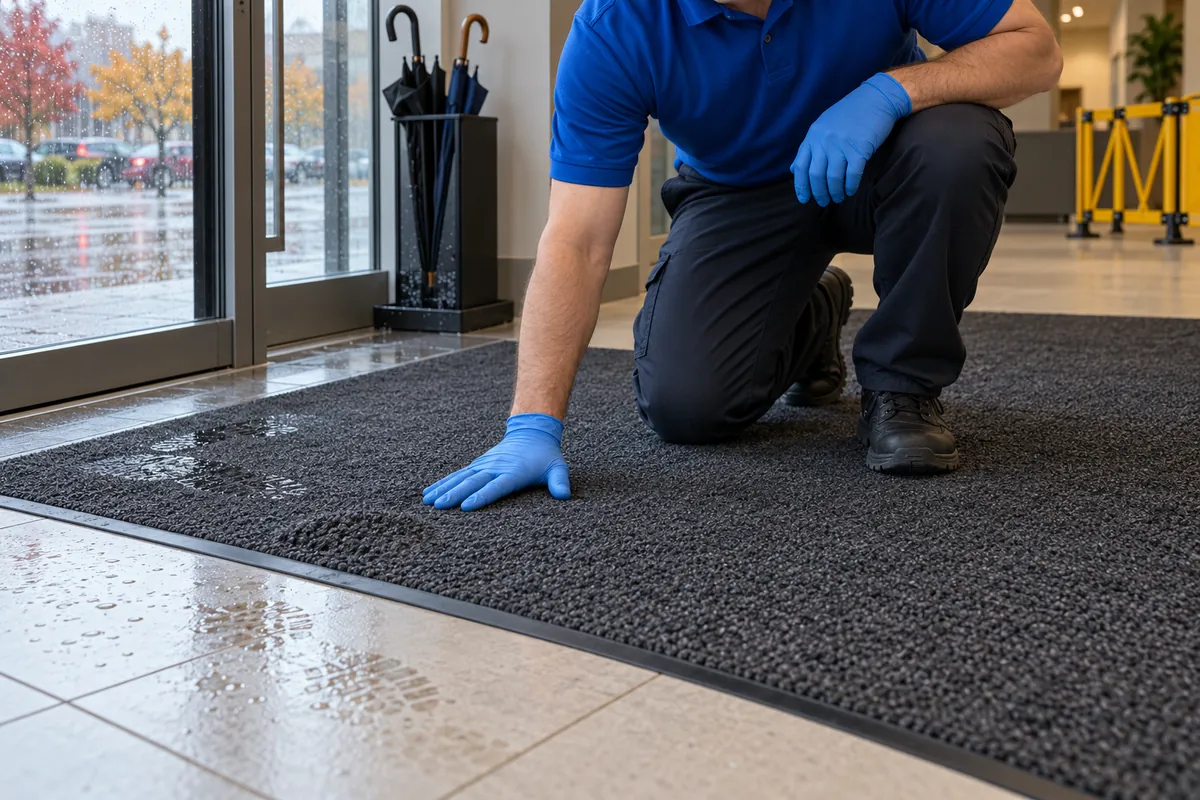
- Arrange replacements for mats that become saturated. Vacuuming lifts loose dry soil. It doesn’t dry a soaked mat.
- Put a stable umbrella stand or drip tray off the walking route, and add emptying it to the routine.
- Check the edge where the mat meets hard floor. Water travels past the mat even when the mat looks fine.
If you rent mats, ask whether the exchange schedule can stretch to an unusually wet week. An exchange next Tuesday won’t fix a saturated mat today.
Who checks the floor between cleaning visits?
Settle this before you add more tasks to the evening checklist. A contractor arriving at 6 p.m. can’t deal with a puddle that forms at 9 a.m. unless daytime service is part of the agreement.
Name the person or team responsible during occupied hours. It might be building operations, trained staff or a daytime cleaner. Agree how they report a problem and what happens when the usual contact is away. If the building needs a cleaner on site during the day, that’s what our shift cleaning services are for.
The Canadian Centre for Occupational Health and Safety recommends prompt spill cleanup and marking spills and wet areas. Get equipment ready before the rain, then use signs and access controls when conditions call for them. A forecast alone doesn’t tell you whether a particular floor is wet.
Where a floor is wet or being cleaned, keep people away or give them a dry route. Take the warning signs down once the area is clean and dry. The UK’s Health and Safety Executive guidance on cleaning says much the same. A sign warns people. The water still has to come off the floor.
Hard floors in wet weather
Check the floor manufacturer’s care instructions before you choose products or equipment. The surface, the seams and the finish all matter. What works on a tiled lobby may be wrong for wood, laminate or a different coating.
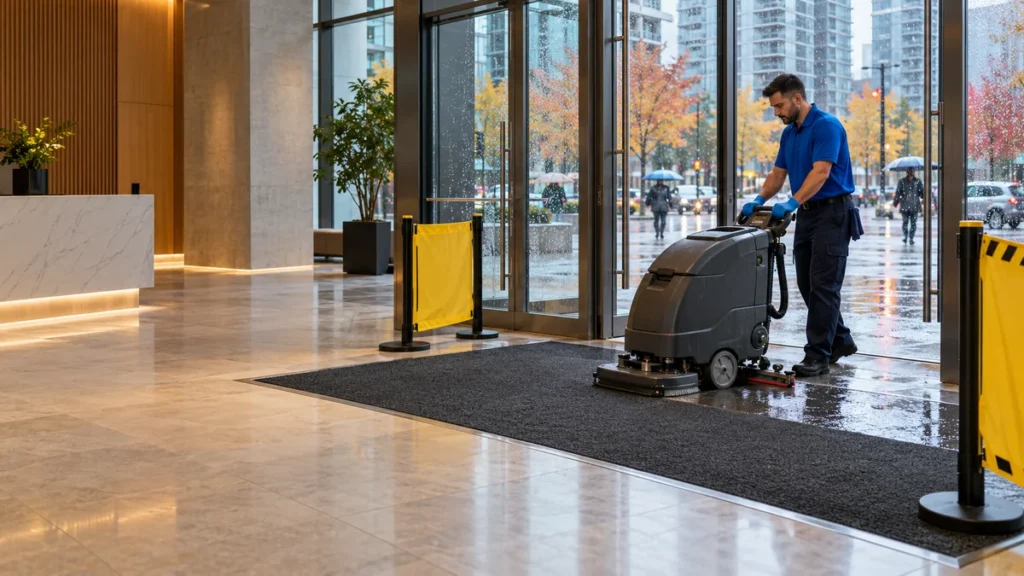
Remove grit with a method suited to the floor. Then clean at the recommended dilution and moisture level, keep the equipment clean and recover the excess water. Depending on the floor and the area, that means suitable mopping equipment or a machine built to recover cleaning solution. Our crews use ride-on scrubbers on larger floors.
A dry pass helps, but it doesn’t prove the floor is ready for foot traffic. Check the surface and keep access controlled while it’s wet.
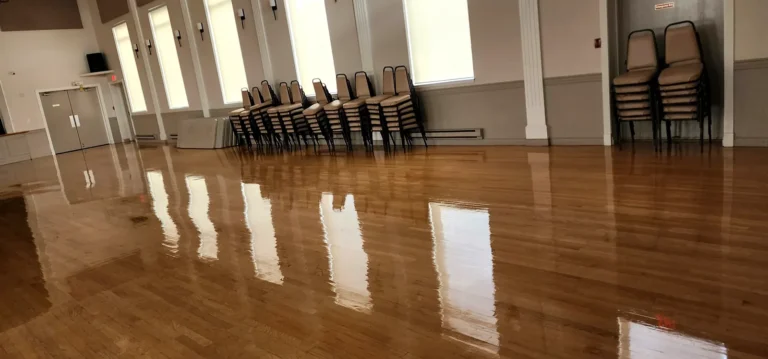
If the entrance looks dull, ask for an assessment before you book a full strip and wax. Soil buildup, wear and a damaged finish each need different treatment, and some floors shouldn’t be waxed at all. Where a coating does make sense, plan around the manufacturer’s drying and curing times before you reopen the area. Our post on when to strip and wax floors, and when to just recoat explains the difference.
Give entrance carpet a realistic drying plan
Carpet near a door collects grit as well as moisture. Remove dry soil regularly with equipment that suits the carpet. An ordinary dry vacuum shouldn’t pick up water. A wet area needs the right equipment and a check on how far the moisture has spread.
Schedule deeper cleaning by soil buildup, traffic and the carpet maker’s guidance. The entrance may need attention sooner than the rest of the office, but that doesn’t mean every building needs extraction every few weeks.
Before any wet cleaning, agree how the carpet will dry. Ask about moisture recovery, ventilation, humidity control and how long the area stays out of use. After-hours cleaning gives you a useful window, but don’t assume the carpet will be dry by morning.
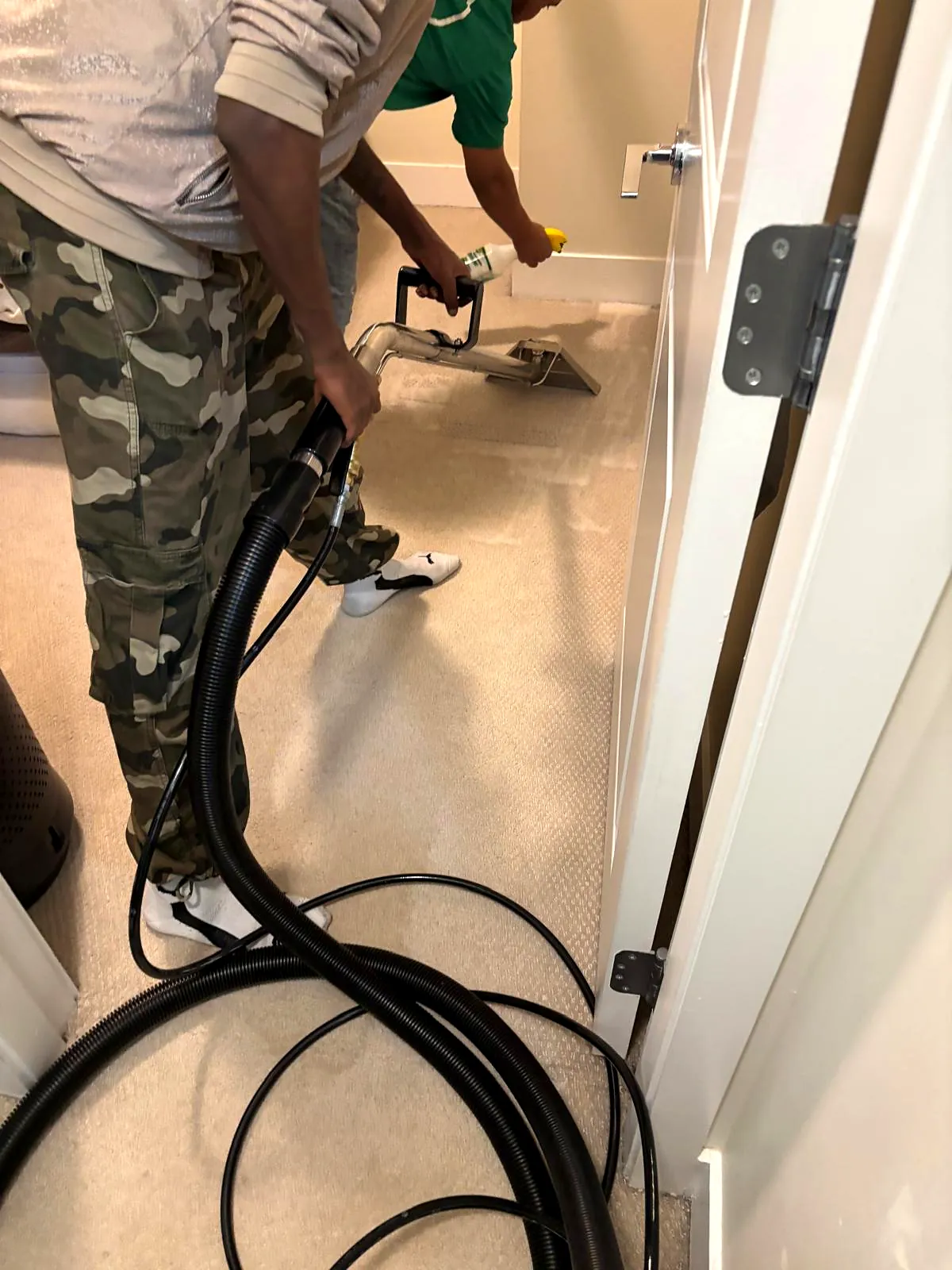
If a cleaned area is still damp the next morning, contact the cleaning team and the building manager. Dampness that keeps coming back, or a musty smell, deserves investigation. Our commercial carpet cleaning page explains what we offer.
Water that keeps returning needs a closer look
A damp patch beside a wall, window or ceiling leak may have little to do with wet shoes. Report the source promptly and have building maintenance or a restoration professional assess it. Suspected sewage or contaminated water needs specialist handling.
Health Canada’s flood-cleanup guidance, written for homes, notes that drying affected materials within 48 hours reduces the chance of mould. Treat that as a reason to act quickly, not a reason to wait two days. It isn’t a promise that water-damaged office carpet can be saved.
Rainy season office cleaning checklist
Use this as a starting point for your building. Check at opening and around busy arrival times, then adjust the intervals to what you see. Deal with hazards when you spot them rather than waiting for the next scheduled check.
| Area or task | What to check | Response to agree |
|---|---|---|
| Entrance mats | Saturation, movement, curled edges and wet footprints beyond the mat | Secure or replace unsuitable mats; exchange saturated ones |
| Hard floors | Water, muddy tracks and cleaning residue | Control access, clean and dry the affected area, then check before reopening |
| Entrance carpet | Dry grit, staining or persistent dampness | Remove dry soil; arrange suitable cleaning or investigate excess moisture |
| Umbrella storage | Overflowing trays or drips in the walking route | Empty containers and clean the surrounding floor |
| Exterior approach | Wet leaves, debris and pooling water | Notify the responsible team; clear debris within the agreed scope |
| Entry glass | Mud splashes and handprints | Clean as needed without leaving water on the floor |
| Signs and barriers | Whether they match the current hazard and leave a clear route | Position during wet conditions or cleaning; remove once the area is clean and dry |
Keep a short record of recurring problems. If the same mat is soaked by lunchtime, review the mat layout or the exchange frequency. For washrooms, desks and the rest of the office, see how often an office should be cleaned.
What to put in your wet-weather plan
Separate routine evening work from daytime response. List the entrances covered, who handles wet floors during business hours and who supplies and changes the mats.
Confirm who looks after exterior approaches and drain problems too. Depending on the property, that may be the landlord, the strata, the maintenance team or a grounds contractor. Strata councils can see how we run strata and property management cleaning for shared entrances.
Agree how extra visits are requested and charged, where equipment is stored and who approves carpet cleaning or floor maintenance. Let the condition of the entrance trigger action. A building can need attention even when no rainfall warning is out.
Rainy season cleaning questions
When should rainy season office cleaning start?
Review the entrance routine before the autumn rain settles in, and again when conditions change. If the wet weather has already arrived, start with today’s mat condition, the equipment you have and who is responsible during the day.
Is one entrance clean a day enough?
It depends on traffic and how fast water builds up. A quiet entrance may stay dry between checks, while a busy lobby may need repeated attention. Set inspection intervals for your building and respond to wet areas as they appear.
Can office carpets be cleaned while it is raining?
Yes, if the cleaning method and the drying plan suit the carpet and the indoor conditions. Discuss moisture recovery, airflow and humidity with the contractor, and allow enough time before the area goes back into use.
Does every office floor need waxing before winter?
No. The floor type and the existing finish decide what maintenance it needs. Ask the contractor whether cleaning, recoating or another treatment fits, and why, under the manufacturer’s instructions.
For the mats themselves, see our guide to commercial entrance matting for wet weather.
Plan wet-weather cleaning with Everest
Everest provides recurring office cleaning across Vancouver and the Lower Mainland. Tell us which entrances are busiest, when your office is occupied and what happens on a wet day. We’ll book a free site assessment, then send a written quote within 1 business day.