How often a clinic should be disinfected depends on the area, not on one number. High-touch surfaces in waiting rooms and washrooms are cleaned and disinfected more often than floors. The clinic follows its own regulator and public health guidance on the rest. A cleaning provider can then put that schedule in writing.
This guide sets out a frequency plan by area for flu season, what changes between October and March, and what a written log should record. For the service itself, see our medical office cleaning page.
Short answer: frequency by area
Think in three bands. Surfaces that many hands touch get the most frequent attention. Surfaces touched by patients one at a time follow a between-patient routine. Floors and low-touch surfaces sit on the nightly schedule.
We do not give a fixed number of times per day. The right figure depends on patient volume, building layout and your infection prevention and control (IPAC) policy. Your regulatory college, your health authority and the clinic’s own IPAC lead set it. The Provincial Infectious Diseases Advisory Committee guidance, published through Public Health Ontario, is a common reference.
Waiting rooms and reception
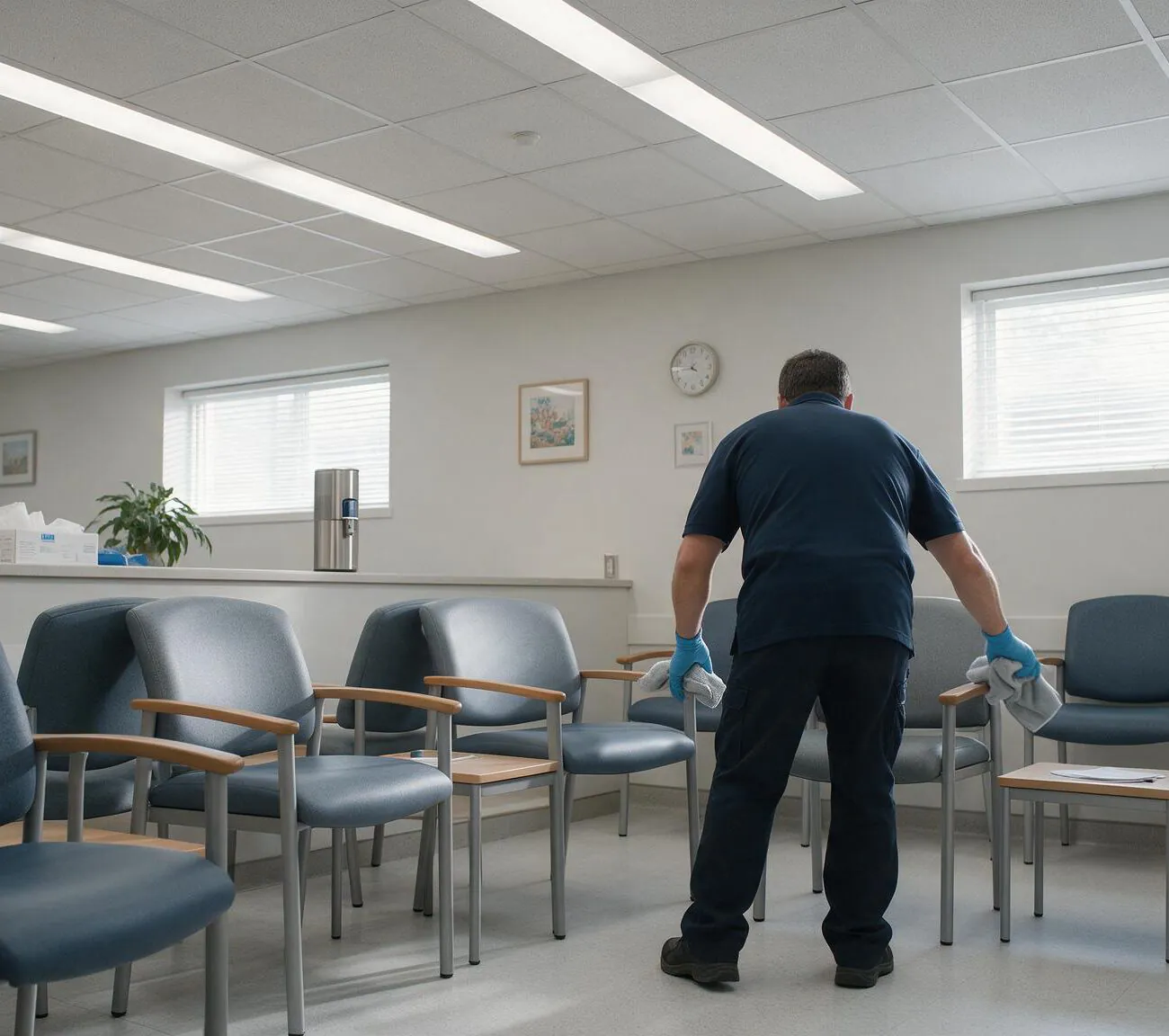
This is the busiest band. Chair arms, door handles, the reception counter, pens, payment terminals, children’s play items and the entrance push plate are touched all day. They belong on a written list with a named person who checks them during opening hours.
The nightly crew then does the full pass: every item on the list, plus the floor and the bins. During flu season, many clinics add a mid-day wipe of the same touch points by front-desk staff. That is a clinic decision, and the schedule should say who does it.
Washrooms and staff areas
Patient washrooms are treated as clinical spaces in most protocols. Taps, handles, dispensers, grab bars, toilet seats and the lock are the touch points. They also need restocking in flu season, because soap and paper run out faster.
Staff rooms and kitchens carry their own touch points: fridge handles, microwave buttons, kettle switches and shared tables. They are usually public-space tasks on the nightly list, with a weekly deeper clean.
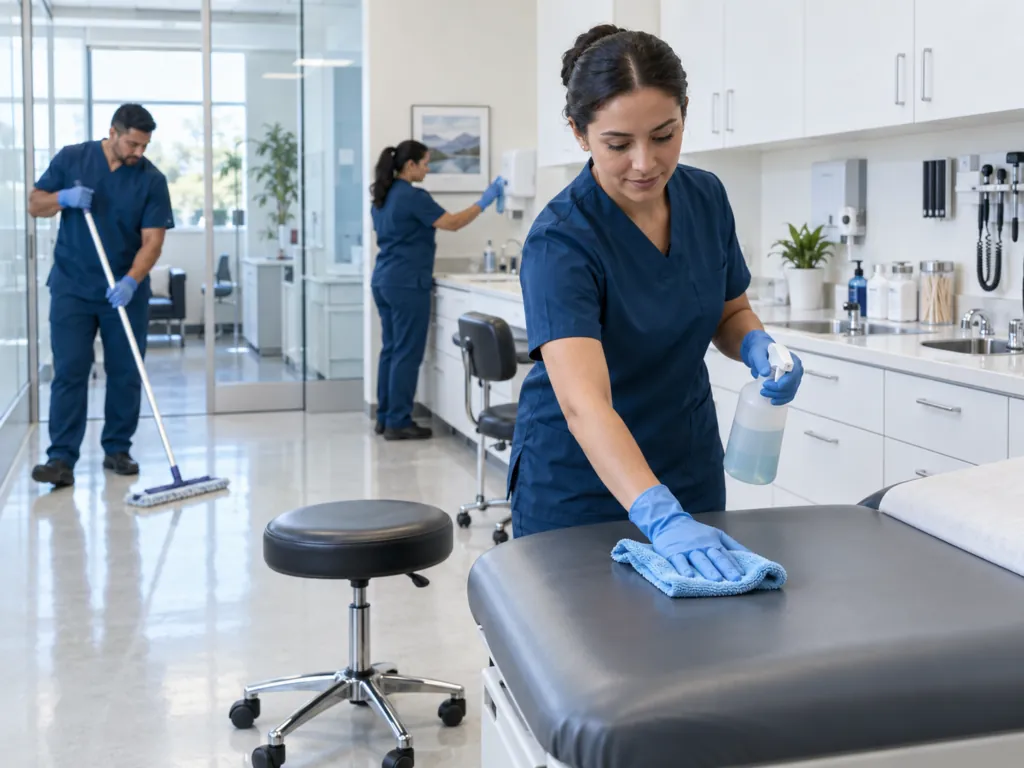
Exam rooms: staff between patients, crew at night
Staff wipe patient-contact surfaces between patients, using the products and steps in the clinic’s policy. The crew does the rest after hours: sinks, counters, switches, floors and waste, as the written scope lists.
If you are changing the plan for flu season, change the written scope first. A crew can only do what the scope names, and a vague line such as “disinfect exam rooms” leaves too much to guess.
What changes in flu season?
- More touch points get a second pass, usually the waiting room and washrooms
- The restock check runs more often, because soap and paper go faster
- Extra products and supplies are stocked early, not on the night they run out
- Wet entrance floors get more attention, since slush and rain track in more grit
- The log gets a closer read, so a missed task shows up the next morning
Our commercial disinfection services can add a scheduled disinfection visit on top of the nightly route. We offer electrostatic disinfection as one option, and we do not make claims about what it kills. Entrances are covered by winter floor care, and our guide on office disinfecting for cold and flu season covers the front-office side.
What a written schedule and log should record
- The space or room, listed by name
- The touch points in that space
- How often each is cleaned or disinfected, and who does it
- The product used and the contact time on its label
- The date, the time and the initials of the person who finished the task
- A line for problems found, such as a broken dispenser or a spill
A sample sheet like this can be posted in each room. Our clinic cleaning protocols guide goes deeper on who does what, sharps and spills.
Who decides products, and when to follow guidance
The clinic does. Disinfectants sold in Canada carry a Drug Identification Number (DIN), and Health Canada publishes the rules a product needs to meet. Ask any provider which products they plan to use and ask for the safety data sheets.
When your regulator or health authority updates its guidance, the clinic updates its policy, and the cleaning scope follows. We are not a source of clinical advice. We follow the scope the clinic writes.
Floors and entrances in a wet flu season
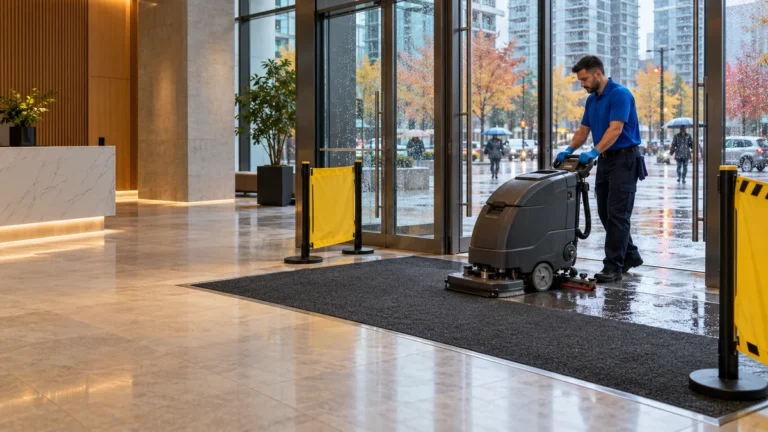
Flu season and wet weather overlap, so the entrance floor matters twice. A wet floor is a slip risk for patients with mobility aids, and grit tracked in from outside ends up on waiting-room carpet.
Ask the crew to check the mat and the first stretch of floor inside the door at the start of every night visit. They should log what they find. Mat and floor care sit in our winter floor care scope.
Frequently asked questions
How often should clinic waiting rooms be disinfected in flu season?
There is no single number. Touch points such as chair arms, door handles and the reception counter are cleaned and disinfected more often than floors. The clinic’s IPAC policy and local health guidance set the schedule. Put the frequency in the written scope.
Does flu season change a clinic cleaning schedule?
Often, yes. Clinics add passes on high-touch surfaces, check washroom supplies more often and review the cleaning log more closely. The change should be written into the scope so the crew knows what to add.
Who cleans exam rooms between patients, the clinic or the cleaner?
Clinic staff handle patient-contact surfaces between patients. The cleaning crew handles the room after hours: floors, sinks, counters, switches and waste. Write the split into the protocol so nothing is missed.
What should a clinic cleaning log record?
The room, the tasks, the date and time, the initials of the person who did them and the product used. Add a line for problems found. A signed log shows the work happened and helps a manager spot a missed task.
Next step
Tell us your opening hours, the number of rooms and the touch points you want on the list. We will draft a scope and send a written quote within 1 business day, after a free site assessment if we need to see the clinic. See health clinic cleaning or get a free quote. The Lower Mainland and Toronto desks can book the site visit.