The Vancouver janitorial bid questions that matter are the same for every bidder: was the building walked before pricing, which common areas does the bid name, how often is each area cleaned, what sits outside the price, whose crew does the work and who you call after signing. Bids only compare once those answers are written down.
By Everest Cleaning. This guide is for property managers and building owners comparing two or three janitorial bids for a commercial or mixed-use building. The questions come from how Everest scopes and quotes building work. They are buyer checks, not a record of a client job.
If a search for janitorial companies Vancouver has left you with several bids, they may not be built the same way. One may list areas room by room, another may give a monthly total with a short task list. The questions below make them comparable before price comes into it.
Was each bid priced from a walk of your building?
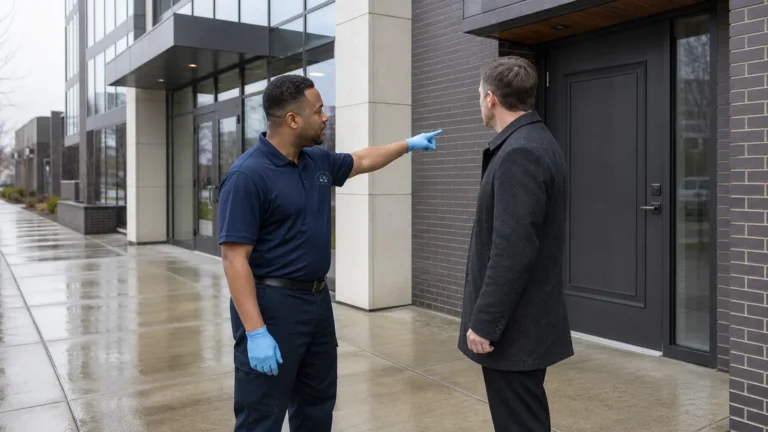
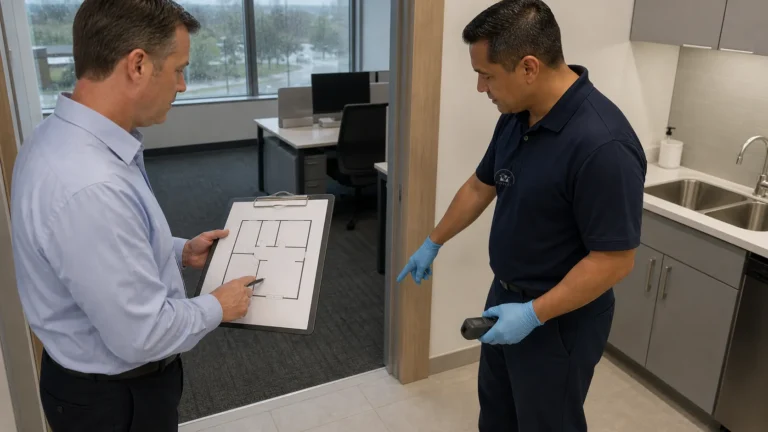
Find out whether someone has walked the building, and who. Everest sends a first written quote from the address, floor count, washroom count and busiest lobby hours, then a supervisor walks the building with the property manager before the plan is approved. Until that walk, any bid's figure is provisional on your floors, stairwells and access.
Write down the name of the person who walked with you on each bid. If they will not supervise the account, ask who will and when you meet them. Note what was settled on the walk, such as which entrance the crew uses and who to call for access. A bid nobody has checked against the parkade landing has not really priced the parkade landing.
Does each bid name the same common areas?
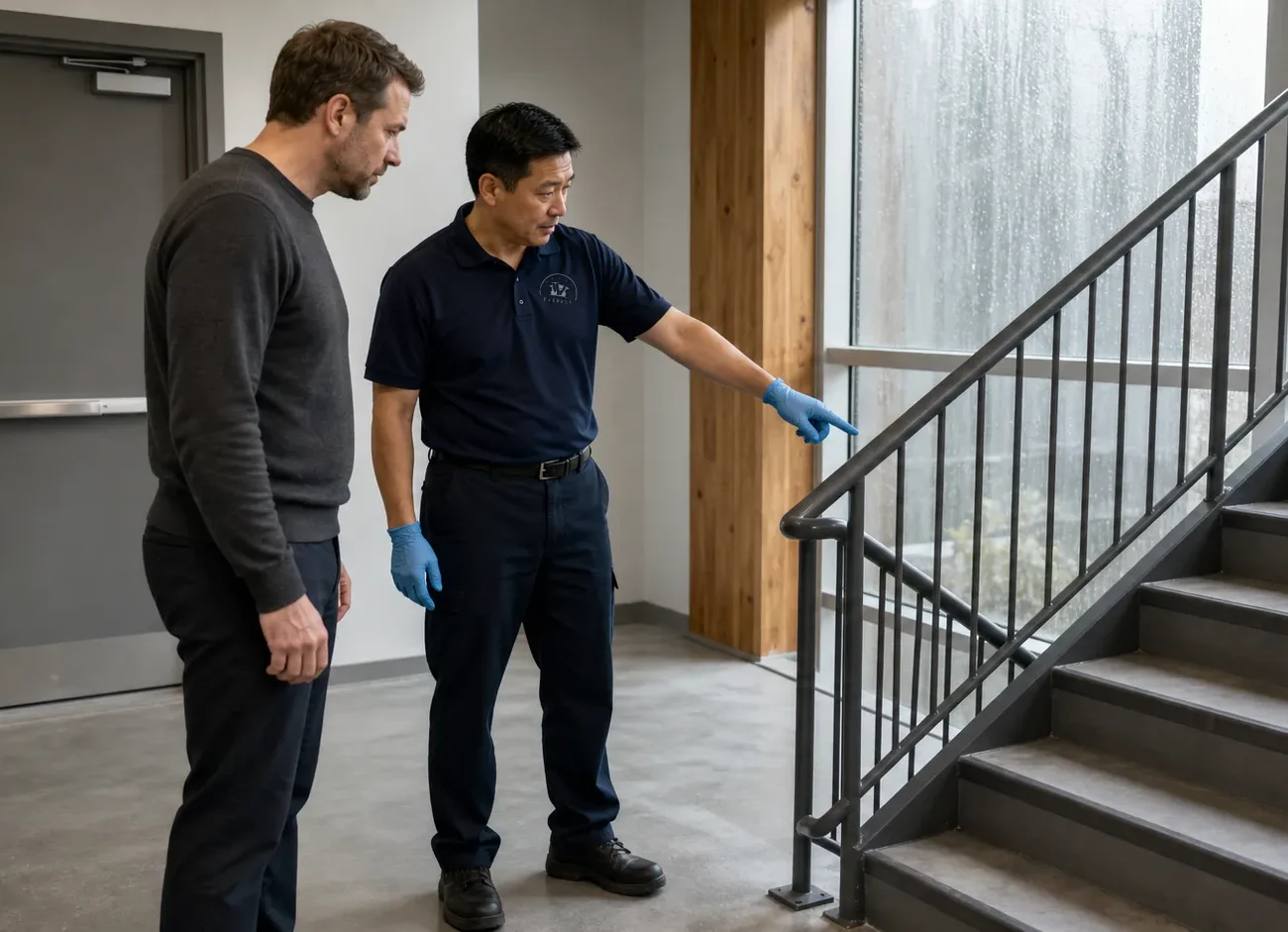
A comparable bid names every area it covers. Everest's common-area list includes lobby glass, directory mats, elevators, corridor landings, stairwells, shared washrooms, the parkade landing and the trash and recycling rooms, and its written quote lists each area by name. Check every bid against your building's own list, not against each other.
Where one bid says “common areas” and another names twelve rooms, ask the first bidder to name theirs. An area that appears on one bid and not another is either excluded or forgotten, and you need to know which. Amenity rooms are easy to miss. Everest says rooms such as a fitness centre can be added, so an unlisted amenity room needs a decision rather than an assumption.
How does each bid set frequency by area?
Each area needs its own frequency, not one visit count for the whole building. Everest's published pattern puts the lobby, elevators, shared washrooms and trash rooms on the daily list, corridor and stairwell floors and glass on the weekly list, and detail work such as baseboards and vents monthly. Foot traffic sets the real schedule.
Two bids with the same monthly total can describe different buildings. If one cleans stairwells daily and another weekly, the price gap may be fair. If both say “daily” with no area named, you cannot tell what you are buying. Ask too whether a day porter covers the lobby and washrooms while the building is open, or whether every visit happens after hours.
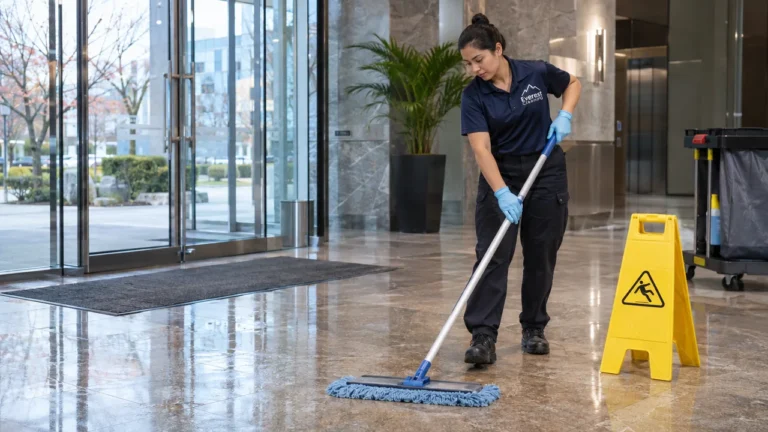
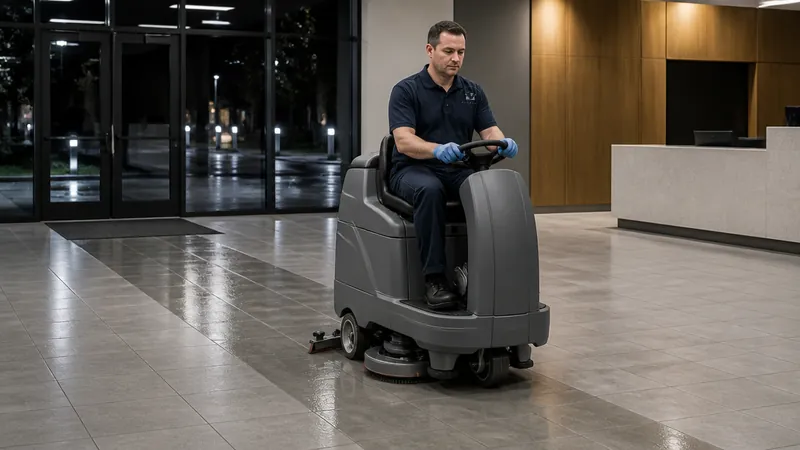
Check, too, whether entrance and lobby floor work changes from October to March, when rain and grit come in through the doors. Everest runs ride-on scrubbers over lobby and stairwell hard floors on the visits you set; the guide to rainy-season entrance care in Vancouver covers the mat and floor questions.
What sits outside each price?
Every bid should say what it does not cover. At Everest, tenant suites stay closed unless a tenant books their own after-hours pass, exterior washing sits on its own quote line, and washroom supplies are restocked only when that is in scope. Ask each bidder the same three questions so the exclusions line up.
A bid can include restocking without saying who buys the paper and soap, so ask. For exterior work, check whether entrances, sidewalks, courtyards or parking areas are included, and on which visits. If the building has tenant suites, confirm that no bid has quietly priced them into the common-area total.
Whose crew does the specialty work?
Ask which tasks the bidder's own crew performs and which go to another company. Everest's own crews handle window and glass cleaning, ride-on scrubber work and exterior washing, so one quote can cover all three. Other bidders may subcontract some of that work, which is fine if the bid says so.
Where a subcontractor is involved, ask for its name and how it is supervised. WorkSafeBC advises getting a clearance letter before and after you receive services from a subcontractor, because hiring one that is behind on premiums can leave you liable for premiums related to that work. The full document list is in the guide to insurance and WorkSafeBC proof to keep on file.
If one bid comes from a franchise operator, compare who signs the contract and who employs the night crew. Everest runs a franchise system and licenses operators in its markets, including Vancouver and the Lower Mainland, so ask us the same question.
Who will you deal with after you sign?
You should have one named contact and a known way to report a missed task. Everest's quote names who to call for access, and its written plan lists each area, how often it is cleaned and the price, approved before the first visit. That plan is also the document you check the work against later.
Find out how each bidder inspects its own work and how you can check it. The commercial cleaning inspection guide shows a walkthrough route you can run against the written scope. If a line is missed on an office floor in the building, the Vancouver missed-clean follow-up covers what the plan should say. Notice periods and renewal dates belong in the agreement; see scope, frequency and exit clauses to settle before you sign.
How do you line up the bids side by side?
Put the same rows against every bid and fill each cell from the bid's own wording. A blank cell is a question for that bidder, not a point in their favour. Compare price only once every row is filled.
| Question | What a complete answer shows | Bid A | Bid B | Bid C |
|---|---|---|---|---|
| Was the building walked? | Who walked it, and the date | |||
| Which areas are named? | Each common area by name, including parkade landing and trash rooms | |||
| How often is each area cleaned? | A frequency against every named area | |||
| What is excluded? | Tenant suites, exterior washing, restocking supplies, amenity rooms | |||
| Whose crew does the work? | Own crew or named subcontractor, per task | |||
| Who is your contact? | One named person, and how misses are reported | |||
| What documents come with it? | Liability certificate and WorkSafeBC clearance letter addressed to you |
Keep the completed sheet with the signed plan. It records what each bidder told you, which helps if a scope question comes up months later.
FAQ
Only once the rows match. A lower total that names fewer areas, cleans stairwells less often or leaves exterior work off is pricing a different job. Compare price after every bid answers the same questions.
They can give a first quote, but treat it as provisional until the building is walked. Everest quotes from the floors, washroom count and busiest lobby hours, then a supervisor walks the building before the written plan with areas, frequency and price is approved.
Not at Everest. Common areas are on the building quote, and a suite is cleaned only when that tenant books an after-hours pass with their own fob and alarm code. Check how each other bidder handles suites.
Everest sends a written quote within 1 business day of receiving the building details. The site assessment is free, and the written plan with areas, frequency and price comes before the first visit.
Request a written plan you can compare
Everest serves buildings across Vancouver from its Lower Mainland service area, and its commercial cleaning in Vancouver page covers the building types it cleans in the city. Bring the address, floor count, washroom count and busiest lobby hours. Request a free estimate to get a written plan you can set beside the other bids.