Industrial cleaning in BC means keeping dust, grease, spills and equipment areas under control on a written schedule. In a factory, warehouse or large commercial building, housekeeping is a safety issue before it is an appearance issue, and an inspector can treat it that way.
This guide is for facility managers and owners. It covers how cleaning ties into WorkSafeBC rules, how often to clean, what to ask a provider, and who handles waste.
Why is cleaning a safety issue in BC industrial buildings?
Because build-up creates hazards. Dust and spilled fluid make slippery floors, and in some settings they are a fire risk. WorkSafeBC’s Occupational Health and Safety Regulation covers housekeeping, safe walking surfaces, hazardous substances and combustible dust.
The requirements depend on what you make, store and handle, so check the current text of the regulation for your workplace. Treat cleaning as part of the safety plan, with a named owner and a schedule, not a task that gets done when there is time.
How often should an industrial facility be cleaned?
As often as dust and residue build up. A site with fine dust or oil mist may need nightly service, while a lighter operation can run on a weekly one. A one-time deep clean looks good for a week and then the build-up starts again.
Write the schedule down, name the areas, and match it to how the building runs. Operations that run around the clock can use 24/7 shift cleaning or a day porter between full cleans. For floors, docks and racking in particular, see our guide to warehouse dock and floor cleaning.
What should you look for in an industrial cleaning provider?
Look for experience with buildings like yours and paperwork you can verify. A crew that has only cleaned offices will not know how to work around forklifts or handle machine grease.
- Work in similar facilities: ask what sites they clean and what equipment they bring.
- Plain reporting: you want to hear about a leak or a damaged floor coating before it becomes your problem.
- A clear quote: ask what is included. A lower number sometimes just means fewer services.
- Paperwork in order: a WorkSafeBC clearance letter, proof of insurance and safety documentation. Ask every provider for these, including us.
Everest is licensed, insured and covered by WorkSafeBC, uses background-checked staff, and sends a written quote within 1 business day. A free site assessment comes before the quote when we need to see the building.
What equipment does industrial cleaning need?
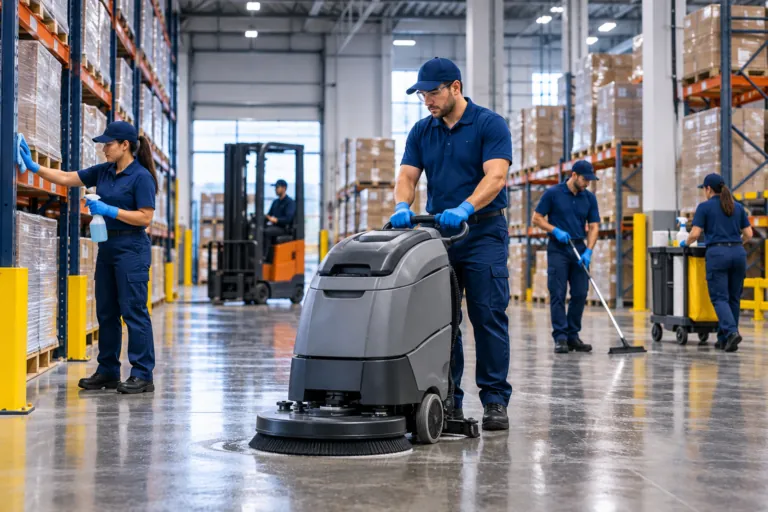
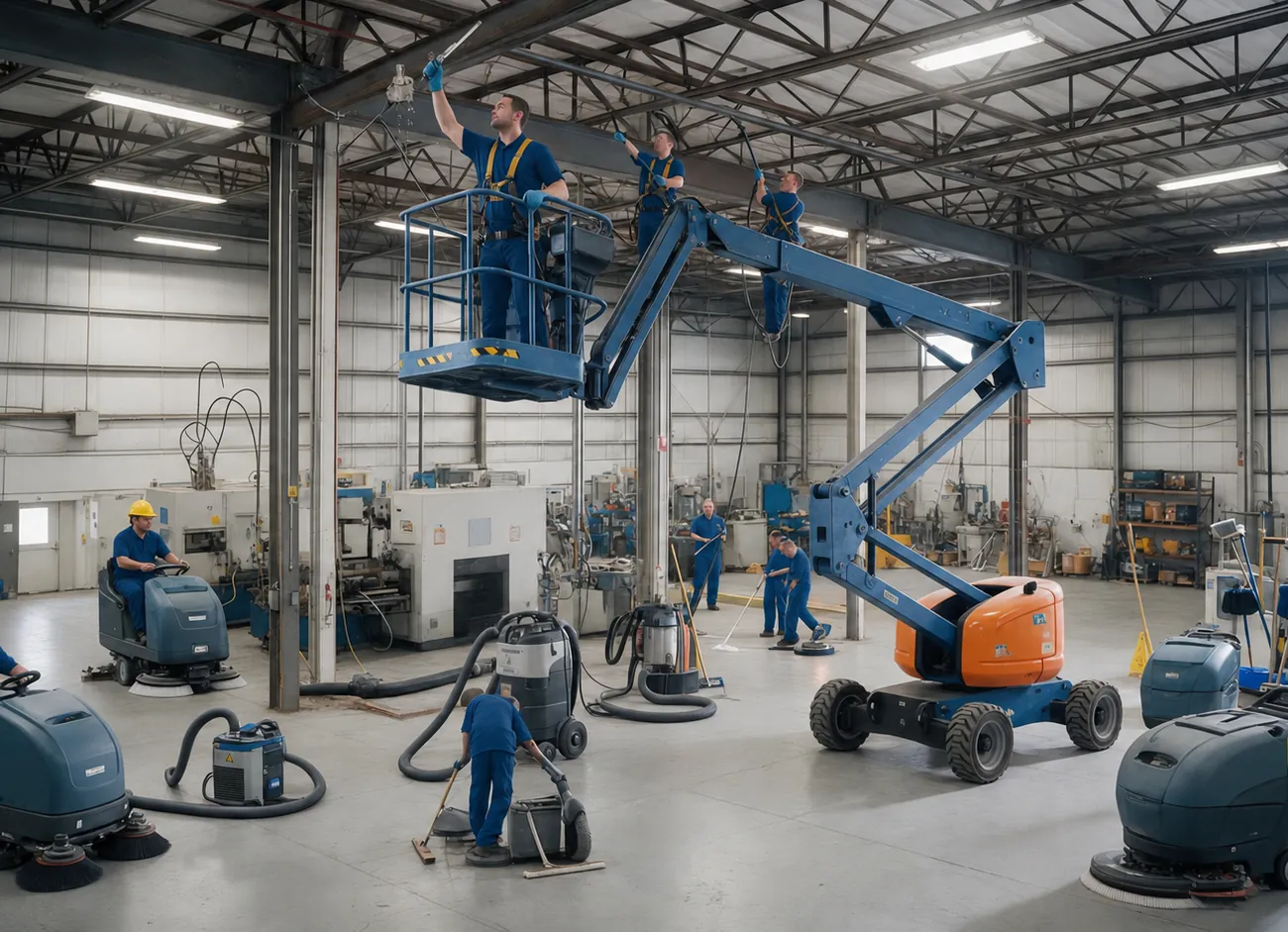
Large floors call for machines. Ride-on scrubbers cover wide aisles and production floors, and HEPA vacuums handle fine dust that a standard vacuum puts back into the air. For high shelving, ductwork and overhead pipes, crews need boom or scissor lifts with fall protection.
Those high spots are where “we clean regularly” and “we still failed the inspection” part ways. Corners behind machinery and the tops of racking collect dust that no one sees from the floor.
What should you know about cleaning products?
Ask for the safety data sheets for anything a vendor brings on site. A provider should be able to tell you what is in its products and where each one is used. Everest uses eco-friendly products where the job allows.
Product choice and waste handling are separate questions. A milder product does not replace proper disposal of what a job produces.
Who handles waste and hazardous materials?
Settle it before the first shift. Industrial sites often generate waste that cannot go in a regular bin, such as used oil and solvent-soaked rags. BC sets handling and disposal rules for hazardous waste under the Environmental Management Act, and some of it must move through a registered hauler.
Ask what the provider handles, what stays with your team, and who is responsible for disposal. Get the answer in writing.
Should you use an in-house crew or a contractor?
An in-house crew works when the building is small and someone owns the schedule. A contractor makes sense when you need machines, lifts, trained staff and cover for absences. Many sites split it: staff handle spills during the shift and a contractor handles the scheduled work.
Checklist before you hire an industrial cleaner
- Has the provider cleaned facilities like yours?
- Can they show a WorkSafeBC clearance letter and proof of insurance?
- What does the quote include, and what does it leave out?
- How do they report leaks, damaged floor coatings and other problems?
- What products do they use, and can they supply safety data sheets?
- Who handles hazardous waste and disposal?
- What is the cleaning schedule, and who writes it down?
Frequently asked questions
What is industrial cleaning?
Cleaning for factories, warehouses and large commercial buildings, where dust, grease, spills and equipment create hazards that ordinary janitorial work is not set up to manage.
How often should an industrial facility be cleaned?
It depends on how fast dust and residue build up. Some sites need nightly cleaning and others weekly. Set the schedule from your building, write it down, and review it when production changes.
Does WorkSafeBC require workplaces to be kept clean?
The Occupational Health and Safety Regulation includes housekeeping and safe-surface requirements, plus rules for hazardous substances and combustible dust. Check the current regulation for your type of workplace.
Do industrial cleaners handle hazardous waste?
Some do and some do not. Ask before you sign, and get in writing who is responsible for handling and disposal.
Does Everest clean industrial buildings in BC?
Yes. We serve Vancouver, the Lower Mainland, the Fraser Valley and Vancouver Island. Tell us the building type, floor area and shift pattern, and we will quote within 1 business day.
Book a site assessment
If your cleaning protocols have not been reviewed lately, start with a walkthrough before something gets flagged. Get a free quote and we will assess the building with you. You can also see our warehouse cleaning services, our commercial cleaning in Vancouver and across the Lower Mainland, or read how to choose a commercial cleaning company.