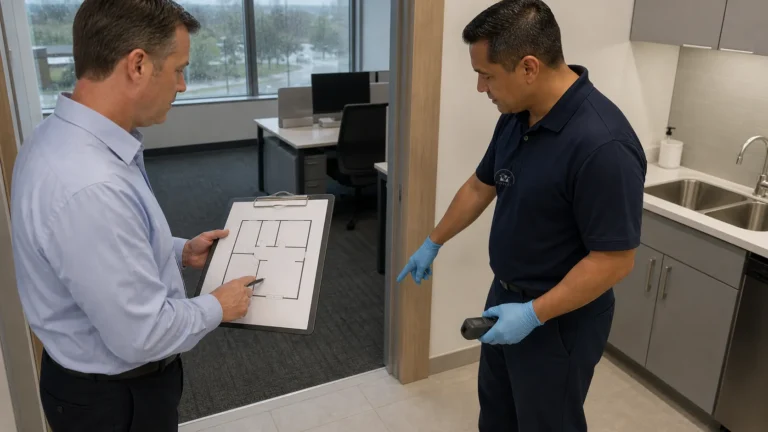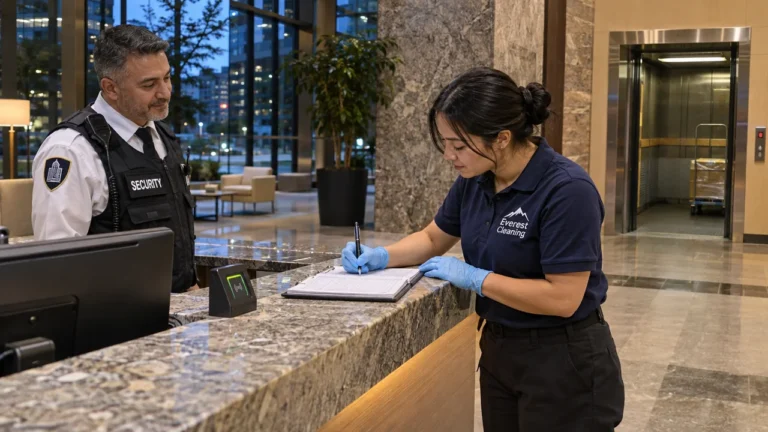

The benefits of a clean office are practical: fewer germs on shared surfaces, fewer complaints about washrooms and kitchens, less dust, and a better first impression for visitors. Cleaning will not fix a poor workflow, but it removes distractions that wear people down.
This guide is for business owners and office managers. It covers the health benefits, what a clean office does for focus and retention, and what a good cleaning schedule looks like.
What are the health benefits of a clean office environment?
The main benefit is less contact with germs on shared surfaces. Door handles, light switches, keyboards, kitchen counters and washroom fixtures are touched by many people each day. Regular cleaning and disinfecting of those points limits how far a cold or stomach bug travels through a team.
Dust matters too. Vacuuming with a HEPA filter pulls fine dust and allergens out of carpet and soft surfaces instead of returning them to the air. Staff with allergies or asthma tend to notice the difference first. For the air side of the story, see our guide to commercial cleaning and indoor air quality.
We can’t promise a specific drop in sick days, and any provider that does should show the source. What cleaning does is remove the obvious routes for germs and allergens, and that is a reasonable thing to pay for.
How does a clean office affect productivity?
It removes small, repeated distractions. Overflowing bins, a sticky kitchen counter, a washroom out of paper and dust on desks all pull attention for a moment. Across a team and a week, those moments add up.
Clutter has the same effect. A tidy desk takes less time to work at and less time to search. Cleaners can wipe and vacuum around a clear desk, which is one reason clean-desk habits and a cleaning contract work well together.
Timing matters as well. Evening or overnight cleaning means no vacuum noise or wet floors during the working day. Our office cleaning runs after staff leave, on a set rotation.
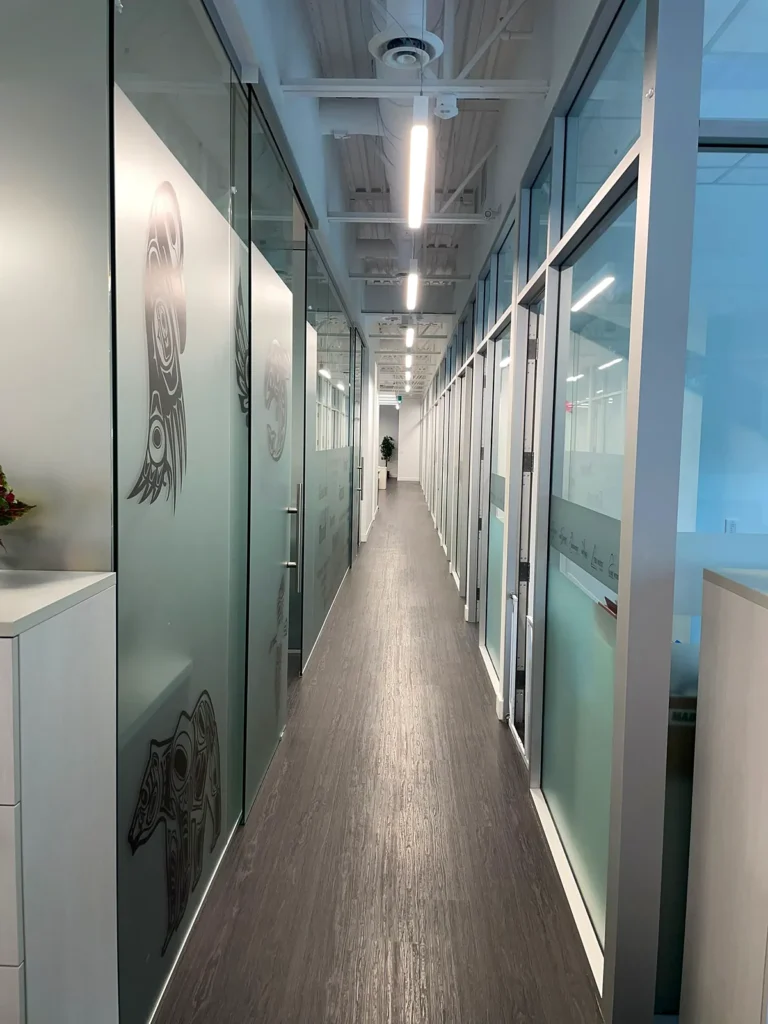
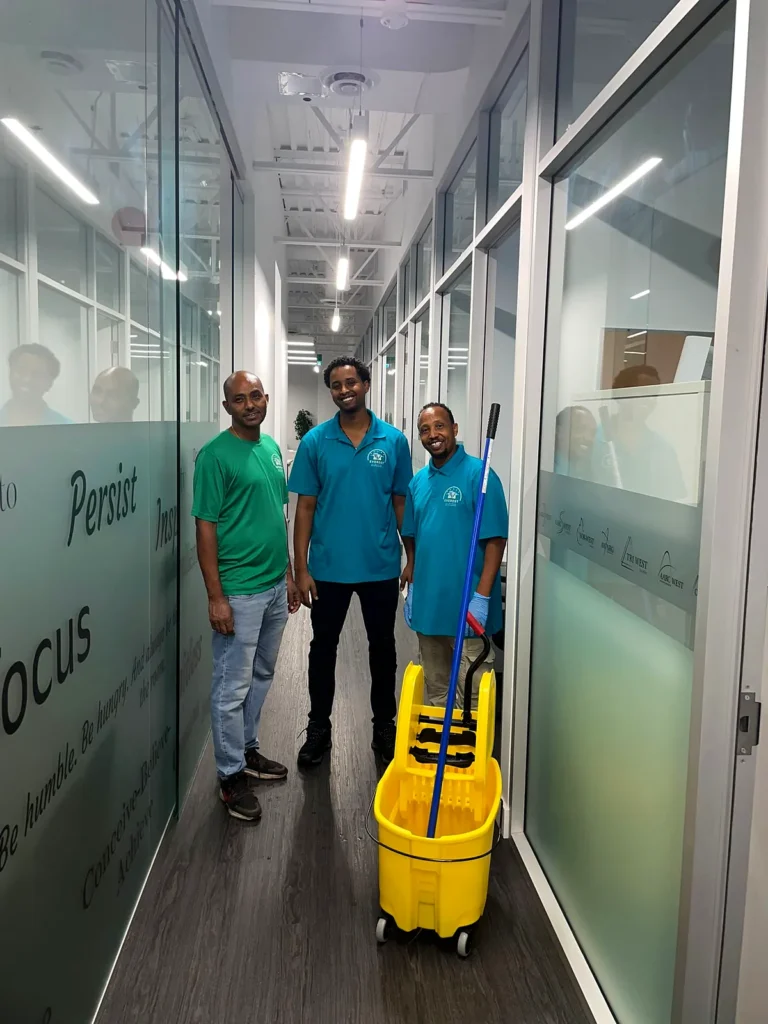
Does a clean office help keep employees?
It helps, in a quiet way. Washrooms and kitchens are the two rooms people judge a workplace by, and they notice when those rooms slip. A clean, stocked washroom says the employer pays attention. A dirty one gets mentioned in exit interviews.
We have no retention figure to quote. The sensible reading is that cleanliness is one of the basics staff expect, and a lapse costs goodwill that is hard to win back.
What does a good office cleaning schedule look like?
A good schedule is written down, with tasks assigned to a frequency. Nightly work covers the rooms that get used: washrooms, kitchens, floors, bins and reception. Weekly or monthly work covers what builds up slowly, such as interior glass, high dusting and carpet extraction.
- Nightly: washrooms, kitchen and break room, vacuuming, bins, reception and entrance.
- Weekly: glass partitions, desks on request, and a detail pass on high-touch points.
- Monthly or quarterly: carpet cleaning, floor care and high-level dusting.
For frequency by office size and use, read how often an office should be cleaned. The nightly list is in our commercial cleaning checklist. Costs are covered in what affects an office cleaning quote.
What can staff do between cleaning visits?
A few habits make the cleaners’ time go further and keep the office presentable day to day.
- Clear desks before leaving so surfaces can be wiped.
- Wipe up kitchen spills and take food waste out the same day.
- Report empty dispensers and broken fixtures to the office manager.
- Keep a log or shared channel where staff can flag a cleaning issue.
How do you pick an office cleaner?
Ask for a written scope, a schedule and a quote that lists what is included. Check licensing, insurance and WorkSafeBC coverage. Our guide on how to choose a commercial cleaning company has the full list of questions. If you are in Vancouver, office cleaning in Vancouver covers local schedules and providers.
Frequently asked questions
What are the benefits of a clean office?
Fewer germs on shared surfaces, less dust and allergen build-up, fewer distractions, and a better first impression for clients. Clean washrooms and kitchens also affect how staff feel about the workplace.
Does a clean office reduce sick days?
Cleaning high-touch surfaces and washrooms limits how easily illness spreads, which can help. We do not promise a specific reduction, because sick days also depend on ventilation, staffing and the time of year.
How often should office washrooms be cleaned?
Daily for most offices, and more often for busy sites. Restocking soap and paper should happen on every visit.
Is it better to clean an office at night?
Usually yes. Evening or overnight work avoids noise, wet floors and blocked corridors during the day. Day porter service can cover washrooms and kitchens in the middle of the day if needed.
How soon can I get an office cleaning quote?
We send a written quote within 1 business day. If we need to see the space first, we book a free site assessment and quote after it.
Next step
Tell us the floor area, the number of washrooms and the hours the office is empty, and we will price a schedule that fits. Get a free quote or see our office cleaning service.