Commercial cleaning and indoor air quality are linked through the dust, tracked-in dirt and moisture that build up on floors, carpet and ledges. Cleaning does not replace ventilation or HVAC maintenance. It is the part of an indoor air quality (IAQ) plan that deals with what lands on surfaces.
HVAC usually gets all the attention in IAQ talk. Ventilation, filters and outdoor-air supply do matter, but they are half the story. Dust settles on ledges, shoes carry grit through the front door, carpet holds fine particles, and cleaning products add their own compounds to the air. Below: where cleaning fits, where it stops, and what to write into your scope.
If you are reviewing a recurring program, our office cleaning service covers scheduled floor care, dusting, washrooms and kitchenettes around building occupancy.
How are cleaning and indoor air quality connected?
IAQ depends on the building envelope, outdoor air, HVAC equipment, furnishings, moisture, occupancy and daily activity. Housekeeping is one of those daily activities, and it can help or hurt.
Foot traffic and dry dusting stir up dust left on floors, carpet and ledges. Moisture nobody notices turns into bigger building problems. Cleaning chemicals add odours and volatile compounds when crews choose them poorly or use them the wrong way.
Health Canada’s guidance on indoor air quality in office buildings lists housekeeping among the operating practices that support better air. It points to preventing dust build-up, damp or wet cleaning where appropriate, lower-emission products and HEPA-filter vacuums where possible. Facility managers building a wider program can read the full Health Canada guidance on improving indoor air quality in office buildings.
Dust control depends on the cleaning method
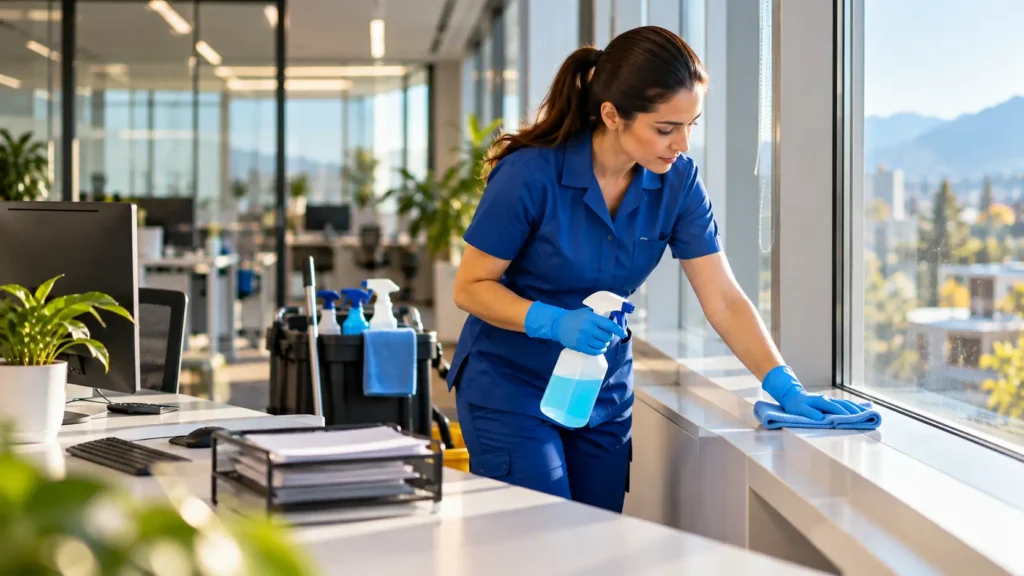
A desk can look clean while fine dust sits in corners, carpet fibres and the ledges a fast nightly pass skips. The method decides whether the crew removes that dust or moves it around.
Dry sweeping and hard dry dusting lift settled particles back into the room. Damp wiping and microfibre systems capture them instead. A practical scope names the surfaces that get routine dusting:
- Desks and other accessible horizontal surfaces
- Window ledges and partition tops
- Baseboards
- Reception counters
- Meeting-room furniture
- Hard floors and carpeted traffic lanes
Dust also collects above eye level: high ledges, door frames, accessible grilles, light fixtures that are safe to reach, exposed pipes and beams. Those jobs do not belong on every nightly visit. Schedule them as periodic tasks in the cleaning plan, using lifts and fall protection where the height calls for it. Our high-level dusting service works that way.
Frequency should match the building. An office beside a busy road, a lobby with constant visitors and a quiet professional suite need different schedules.
Why HEPA-filter vacuuming matters
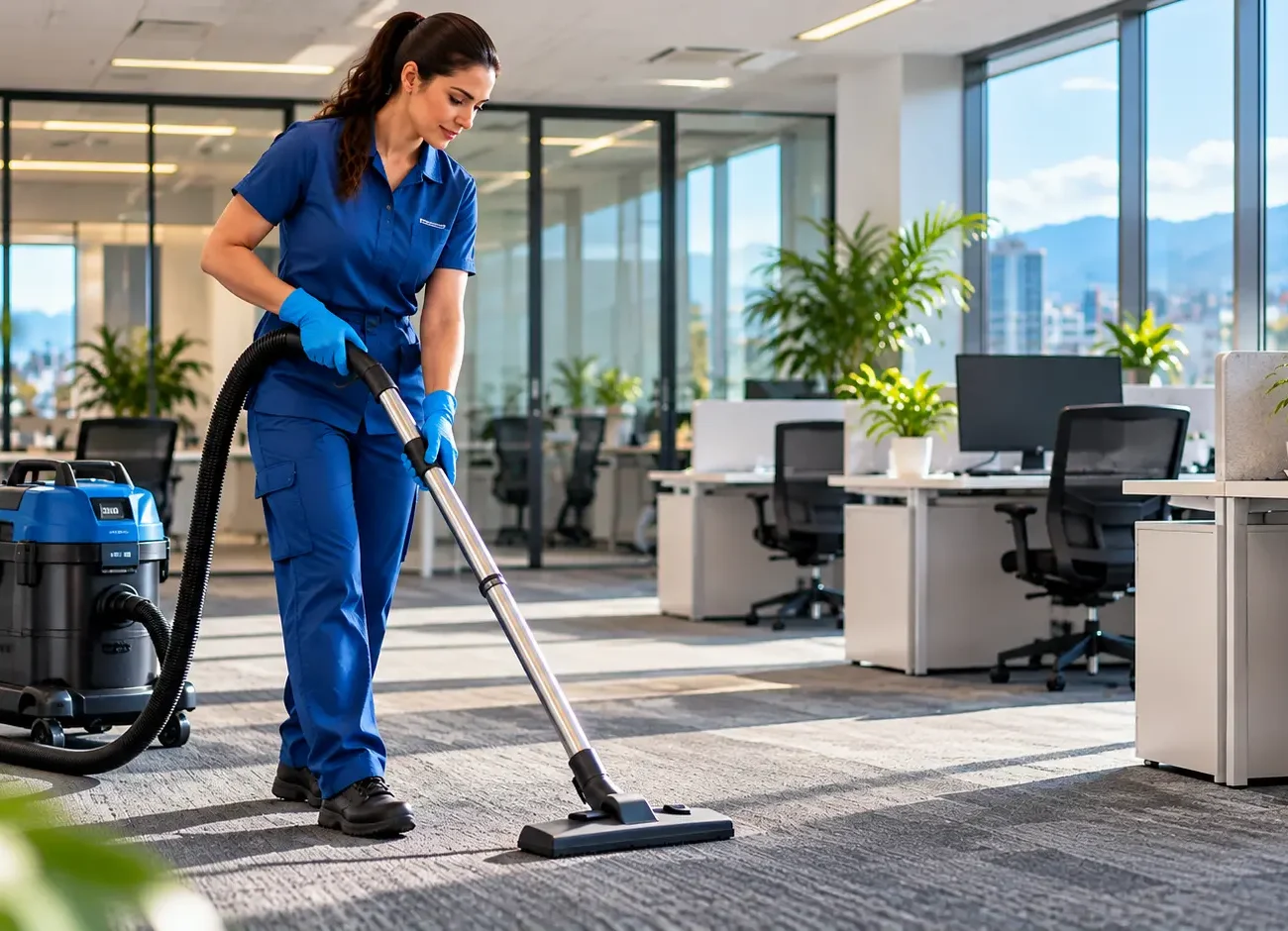
Vacuuming is one of the main recurring tasks in carpeted buildings, and the equipment matters as much as the schedule. Health Canada recommends vacuums with high-efficiency particulate air (HEPA) filtration where possible. The idea is simple: collect fine particles without letting much of them escape back into the occupied space.
It pays off most in carpeted offices, meeting rooms, reception areas, corridors, elevator landings and entrance zones. Everest uses HEPA vacuums alongside ride-on scrubbers on larger floors.
The machine needs care too. A good filter does little if the bag is overfull or the filter is overdue. Contractors do not all run the same equipment, so put your vacuum requirements in the written scope instead of assuming.
Carpet holds more than visible dirt
Commercial carpet takes thousands of steps, especially at entrances, in corridors and in shared spaces. Dust and grit work down into the pile, where surface vacuuming eventually stops being enough. Most carpet programs run on two levels.
Routine vacuuming
The recurring task. It removes loose soil before it becomes embedded.
Periodic carpet extraction
The deeper clean for traffic lanes, entrances and other high-use areas. Carpet needs time to dry before heavy occupancy returns, so crews often book extraction after the building closes.
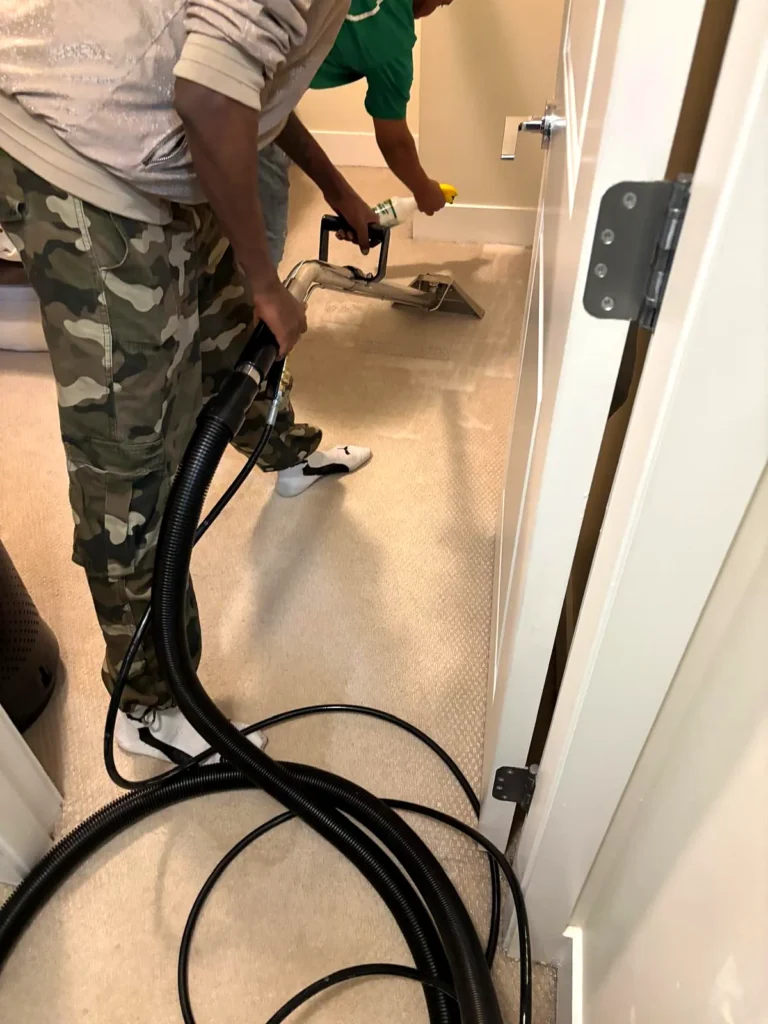
Our commercial carpet cleaning service covers offices, corridors and other carpeted areas, including close-of-day work where drying time has to fit between shifts.
Cleaning products are part of the indoor environment
A stronger smell does not mean a cleaner building. Heavily fragranced products, unnecessary aerosols and unsuitable chemicals can all affect the air in an occupied space. Health Canada recommends considering lower-emission products and following the manufacturer’s instructions.
Four questions are worth asking your cleaning provider:
- Which products does the crew use for routine cleaning?
- Do crews dilute them exactly as the label says?
- Does this task really need a spray?
- Can strong-smelling jobs be scheduled away from occupied hours?
You should also be able to get Safety Data Sheets on request. The aim is not to label products good or bad. It is to pick the right one for the job and use it correctly.
Entrances are part of the dust-control plan
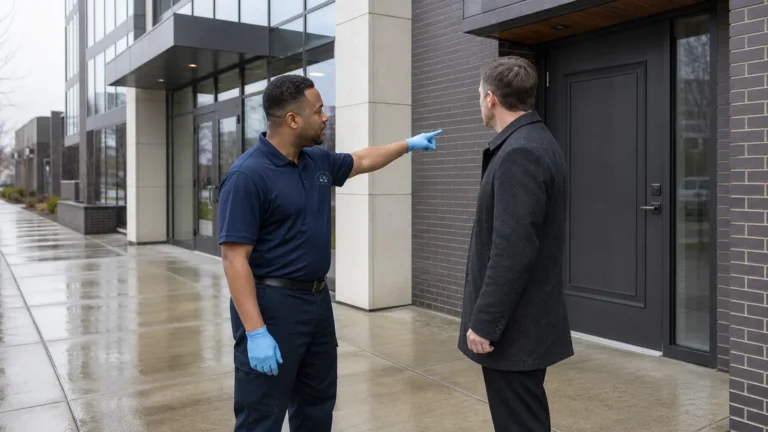
A lot of dirt walks in the front door. Shoes bring in soil, road dust, pollen, moisture and, through a Canadian winter, salt and slush. Once that material gets past the entrance, foot traffic spreads it through the building.
A well-kept entrance cuts the work further in, because the crew has less to chase down corridors later. The plan should cover:
- Entrance mats and vestibules
- Floor edges around the mats
- Water and snow from exterior doors
- Vacuuming or extraction of saturated mats
- Extra floor attention in bad weather
Health Canada’s office guidance recommends keeping entryways clear of water and snow, and keeping mats clean and dry so less moisture and debris enters the building. On the coast, the same problem arrives with rain; see rainy-season office cleaning in Vancouver. For snow country, winter floor care for commercial buildings covers mats and salt.
Report moisture problems instead of ignoring them
Cleaners are often the first people in a building after staff go home, so they are well placed to spot trouble that would otherwise sit overnight:
- Water pooling near an entrance
- A recurring leak under a sink
- Damp carpet
- Ceiling stains
- Constant condensation
- A musty smell that keeps coming back
Health Canada’s guidance also suggests inspecting buildings after heavy rain or rapid snowmelt, which matches what crews see on the floor.
Spotting a problem is different from fixing it. Do not expect a cleaning contractor to diagnose or remediate a moisture or mould issue. Larger or repeated problems belong with building maintenance, an occupational hygienist, an HVAC professional or another qualified specialist. What your scope needs is a clear process: who reports the issue, who receives the report, and what happens next.
Cleaning and HVAC maintenance are different jobs
Commercial cleaning looks after the occupied space: floors, carpet, furnishings, washrooms, kitchens, entrances and accessible surfaces. HVAC maintenance looks after the systems that move, condition and filter air.
A clean floor cannot make up for a poorly performing ventilation system, and a new HVAC filter will not remove dust sitting on desks and carpet. Health Canada recommends preventive ventilation maintenance, appropriate filtration, and checking that ventilation still suits how the building is used.
Everest does clean air ducts and HVAC vents, but that is a separate job from nightly cleaning and it goes on its own scope. If you suspect a ventilation fault or get air-quality complaints you cannot explain, call a qualified HVAC or IAQ professional first.
What should a cleaning scope for IAQ include?
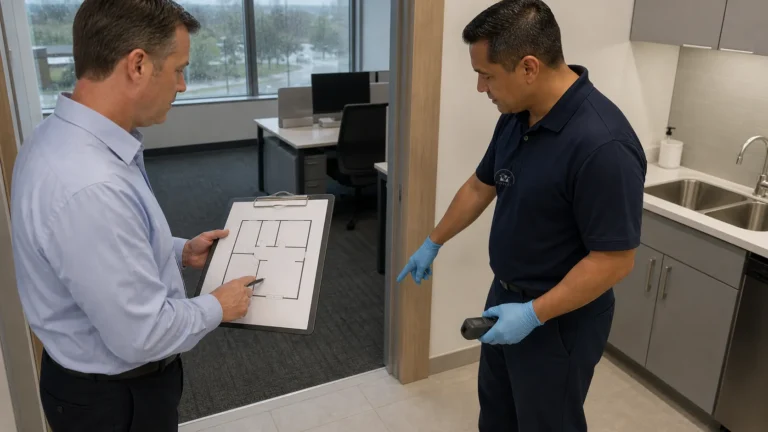
If IAQ is a priority, “keep the office clean” is not enough of an instruction. A useful scope can specify:
- Which areas the crew vacuums, and how often
- Whether the crew must use HEPA-filter vacuums
- Which surfaces get routine damp dusting
- How often high dusting happens
- How the crew cleans and maintains entrance mats
- When carpet extraction happens
- Which cleaning products you approve
- How crews dilute and store chemicals
- Who reports leaks, damp carpet or unusual moisture, and who receives those reports
- How cleaning fits around occupied hours
That last point deserves a note. After-hours cleaning keeps vacuums away from meetings, lets mopped floors dry with less foot traffic and gives crews clear access to desks and shared spaces. It is not right for every building. Clinics, warehouses and multi-shift sites often split cleaning into several passes, which is what shift cleaning is for.
For offices, a recurring schedule can separate nightly tasks, weekly floor work and periodic detail cleaning, so nothing is squeezed into one visit. Our guide to how often an office should be cleaned gives a starting frequency for each. Put the scope in writing and you can measure the program. Leave it unwritten and the program runs on assumptions.
Frequently asked questions
Can commercial cleaning improve indoor air quality?
It can support an IAQ program by controlling settled dust, dirt, moisture and some contaminant sources. It does not replace ventilation, filtration or HVAC maintenance, because air quality depends on several systems and practices working together.
Should commercial vacuums have HEPA filters?
Health Canada recommends HEPA-filter vacuums where possible as part of housekeeping in office buildings. You still have to maintain the equipment and replace bags and filters when needed.
How often should an office be vacuumed?
There is no single answer. Busy entrances and corridors need far more attention than private offices or lightly used meeting rooms. Base the schedule on occupancy, floor type, weather and how much soil enters the building.
Does carpet cause poor indoor air quality?
Not automatically. Carpet does collect dust and tracked-in material, though. Regular vacuuming and scheduled extraction keep that build-up under control.
Should cleaners handle mould?
Routine cleaners can and should report signs of moisture or suspected mould. Significant or recurring contamination needs trained personnel or a qualified remediation professional, and someone has to find and fix the source of the moisture.
For a frequency plan by area, read how often a clinic should be disinfected during flu season.
Build the cleaning plan around your building
We write schedules around occupancy, floor types, entrances and carpeted areas for facilities in the Lower Mainland, Winnipeg, Kitchener–Guelph–Hamilton, Ottawa, Toronto and Calgary. If you are reviewing your scope, start with the areas where dust, traffic and moisture are hardest to control.
Tell us how your facility operates and we will review your schedule, floor and carpet needs, and the areas that need steadier attention. Quote within 1 business day. Get a free quote, or see carpet cleaning.