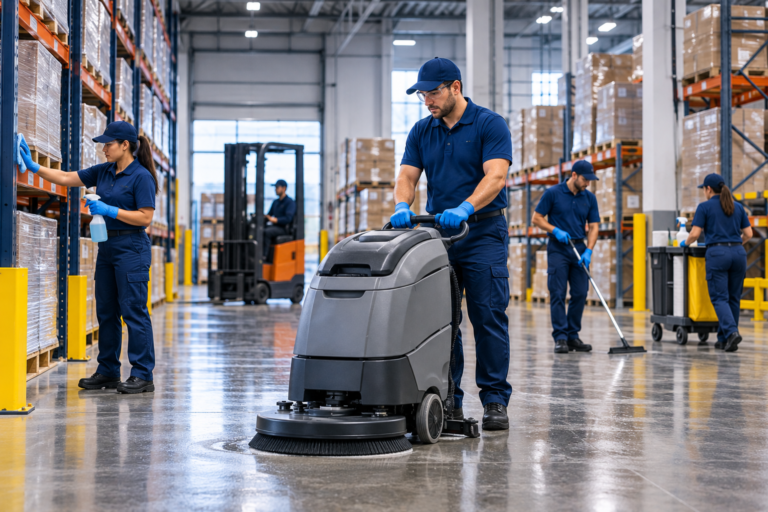
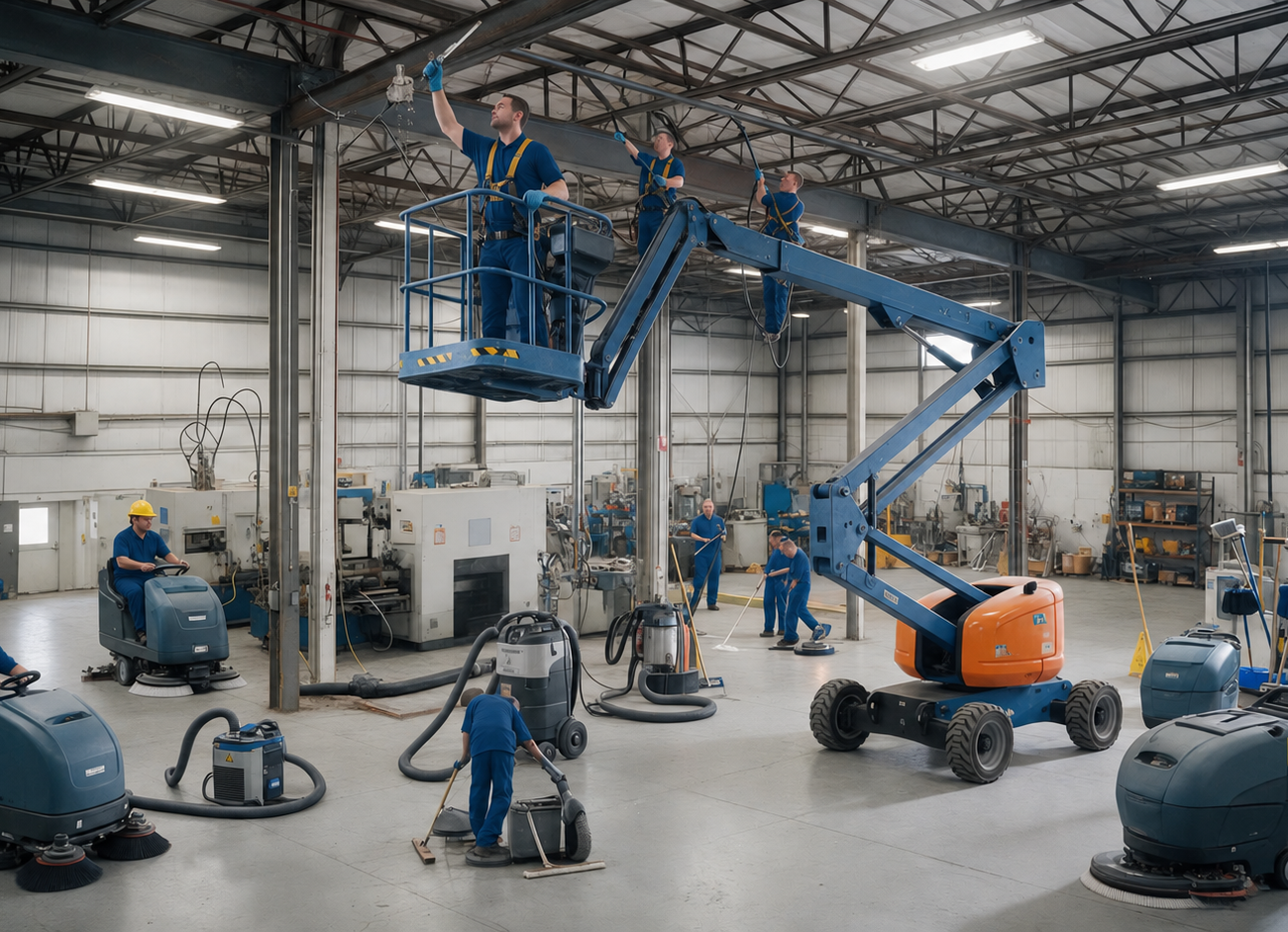
Industrial cleaning in British Columbia isn’t like wiping down an office kitchen. Factories, warehouses and large commercial buildings each come with their own dust, grease and equipment hazards, and getting it wrong can shut down a shift.
This guide is for facility managers and owners who need to know what good industrial cleaning looks like in BC: how it ties into safety, how to pick a provider, how often to clean, and what to check on waste and products before you sign anything.
Cleaning is part of the safety plan
A build-up of dust or spilled fluid isn’t just unsightly. It’s a slip hazard, and in some settings a fire hazard, and it’s the kind of thing an inspector notices. WorkSafeBC’s Occupational Health and Safety Regulation covers housekeeping, safe walking surfaces, hazardous substances and combustible dust, among other things. Check the current text of the regulation for your type of workplace, because the requirements depend on what you make, store and handle.
The practical takeaway is to treat cleaning as part of your safety plan, not a chore squeezed in when there’s time.
What to look for in an industrial cleaning provider
Not every cleaning company is set up for a warehouse floor or a production line. Before you sign a contract, look for:
- Experience with facilities like yours. A provider that has only cleaned offices won’t know how to work safely around forklifts or handle machine grease the way a company with industrial clients will.
- Clear communication. You want a provider that tells you when something’s off, like a leak or a damaged floor coating, before it becomes your problem.
- Transparent pricing. Get quotes from a few providers and ask what’s actually included. A lower number sometimes just means fewer services.
- Paperwork in order. Ask for their WorkSafeBC clearance letter, proof of insurance and their safety documentation. A serious provider will hand these over without fuss.
Why a regular schedule beats a one-time deep clean
A one-time deep clean feels good, but it doesn’t stop the next build-up. Dust and grime accumulate fast in an industrial setting, and letting them pile up can shorten the life of your equipment and push up maintenance costs.
The right rhythm depends on the operation. Some facilities need a weekly service and others need nightly cleaning. What matters is that the schedule is written down and matches how the building actually runs, so cleaning doesn’t depend on somebody finding the time. For a look at how that works in a warehouse, see our guide to warehouse cleaning services.
Cleaning products: know what’s in them
Many BC facilities are moving to lower-toxicity cleaning products, mainly because they’re better for the people working the floor. If your current provider uses harsh chemicals and can’t tell you what’s in them, that’s worth asking about. Any vendor should be able to give you the safety data sheets for what they bring on site.
Keep product choice and waste handling separate in your mind. Choosing a milder product doesn’t replace proper disposal of what a job produces, which is the next section.
Handling waste and hazardous materials
Industrial sites often generate waste that can’t go in a regular bin. Used oil, solvent-soaked rags and other hazardous byproducts have specific handling and disposal rules in BC, which fall under the Environmental Management Act and its hazardous waste regulation. Some of this waste may need to move through a registered hauler.
Ask about this upfront, not after an inspector asks. Find out what your provider handles themselves, what stays with your own team, and who is responsible for disposal. A provider who understands proper handling keeps you out of regulatory trouble and protects the people doing the work.
In-house crew or professional service?
You can put together an in-house crew, but a professional industrial cleaning service brings equipment and training that’s hard to replicate. That includes automated floor scrubbers for large buildings and safe protocols for hazardous materials.
The difference often shows up in places you wouldn’t think to check: ductwork, high shelving, and the corners behind machinery. Skipping those spots is usually how “we clean regularly” and “we still failed the inspection” end up in the same sentence.
A quick checklist before you hire
- Has the provider cleaned facilities like yours?
- Can they show a WorkSafeBC clearance letter and proof of insurance?
- What exactly does the quote include, and what does it leave out?
- How do they report leaks, damaged floor coatings and other problems?
- What products do they use, and can they provide safety data sheets?
- Who handles hazardous waste and disposal?
- What’s the cleaning schedule, and who writes it down?
Frequently asked questions
What is industrial cleaning?
Cleaning for factories, warehouses and large commercial buildings, where dust, grease, spills and equipment create hazards that ordinary janitorial work isn’t set up to manage.
How often should an industrial facility be cleaned?
It depends on the operation. Some sites need nightly cleaning and others weekly. The schedule should follow how quickly dust and residue build up in your building.
Does WorkSafeBC require workplaces to be kept clean?
The Occupational Health and Safety Regulation includes housekeeping and safe-surface requirements, plus rules for hazardous substances and combustible dust. Check the current regulation for your workplace.
Do industrial cleaners handle hazardous waste?
Some do and some don’t. Ask before you sign, and get in writing who is responsible for handling and disposal.
Review your cleaning protocols
If your facility hasn’t had its cleaning protocols reviewed recently, this is a reasonable place to start, before something gets flagged. Book a free consultation and we’ll walk through your facility with you.