
The discovery call was only a few minutes old when someone asked me to rank three cleaning franchise brands from a directory he still had open on his screen.
I asked him to close the tab.
I have this conversation several times a year. Someone searches for a cleaning franchise in Canada, lands on a comparison page full of logos, fees and marketing claims, and wants a simple answer about which one to pick. This article won’t give you a ranking.
Before you fill out any franchise application, ask these instead. What territory are you actually getting? Who owns the customer relationship? What happens after training ends? Who do you call when a supervisor doesn’t show up? What does the agreement say about the buildings you service? Those answers matter more than a logo.
If you’re considering an Everest opportunity, you can also read our franchise opportunities page before you start the conversation.
The short version
| Topic | What to ask to see |
|---|---|
| Territory | The written definition (cities, postal codes or boundaries) and who else can sell into it |
| Customer contracts | Who signs the master service agreement, and what happens to accounts if you leave or sell |
| Training | How many days are classroom and how many are supervised work in real buildings |
| After-hours support | A named contact, an escalation process and a backup staffing model |
| Equipment and supplies | Who buys and owns what, and whether suppliers are mandatory |
| Legal and registrations | The disclosure documents for your province, plus workers’ compensation, insurance and payroll responsibilities |
Understand the territory before the brand
A logo on a van is easy to understand. A territory is harder. Ask whether it’s exclusive, and more importantly, what “exclusive” means in the actual agreement.
- Can another franchisee service an account inside your territory?
- Can a national account team place a customer there?
- What happens when a client operates across several cities?
Don’t settle for “Greater Vancouver” or “Southern Ontario.” Ask to see the territory definition itself, with the cities, postal codes or boundaries and any restrictions.
Also ask who can sell into your territory after you sign:
- Head office
- Another franchise operator
- A national accounts team
- You alone
If you might move or expand into another province later, ask how transfers and expansion are handled. Franchise requirements and operating conditions can vary by province.
Who owns the customer relationship?
This may be the most important question before you join a commercial cleaning franchise. When a building becomes a customer, who holds the contract? Is the client yours, the franchisor’s, or a shared arrangement?
If head office holds the master service agreement while your company does the cleaning, find out what happens when the customer asks for another crew, changes providers, or when you eventually sell or leave.
Ask it in these words: Who owns the customer relationship and service agreement if my franchise ends? Don’t assume the answer. Get it explained, and check that the agreement matches what you were told.
Look beyond the training binder
Most franchise systems mention training. The question is what it actually includes. It could mean online documents and manuals, or classroom instruction, supervised site work and ongoing coaching.
Ask how many days go to learning the business and how much happens inside real commercial facilities. Then ask:
- How is staff scheduling handled?
- How are inspections completed?
- How are customer complaints managed?
- How are cleaning scopes priced?
- How are supervisors trained?
- What help is available after onboarding?
Everest also provides operator and franchise training through Everest Academy. To see how it fits into onboarding, ask during your consultation or email info@everestabm.ca.
Training should prepare you for the work after launch, not just get you to opening day.
What support exists after the first month?
The first few weeks of a new operation involve plenty of contact. The better test is what happens later.
Say a supervisor calls in sick before an important shift. A client can’t get into part of the building. A key or access card fails. A machine stops working. Who do you call?
Ask whether there’s regional operational support, an emergency contact, staffing help or a set escalation process. Ask how replacement staff are handled, too. Does head office keep extra cleaning capacity, or are you expected to build and manage your own backup?
No model is right for everyone. You just need to know which one you’re buying.
Ask about equipment, chemicals and supplies
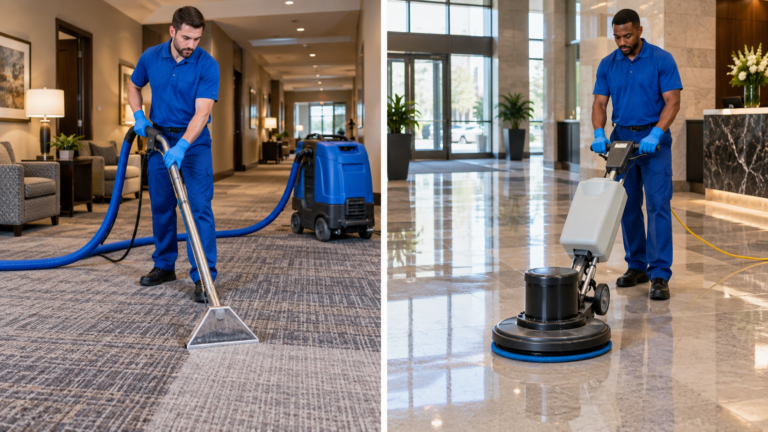
Commercial cleaning takes more than labour. Ask who buys and owns vacuums, autoscrubbers, floor machines, carts and specialty tools, and ask the same about chemicals and consumables.
- Who selects the approved products?
- Who buys them?
- Are suppliers mandatory or optional?
- Who owns the equipment if the franchise ends?
- Are equipment costs in the franchise investment or separate?
These look like small details at the start. They shape your operating costs and how you run the business day to day.
Get the Canadian franchise documents reviewed
A commercial cleaning franchise is a business agreement, not a branding package. Before you sign anything, have the documents reviewed by a qualified Canadian franchise lawyer and an accountant.
Franchise disclosure and legal requirements differ across Canada. Ask which documents apply in the province where you’ll operate and when you’ll receive them. Give yourself enough time to read the agreement properly. An application deadline should never replace independent legal or financial advice.
Also clarify who is responsible for business registration, insurance, workers’ compensation, payroll, tax and employment obligations. Depending on the province, that can involve bodies like WorkSafeBC, WSIB or another provincial workers’ compensation board. For each registration and account, ask whose name it goes under.
Understand the real operating hours
Commercial cleaning often happens outside office hours, but not every account works the same way. Some buildings need daytime porters. Others need evening or overnight crews. A few need weekend or 24/7 coverage.
Ask what a typical week looks like for both the cleaning team and the franchise operator. Find out who handles building access, alarms, keys, security procedures, schedule changes and last-minute staffing gaps.
Running a commercial cleaning franchise isn’t only about winning customers. You also have to build systems that keep those customers serviced consistently.
Ask for Canadian information
At a franchise event, I was once handed a big training binder that looked impressive. Several sections had clearly been adapted from U.S. material, including references that didn’t apply in Canada.
It’s a small story with a practical point: make sure what you’re given applies to the market where you’ll work. Ask for Canadian agreements, Canadian operating information and province-specific guidance. Generic franchise material isn’t enough for a business that runs under Canadian provincial requirements.
13 questions to ask before you apply
Before submitting an application for a cleaning franchise in Canada, make sure you can answer these:
- Is the territory exclusive, and what are its exact boundaries?
- Who can sell commercial cleaning accounts inside that territory?
- Who holds the customer and building contracts?
- What happens to those accounts if I leave or sell the franchise?
- How much practical training is included?
- What support is available after initial onboarding?
- Who do I contact when an operational problem happens after normal office hours?
- Who purchases and owns cleaning equipment?
- How are chemicals and supplies managed?
- What disclosure documents apply in my province?
- Who is responsible for workers’ compensation, insurance, payroll and other registrations?
- How are customer invoices and taxes handled?
- Is Everest Academy included in onboarding or offered separately?
Write the answers down. A franchise opportunity should get clearer the more you ask, not more confusing.
Frequently asked questions
How much does a cleaning franchise cost in Canada?
It varies by brand and by what the investment includes, which is why the equipment and supplies questions matter. Ask each franchisor for a written breakdown of what the initial investment covers and what’s billed separately.
Is a franchise territory really exclusive?
It depends on the agreement. Ask what “exclusive” means in writing: who else can sell into it, and how national accounts are handled.
Do I need a lawyer before signing a cleaning franchise agreement?
Yes. Have a qualified Canadian franchise lawyer and an accountant review the documents before you sign, and don’t let an application deadline rush that.
Does Everest Academy come with the franchise?
Everest Academy provides operator and franchise training. To see how it fits into onboarding, ask during your consultation or email info@everestabm.ca.
I need cleaning for my building, not a franchise. Who do I talk to?
Book a free consultation to talk through your facility and cleaning requirements.
Thinking about an Everest cleaning franchise?
If you’re exploring a commercial cleaning franchise, start with the franchise opportunities page and bring your questions to the consultation.
We’d rather find out early whether the opportunity is a good operational fit than have someone move forward without understanding the territory, responsibilities, support and day-to-day reality of the business.
If you’re a property manager or business owner looking for commercial cleaning, not a franchise, book a free consultation to discuss your facility and your requirements.