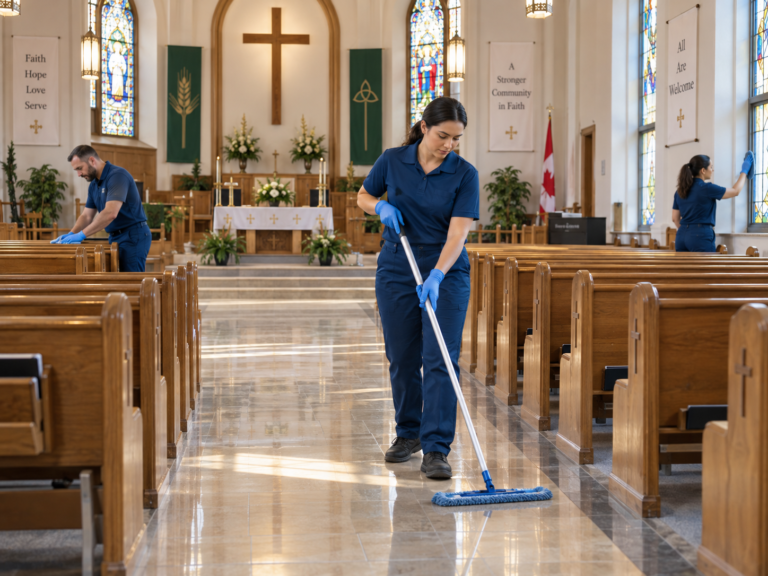
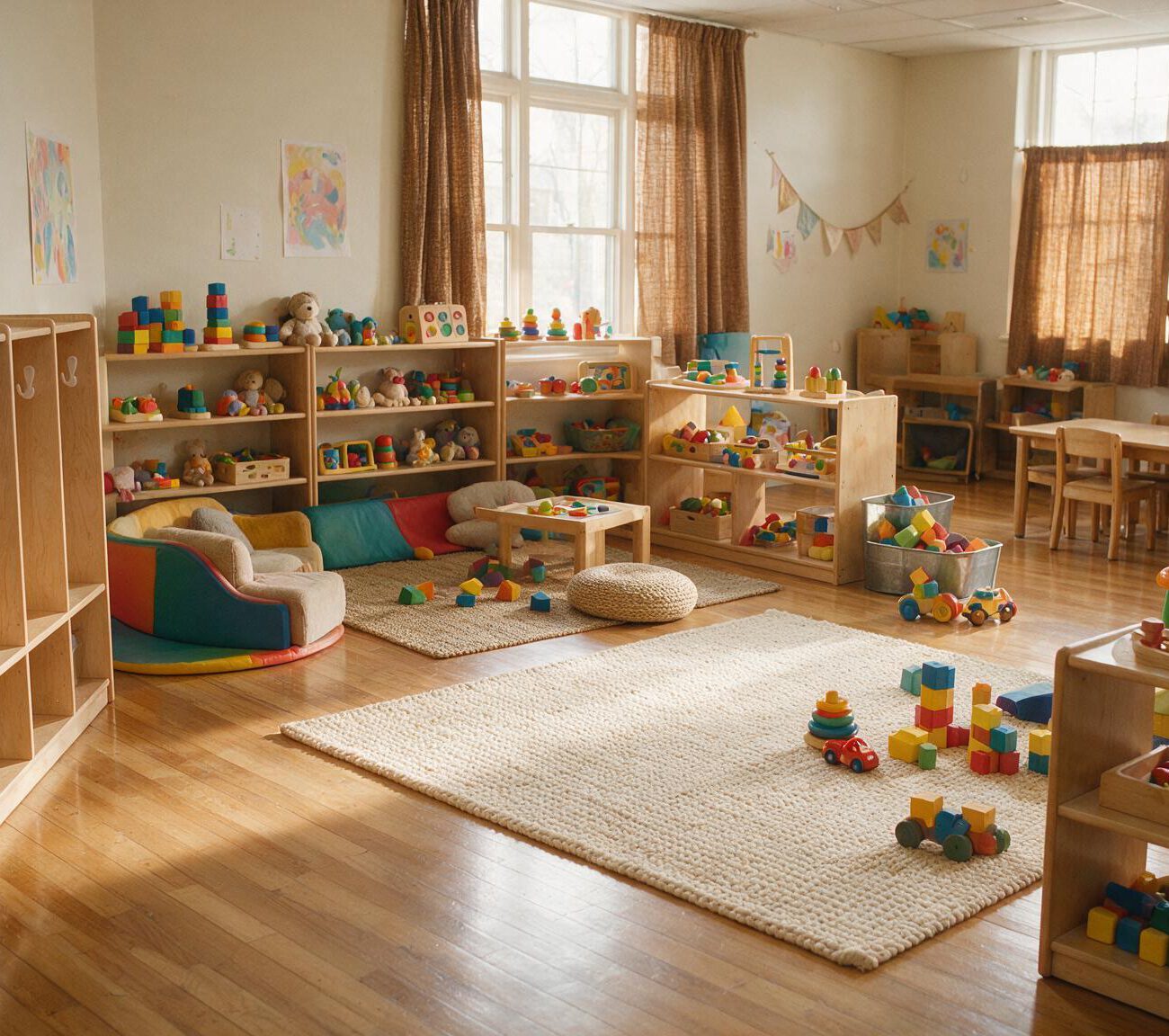
After-hours daycare cleaning is more than a closing checklist. When the last child leaves, there are still toys, cubbies, washrooms, snack areas, staff spaces, floors and a lot of high-touch surfaces to deal with.
Everest provides daycare cleaning services built around how each centre actually runs. Some centres want a full after-hours clean. Others have staff handling toys already and only need help with floors, washrooms, common areas and deeper tasks.
Either way, the plan has to exist before the crew arrives. This guide covers what belongs in it.
What a daycare cleaning scope usually covers
| Area | Usually in the nightly scope | Confirm before service starts |
|---|---|---|
| Toy and play areas | Hard toys, shelves, bins, activity tables | Soft toys, electronics, wooden toys, project shelves |
| Cubbies and entrances | Shelves, hooks, benches, surrounding floors | Stroller parking, shoe storage, parent boards |
| Washrooms | Toilets, sinks, taps, mirrors, floors, bins | Staff washrooms, changing tables, restocking |
| Snack areas and kitchens | Counters, tables, chair rails, sinks, floors | Which fridges and prep areas are included |
| Floors | Vacuum, sweep, mop, spot clean spills | Carpet extraction or strip and wax, booked separately |
| High-touch surfaces | Handles, switches, railings, fixtures | Cleaning frequency |
Start with the rooms that are actually empty
Cleaning begins after pickup, but rooms don’t empty at the same time. If a parent is still collecting a child or staff are finishing up, the crew starts in the rooms that are already clear and comes back later.
Write down four things:
- Which rooms the crew can enter after pickup
- Which areas may still be occupied
- Which doors to use after hours
- Which rooms stay locked or untouched
Toy and play area cleaning
Every daycare organizes materials differently, so toy areas need clear instructions.
Hard toys, shelves, bins, activity tables and play surfaces can be part of the nightly service. Items go back where they came from, so staff don’t walk into a reorganized classroom in the morning. Soft toys, dress-up items, electronics and wooden toys can need different handling, and some may not be in scope at all.
We don’t assume every toy should be washed, soaked, moved or thrown out. If a toy is damaged, missing a piece or looks unsafe, we note it for staff instead of binning it. Shelves set up for projects, sensory activities or tomorrow’s lesson stay as arranged unless you tell us otherwise.
Cubbies, benches and entry areas
Cubbies take more wear than almost anything else in a centre. Cleaning can include shelves, hooks, benches, the floor around them and other frequently touched surfaces. Bags, lunch kits, clothing and personal belongings stay where they are unless staff say otherwise.
The space under benches and cubby units is easy to miss. That’s where cups, crumbs, mittens, dirt and moisture collect. Include it in the scope whenever the furniture can be moved or lifted safely.
Entrances and vestibules add stroller parking, shoe storage and parent boards. Decide in advance which of those the crew handles and which stay with staff.
Daycare washroom cleaning
Washroom cleaning can include child-size toilets, sinks, taps, mirrors, floors, changing-table surfaces, waste bins and high-touch areas. If supplies are provided and reachable, we restock paper products and soap.
Staff washrooms can be part of the same visit, but confirm that up front. Some centres include them in the nightly scope and some handle them separately.
Snack areas and staff kitchens
Many centres have more than one place where food is handled. A children’s snack counter usually means surfaces, tables, chair rails, floors and high-touch points. A staff kitchen adds counters, sinks, fridge handles, microwave surfaces and floors.
List them separately in the plan, because expectations differ. If you have more than one fridge or prep area, name each one. Food, lunches, labelled containers and personal items don’t get removed unless staff ask.
Floors and high-traffic areas
Floors take daily punishment. Children move between classrooms, washrooms, play areas and entrances all day, and dirt, crumbs and spills build up quickly. Depending on the flooring, the service can include vacuuming carpets and rugs, sweeping and mopping hard floors, spot cleaning spills, cleaning under movable benches and furniture, and extra attention to entrances and cubby areas.
Floors go last. Otherwise the crew keeps walking across surfaces they’ve just finished. We work from the back of the centre toward the entrance for the same reason, so dirt from the entry doesn’t get carried into classrooms.
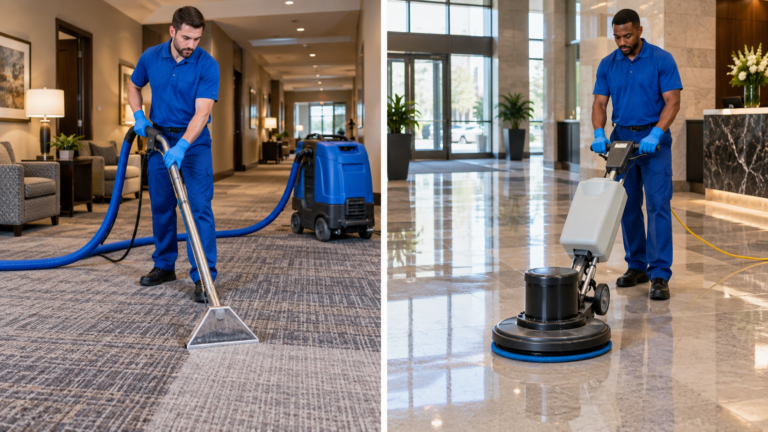
Deep floor work is a different job from nightly cleaning. Carpet extraction and strip and wax are separate services with their own dry times, and centres with both carpet and hard floors need each one named. Our guide to carpet cleaning vs floor waxing explains how to book them.
High-touch surface cleaning
Children touch the same surfaces all day. That includes door handles, light switches, cubby hooks, table edges, chair backs, railings, sink fixtures, fridge handles, classroom counters and shared equipment. How often each one is cleaned can be adjusted for your traffic, room use and hours.
Cleaning, sanitizing and disinfecting are different requests
Routine daycare cleaning is not a disinfection program. Everest doesn’t set up a medical or infection-control program unless that service has been arranged separately. If you need disinfection for an outbreak or a specific requirement, say so when you book, so it lands in the scope as its own item.
Your provincial or territorial child care licensing rules and your local public health guidance come first, and the cleaning plan should follow them. In Canada, hard-surface disinfectants carry a Drug Identification Number (DIN) on the label. Ask which products your cleaner uses in rooms where children eat, play and nap, and ask to see the safety data sheets.
What the crew should leave alone
The easiest way to run a smooth daycare clean is to say what not to touch. That list usually includes:
- Children’s bags and personal belongings
- Classroom projects
- Labelled storage bins
- Staff paperwork
- Medication cabinets and locked cupboards
- Electronics
- Special teaching materials
- Personal food
- Items set up for the next day’s activities
The crew shouldn’t have to guess. Clear instructions protect your classroom setup, and they keep the service consistent from one night to the next.
After-hours scheduling
We clean in evenings, overnight, on weekends and in other scheduled windows based on your hours. Some centres need service every night. Others need it a few times a week, or extra support during busy periods.
A schedule can be built around pickup times, classroom schedules, staff closing routines, weekend programs, special events, high-traffic rooms and seasonal needs such as winter salt and slush at the door.
What to put in your daycare cleaning plan
Before the first night, write down:
- Which rooms are included
- Which rooms stay locked
- Whether toys are in scope
- Which washrooms get serviced
- Whether the staff room and kitchen are included
- How cubbies and benches are handled
- Where supplies are stored
- Whether late pickups are common
- Which items must not be moved
- Who is responsible for outdoor toy bins and stroller areas
The more specific the plan, the more consistent the cleaning.
Frequently asked questions
Do you clean toys?
Hard toys, shelves, bins and play surfaces can be part of the nightly service. Soft toys, electronics and wooden toys need instructions first, and damaged toys are flagged for staff, not thrown away.
Can the crew clean while parents are still picking up children?
The crew starts in rooms that are already empty and returns to the rest later. The plan should say which rooms and doors to use.
Are staff washrooms and kitchens included?
They can be. Confirm it in advance, because some centres include them in the nightly scope and others don’t.
Is daycare cleaning the same as disinfection?
No. Routine cleaning and specialized disinfection are separate services, and disinfection has to be arranged in advance.
Build a plan around your centre
Every daycare runs a little differently. Some need a complete after-hours program, and others already handle part of the close.
We build the plan around your room layout, pickup schedule, staff responsibilities, high-traffic areas and hours. If you’re looking for professional daycare cleaning, book a free consultation. We’ll walk the centre, identify the rooms that need service, and put together a plan that fits.