

The first snowfall rarely catches a building by surprise. The floors are another matter. Salt, grit and slush come in on boots from the first week, and by January the tile at the entrance has a white edge, the carpet inside the door looks grey, and the finish in the main corridor has lost its shine.
Winter floor care for commercial buildings works best when you schedule it before that happens. This guide covers what to do before the first snowfall, what to adjust once winter starts, and what to put in writing with your cleaner. Everest crews work in Winnipeg, Calgary, Toronto, Ottawa, Kitchener–Brantford and Vancouver, so we also note where winter differs from city to city.
Why winter is hard on commercial floors
Road salt and ice-melt products arrive on boots as a damp, gritty film. The grit scratches hard floors every time someone walks across it, the salt dries into a white residue, and the moisture makes entrances slippery. Carpet near the doors soaks up all three.
None of this stays at the entrance. Foot traffic spreads it down corridors, into elevators and across lobbies, which is why a floor that was fine in October can look tired by December. Planning winter floor care early costs less than repairing a floor that has had a season of salt on it.
Before the first snowfall: start at the entrances
Entrances do most of the work in winter, so set them up first. A good setup has three layers:
- Outside the door: a heavy-duty scraper mat that knocks off packed snow and grit
- Just inside: an absorbent mat long enough that people take several steps on it before reaching the floor
- In the vestibule: a second mat, plus boot trays or umbrella stands where people linger
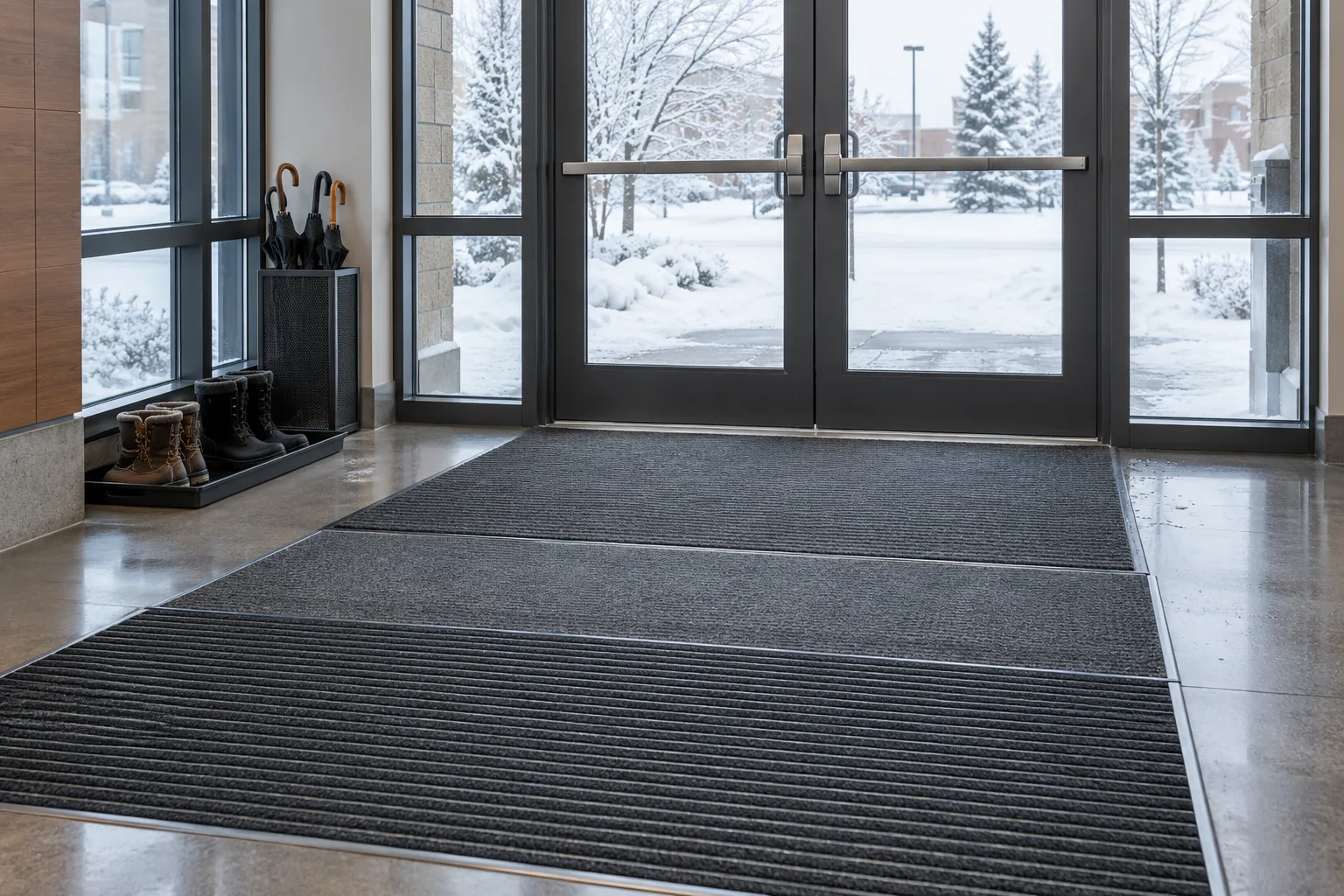
Mats alone won’t hold the line, though. They fill with water and salt within hours on a bad day, so they need to be swapped, vacuumed or extracted on a schedule. The floor around them also needs regular mopping to pull up moisture before it dries into residue.
Walk the entrances with your cleaner before winter starts. Ask which doors people actually use, where the mats end and where the tracked-in slush shows up. That walk tells you more than any checklist.
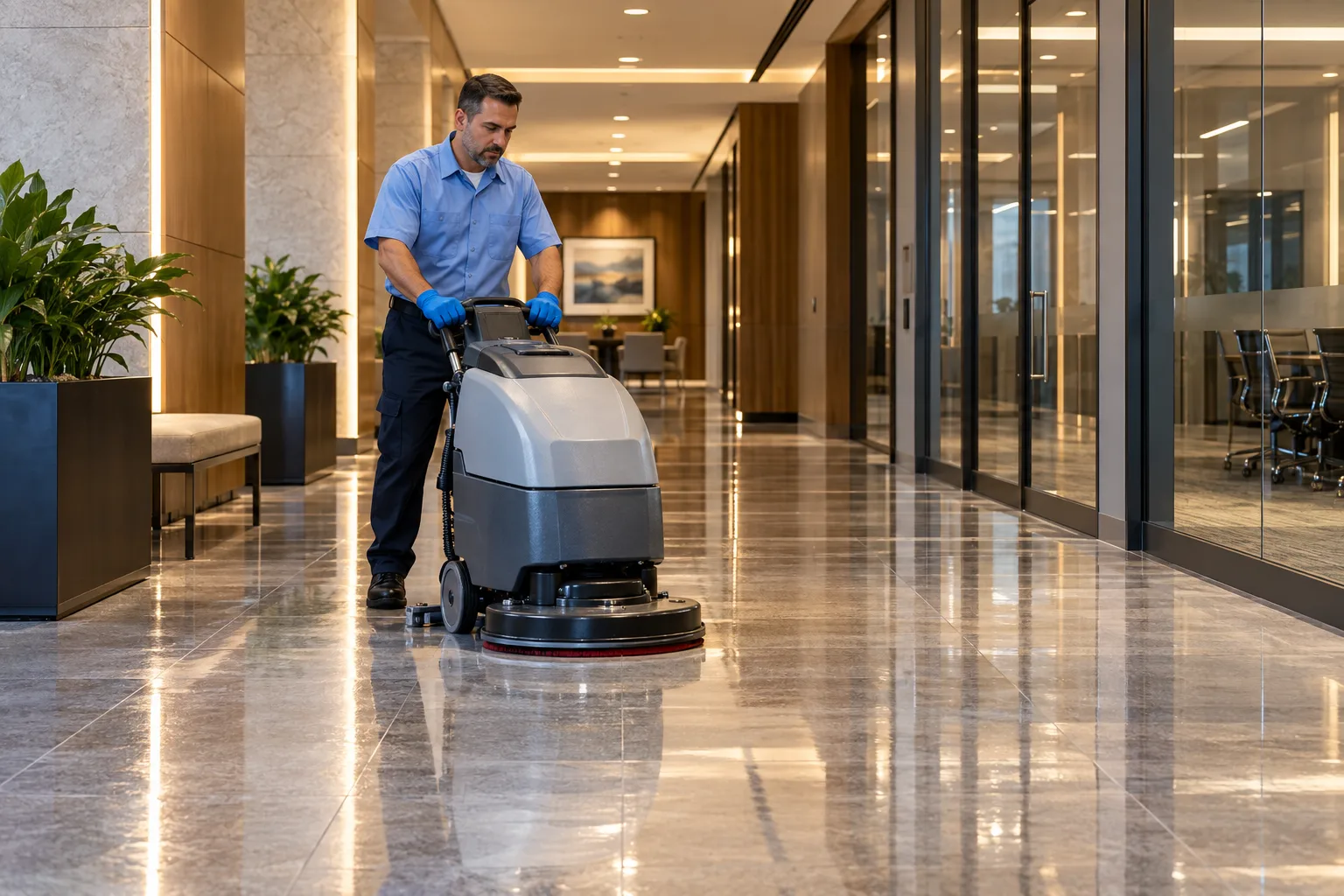
Hard floors: refinish before winter, not during it
A worn floor finish is the first thing salt exposes. Once the protective coat is thin, grit scratches the tile itself, and that damage is much harder to fix than a dull finish.
Strip and wax or scrub and recoat?
If the existing finish is badly worn, discoloured or built up in layers, a full strip and wax gives you a fresh start. If the base finish is still sound, a scrub and recoat adds new coats on top for less time and cost. Our guide to when to strip and wax VCT floors and when to recoat explains how to tell which one you need. If you decide on a full strip, our strip and wax service covers the process.
Plan for cold weather and slow drying
Floor finish dries and cures at a pace set by temperature, humidity and airflow. A building that drops its heat overnight will cure more slowly than one held at a steady temperature, so tell your cleaner what the building does after hours. Follow the finish manufacturer’s cure time before heavy traffic returns.
Timing matters too. Refinishing right before a storm means the first wave of salt walks across a floor that hasn’t fully hardened. Schedule the work early enough that the finish is ready before the weather turns.
Carpet: clean before the salt, extract when it’s needed
Carpet inside the entrance takes the worst of winter. Salt and dirt work down into the fibres, and once they are embedded, ordinary vacuuming won’t lift them.
A pre-winter clean gives you a cleaner starting point. During the season, targeted extraction at the entrance and the first stretch of carpet usually does more than cleaning the whole building. Between extractions, vacuuming and low-moisture cleaning keep the surface from building up.
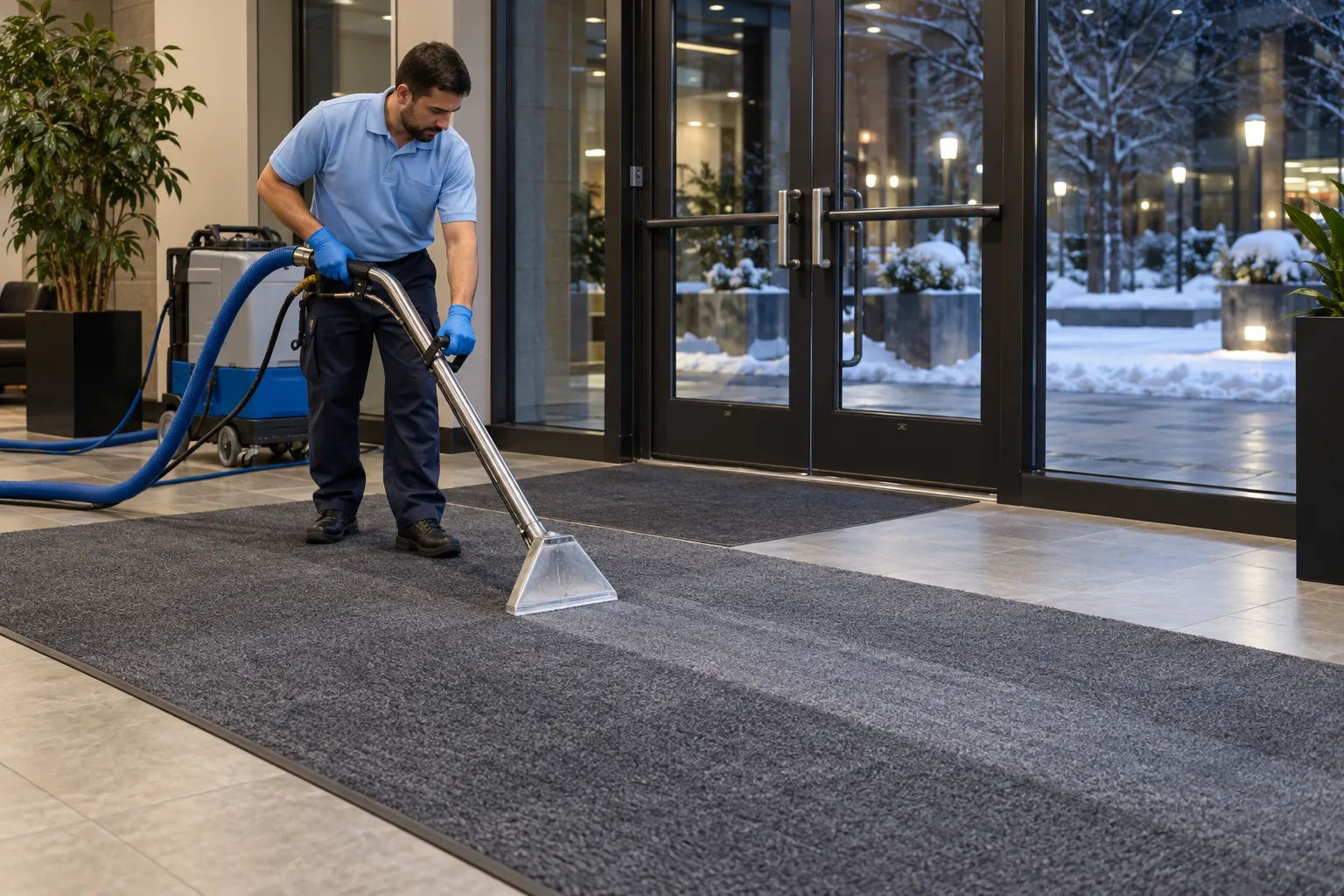
Drying time is the practical limit in winter. Extraction leaves carpet damp, and how fast it dries depends on temperature, humidity and airflow. That is one more reason to book carpet work after hours, with the heat on, rather than squeezing it between shifts. Our guide to carpet cleaning vs floor waxing explains how the two services differ, and our carpet cleaning service page covers what we do on site.
What to adjust once winter starts
Most buildings need a few changes to the regular cleaning scope between November and March, and some increase frequency over those months. The usual ones are:
- An extra entrance clean after heavy snowfall or freezing rain
- More frequent mopping at the doors and in the vestibule
- Mat swaps or extraction when mats are saturated
- Wet-floor signs at the entrances during storms
Wet floors are also a slip risk for staff, visitors and customers. The Canadian Centre for Occupational Health and Safety has practical guidance on preventing slips and trips, including cleaning spills quickly and marking wet areas.
Not sure what your building needs this winter? Book a free consultation, and we’ll walk the entrances and floors with you.
How winter differs by city
Winter looks different across the country, so the plan should too. These are general patterns, and your building may behave differently.
- Winnipeg and Calgary: long cold stretches mean salt and grit sit on floors for weeks, so mats and entrance mopping carry most of the load.
- Toronto, Ottawa and Kitchener–Brantford: repeated thaw and freeze cycles bring slush and meltwater indoors again and again, so entrances may need attention several times during one cold spell.
- Vancouver: rain and wet boots matter more than salt, so moisture control and slip prevention come first.
Buildings with unusual hours need extra planning
Some buildings can’t follow a standard cleaning window. A church may have services on Sunday and funerals midweek, and a daycare can’t start until the last child leaves. In both cases, winter floor care has to fit around the building, not the other way around. Our guides to a church cleaning schedule and after-hours daycare cleaning show how that planning works in practice.
What to put in your winter floor care plan
Before winter starts, write down the following so your cleaner knows exactly what to do:
- Which entrances and vestibules are included
- Where mats sit, who swaps them and how often
- Which floors are hard and which are carpet
- When the next strip and wax, recoat or carpet extraction is due
- What the building temperature is after hours
- How to book an extra clean after a storm
- Who handles exterior walkways and ice melt
Frequently asked questions
When should we start winter floor care?
Start in September or October, before salt and slush become a daily problem. That leaves time to refinish floors, clean carpet and set up mats before the first storm.
Can entrance mats replace regular floor cleaning?
No. Mats catch most of the moisture and grit, but they fill up fast and need regular care. The floors around them still need mopping or vacuuming throughout winter.
Is it safe to strip and wax in winter?
Yes, if you plan for cold. Finish dries more slowly when the building is cool or poorly ventilated, so tell your cleaner what the building temperature is after hours and allow the full cure time before heavy traffic returns.
Should we clean carpet in winter?
Often, yes, especially near the entrances. Plan the work after hours with the heat on so the carpet has time to dry, and focus on the entry areas, where most of the salt collects.
How often should entrances be cleaned in winter?
It depends on foot traffic and weather. Busy entrances often need attention daily during heavy snow or thaw, and an extra clean after a major storm helps. We set the frequency with you during the consultation.
Plan winter floor care before the first storm
A good plan covers entrances, hard floors, carpet and storm response, and it’s written down before the weather turns. Everest builds winter floor care plans for commercial buildings in Winnipeg, Calgary, Toronto, Ottawa, Kitchener–Brantford and Vancouver, around your hours, your floors and your building access.
If you’re planning ahead for the season, book a free consultation. We’ll walk your entrances and floors, flag what needs attention before winter, and put together a plan that fits.