Day porter vs night cleaning is rarely an either-or choice: most offices need night cleaning, and only some need a day porter on top of it. A night crew resets the whole building after everyone leaves. A day porter keeps shared spaces in shape while people are working. The right choice depends on your foot traffic, your washrooms and how many tenants share the building.
Night cleaning is the base of commercial office cleaning. A porter is the add-on. This guide shows where each one earns its place. For how often each task should happen, see how often an office should be cleaned.
Day porter vs night cleaning at a glance
The two services solve different problems. Use the table to see which problem is yours.
| Comparison point | Day porter | Night cleaning |
|---|---|---|
| When they work | During business hours | After the last person leaves |
| Main job | Upkeep and quick response | Full clean and reset |
| Typical tasks | Washroom checks, spills, shared-area trash and high-touch surfaces | Vacuuming, mopping, washrooms, kitchens and periodic floor work |
| Strength | Fixes problems while people can see them | Reaches every room with nobody in the way |
| Limit | Can’t run floor machines around busy staff | Can’t respond to a spill at 11 a.m. |
| Disruption | Visible in the workday, so tasks stay quiet and quick | None to staff |
| Usually priced by | Hours on site | Scope and visits per week |
| Best fit | Busy lobbies, shared washrooms, client-facing floors | Every office, as the base service |
What does a day porter do?
A day porter is a cleaner who works on site during business hours, usually alongside the after-hours crew. The job is upkeep, not a full clean. At Everest, day porter service covers washrooms, lobbies, common areas and spills while the building is open. A good porter works from a short list of rounds and moves through the building on a schedule.
- Washroom checks. Restock paper and soap, wipe sinks and empty bins before they overflow.
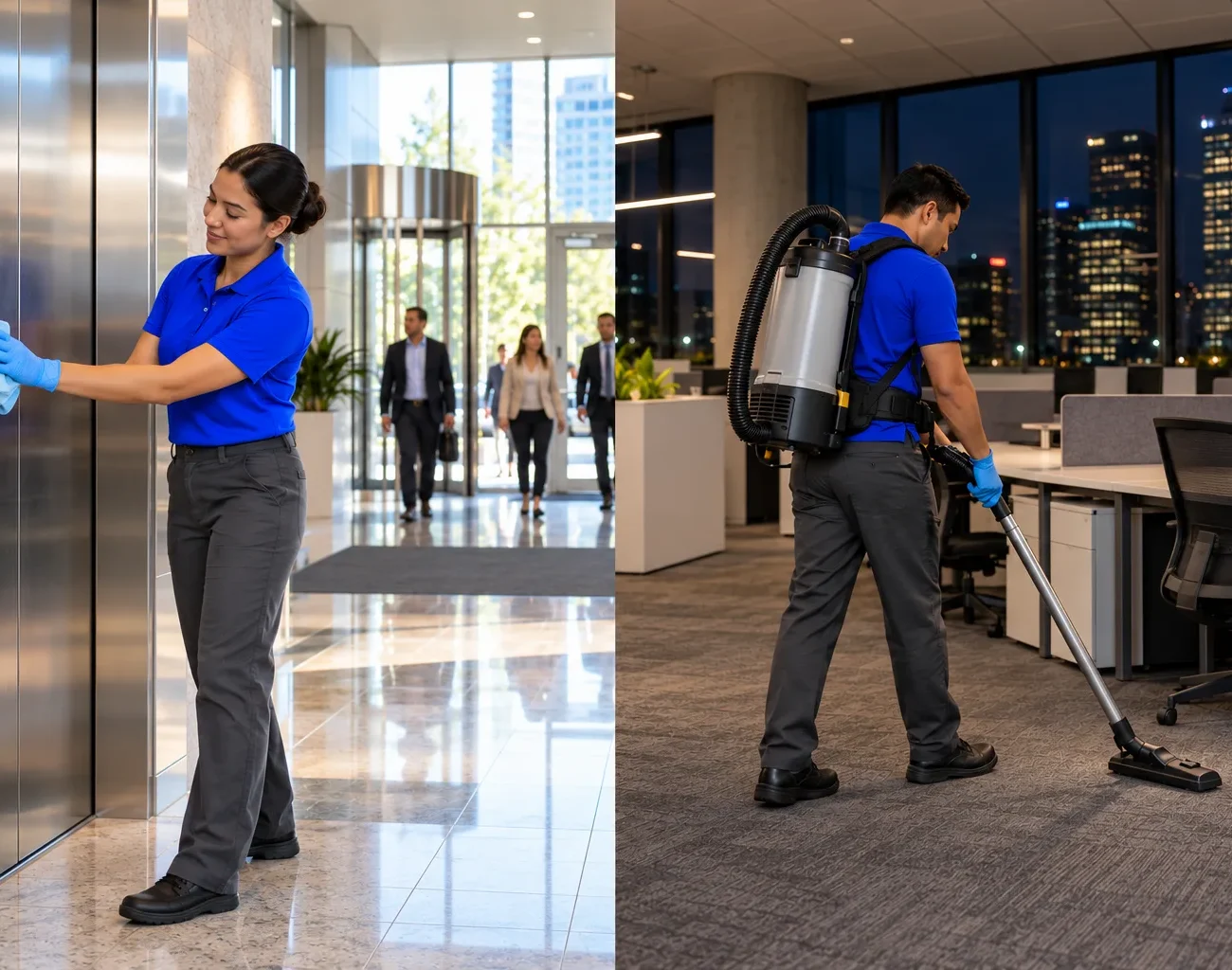
- High-touch surfaces. Wipe door handles, elevator buttons and railings. The CDC notes that high-touch surfaces are more likely to spread germs, so they get regular rounds.
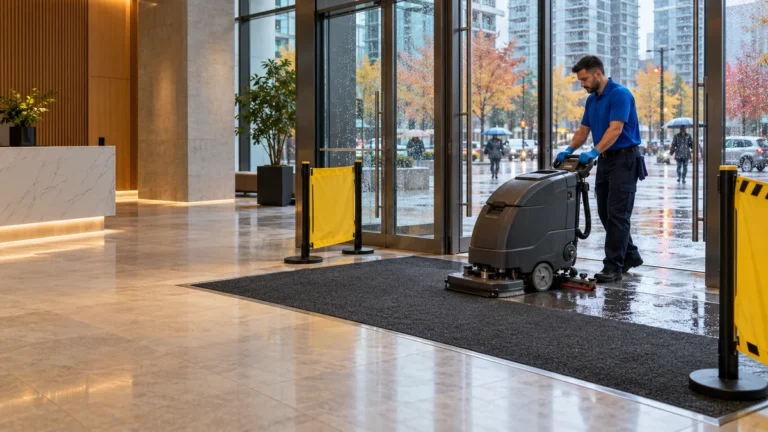
- Lobby and entrance. Pick up litter, wipe glass and mop up tracked-in water.
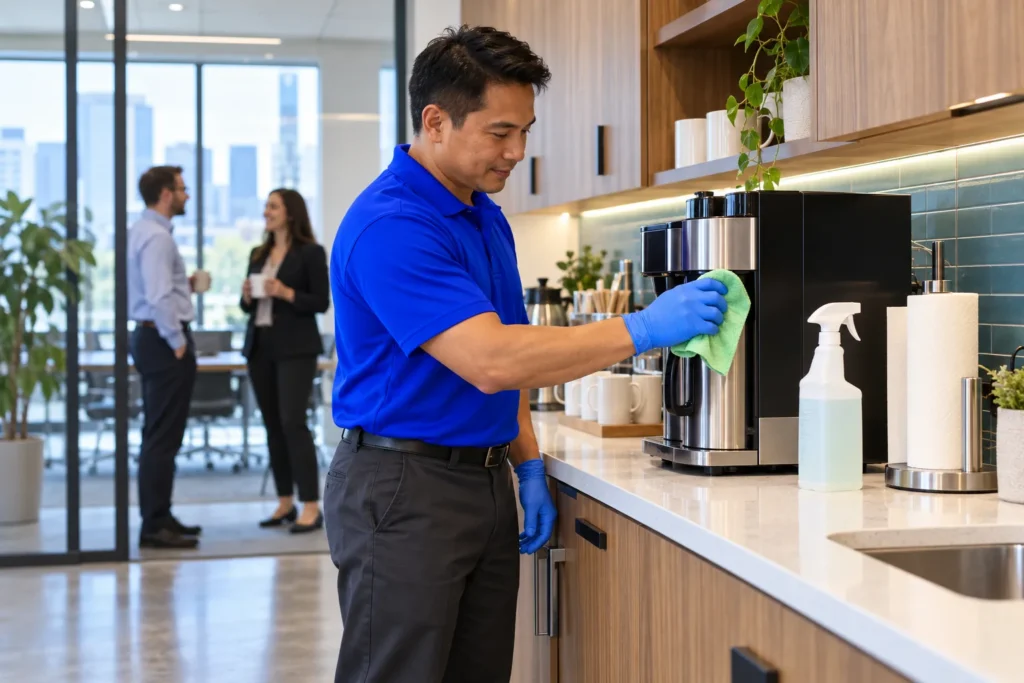
- Kitchenette and break room. Wipe counters, empty the trash and restock after the lunch rush.
- Meeting rooms. Clear cups and wipe tables between bookings.
- Reporting. Tell the office manager about a burnt-out light, a leak or a damaged floor.
What does night cleaning cover?
Night cleaning is the main service for most offices. The crew arrives after closing and has the whole building to work in. That matters for the jobs that need space and time.
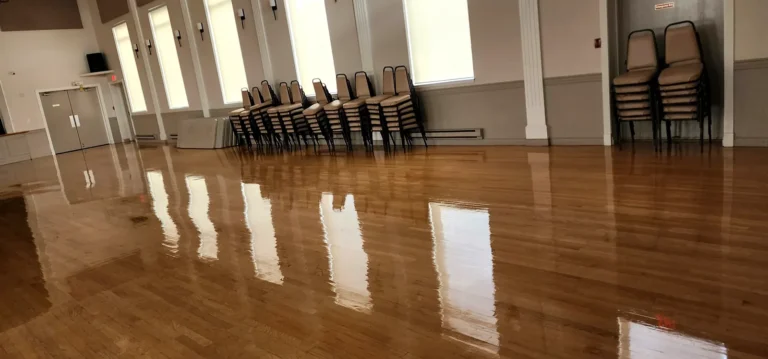
- Floor care. Vacuum carpet and mop hard floors with no one walking across them.
- Washroom cleaning. Scrub and disinfect from top to bottom.
- Waste removal. Empty trash and recycling from every room.
- Kitchen clean. Sinks, counters, fridges and microwaves.
- Periodic project work. Carpet extraction and machine scrubbing.
Empty floors dry before morning, and noisy machines bother no one. Access needs a clear plan, because the crew holds keys or fobs and works in an empty building. Ask any provider how it handles lock-up, alarms and handover. Our shift cleaning and day porter services run on a set schedule, including 24/7 shift cleaning for buildings that never fully close.
When is night cleaning enough?
Many offices don’t need a porter. Night cleaning alone usually works when most of these are true:
- You have a small team, roughly under 30 people, and few visitors.
- Washrooms and the kitchen rarely run short of supplies before the end of the day.
- The lobby is small, or staff manage it themselves.
- Nobody complains about the building at 2 p.m.
In that case, a small routine from your own staff fills the gap. One person refills the paper towels and wipes the kitchen counter. The night crew handles the rest.
Signs you need a day porter as well
Answer these questions. Two or more yeses mean a day porter is worth pricing.
- Do visitors or clients walk through your lobby or reception every day?
- Do washrooms run out of supplies or look rough by mid-afternoon?
- Does the building have a shared lobby, elevators or washrooms used by several tenants?
- Does rain or snow bring water and grit through the entrance all day?
- Do meetings, events or training leave rooms messy mid-day?
- Do staff or tenants report mid-day spills, litter or full bins?
Wet weather is a common trigger. A slip hazard at the door can’t wait until night. WorkSafeBC links icy and wet winter conditions to an 11% increase in slip, trip and fall injuries. Our winter floor care guide covers the entrance setup. If you run an office in Vancouver, our Vancouver cleaning team can look at your entrance and lobby.
Not sure your foot traffic justifies a porter? Ask for a free site assessment and we’ll tell you what we’d cover by day and what we’d leave to the night crew.
Which hybrid setups work?
You don’t have to choose one or the other. Offices that need daytime help usually end up with one of these.
- Night crew plus a part-time porter. The porter covers the busiest few hours, such as 11 a.m. to 2 p.m., instead of a full shift.
- Night crew plus a mid-day visit. One short check restocks washrooms and wipes the lobby and kitchen. It suits mid-sized offices with steady lunch traffic.
- A shared porter in a multi-tenant building. The property manager arranges one porter for the lobby, elevators and common washrooms, and the cost is split across tenants.
- Night crew plus a staff routine. A named person does a five-minute check twice a day. It costs the least and works only if someone owns it.
Picture a busy multi-floor office. A porter comes in from 11 a.m. to 2 p.m. to keep washrooms stocked, wipe down the lunchroom and dry the entrance mats. Vacuuming and heavy trash removal stay with the evening crew. A porter alone rarely works, because floors, carpet and full washroom cleaning need an empty building.
How do the costs compare?
Each service is priced differently, so quotes only compare fairly when you know the structure. We can’t give one flat price, because square footage and traffic differ in every building.
- A day porter is usually paid by the hour. You buy dedicated time on site, so the cost grows with the shift length. A short block around your peak hours costs far less than a full day.
- Night cleaning is usually priced by scope. Square footage, washroom count and visits per week set the monthly rate.
- Idle time is the hidden cost. A porter with no task list stands around. Write down the rounds and peak hours before you ask for a quote.
Our guide to what affects an office cleaning quote explains the main cost drivers.
How do you set up a day porter plan?
- List the duties. Washrooms, lobby, kitchenette and spill response.
- Pick the hours. Base them on when the building is busiest, not on a standard 9-to-5 shift.
- Set the rounds. Decide how often the porter checks each area and what counts as done.
- Agree on supplies and storage. Say where the cart lives and who orders consumables.
- Tell your staff. Reception should know the porter’s name and hours.
- Share a log with the night crew. If the porter notes a carpet stain or a leak, the night crew can deal with it that evening.
- Plan for absences. Ask how the provider covers a sick day.
What should you ask a provider?
- Is the porter your employee, and how do you train and supervise them?
- What is on the daily task list, and who checks that it was done?
- What happens when the porter is sick or on holiday?
- How will the porter and the night crew share information?
- Can we start with a short trial before we commit to a term?
Our guide to how to choose a commercial cleaning company covers insurance, training and contracts.
Frequently asked questions
What is the difference between a day porter and night cleaning?
A day porter works during business hours and handles upkeep, such as restocking, spills and high-touch surfaces. A night crew works after hours and does the full clean, including floors, washrooms and trash.
Can a day porter replace night cleaning?
Usually not. Vacuuming, mopping and deep cleaning are slow and disruptive around busy staff. A porter keeps the office presentable between night visits.
How many hours does an office need a day porter?
It depends on the building. Many offices only need a block of a few hours around the busiest part of the day. Start with your peak hours and adjust after a month.
Does a small office need a day porter?
Often not. A small office can manage with night cleaning, a short staff routine or one mid-day visit.
How secure is an after-hours crew?
It can be, with the right access plan. Ask how keys and fobs are controlled and whether the crew logs each visit.
Does a day porter help during cold and flu season?
Yes, for shared surfaces. A porter can wipe door handles and kitchen counters during the day, when people touch them most. For a deeper clean, see our disinfection services.
Get a quote for the right mix
A walkthrough lets us look at your lobby, washrooms and traffic. We then recommend what to cover during the day and what to leave to the night crew. Everest provides office cleaning across Canada, with a written quote within 1 business day.