Most buyers looking for janitorial services Vancouver choose between a building program and one-off cleans. You need the program when lobbies, shared washrooms, corridors and elevators stay on a set daily, weekly and monthly rotation. One-offs still fit events, seasonal exteriors or a suite handover. Tenant suites stay off the building quote unless that tenant books their own after-hours pass.
When does a Vancouver building need a janitorial program?
A program is the right call once common areas are busy every weekday and a spot clean no longer resets them. Everest's commercial building cleaning page puts lobbies, corridors, stairwells, shared washrooms, elevators and trash rooms on a daily, weekly or monthly schedule set by how the building is used. For multi-tenant commercial cleaning in Vancouver, that means a written rotation before the first visit, not a scrub when complaints pile up.
Ad-hoc cleans make sense when traffic is light, the space is vacant, or you only need a single suite reset. Once visitors and tenants share the same lobby glass, directory mats and washrooms every day, reactive cleans leave the same surfaces dirty again by mid-week. Property managers usually feel that lag as elevator buttons that never stay wiped, trash rooms that hold odour between call-outs, and corridor floors that look finished only after a special visit.
What does a building cleaning program usually cover?
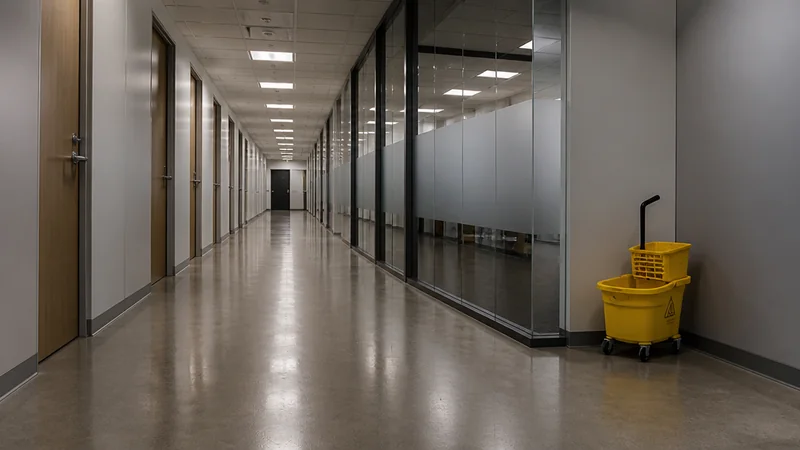
On Everest's building page, wear shows in shared spaces first. The base route starts with the lobby, corridors and washrooms every tenant and visitor uses, then adds entrances, courtyards and parkade landings when those are in scope. A typical split looks like this:
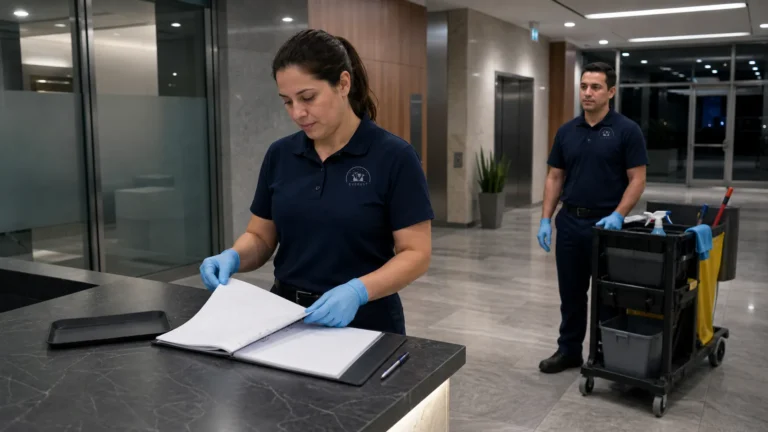
- Daily: lobby, elevators, shared washrooms and trash rooms, usually after the building empties
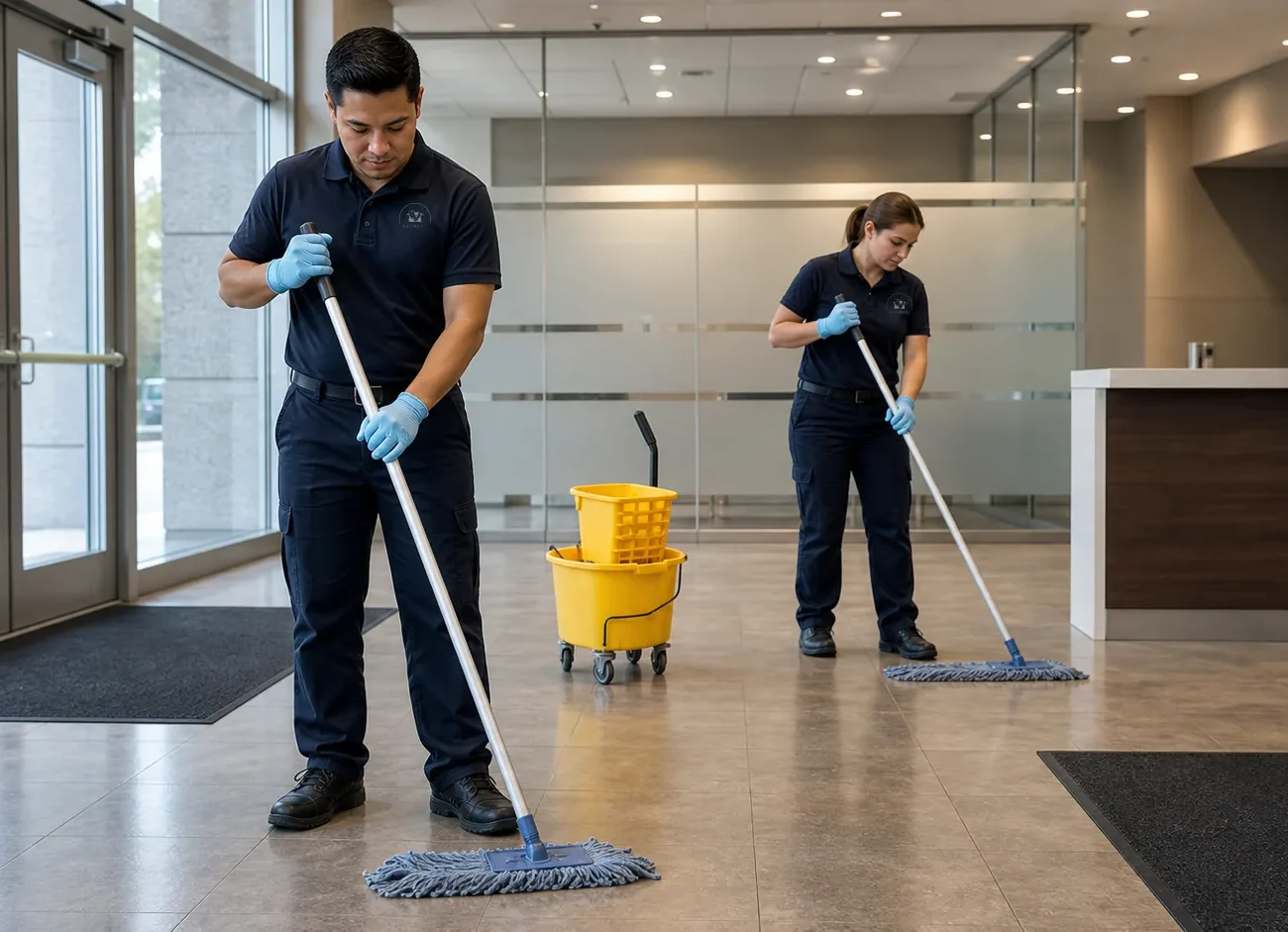
- Weekly: corridor and stairwell floors, plus interior and entrance glass
- Monthly: detail work such as baseboards and vents, and exterior washing of entrances and walkways when booked
- Day porter: lobby and washroom tidy-ups while the building is open, on top of the night rotation when foot traffic needs it
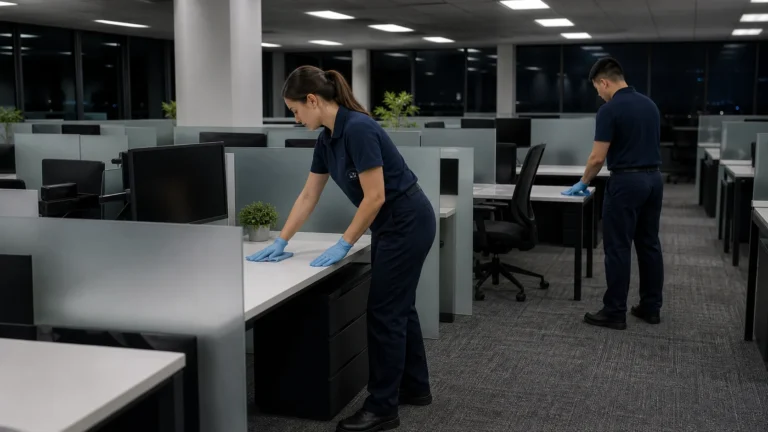
That is different from a tenant office cleaning route, which targets desks, suite washrooms, kitchenettes and the tenant's own floors after staff leave. How often that suite needs visits is a separate call; see how often an office should be cleaned. The building program owns the shared envelope. The suite program owns the leased floor plate. Blurring those lines is how buyers pay twice for the same corridor.
For the day-vs-night choice on an occupied floor, use day porter vs night cleaning. Here the Vancouver question is narrower: whether the building's shared spaces need a standing program at all.
When do one-off cleans still make sense?
One-offs are not a failure mode. They are the right tool when the work is bounded. Post-event lobby resets, a seasonal exterior wash, a parkade landing scrub after a spill, or a vacant-suite handback before a new tenant moves in do not need a nightly crew on the calendar.
Everest's building page lists exterior pressure washing and amenity rooms as add-ons on their own quote lines for that reason. On the office scope, carpet extraction and hard-floor strip and wax also sit apart from the regular visit.
Use a one-off when you can name the end state and the date. Use a program when the same surfaces need the same work again next week. If every “special clean” is really yesterday's missed daily washroom pass, the calendar is wrong, not the crew.
How do tenant suites and common areas split on the quote?
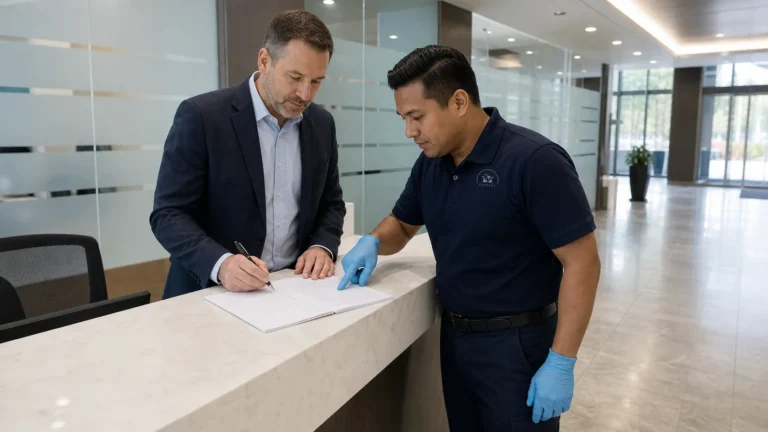
Common areas sit on the building quote. Suites are cleaned only when a tenant books their own after-hours pass with their own fob and alarm. Everest states that split on the commercial building page so the landlord's visit stays on shared spaces and each tenant keeps control of their suite.
What counts as common area on that page: lobby glass, directory mats, elevators, corridor landings, stairwells, shared washrooms, parkade landings, and trash and recycling rooms. The written quote lists each area by name. Anything on the boundary (a tenant lounge that opens to the lobby, a washroom used by one floor only) gets settled on the walkthrough, not in a verbal aside after month two.
Strata councils and property managers follow the same steps: walkthrough, written plan, fixed visit schedule. Crews cover common areas, entrances and exteriors at multi-tenant buildings and townhouse complexes when those are in scope. Suite interiors still need a separate booking.
How do you tell if ad-hoc cleans are costing more than a program?
You do not need a spreadsheet model. Track three signals for a month:
- How often someone calls for an “urgent” lobby, washroom or trash-room clean between planned visits
- Whether elevator buttons, rails and shared washroom fixtures look finished only after those call-outs
- Whether corridor floors get a real mop only when a complaint lands
If those call-outs land every week, you are already buying program work at emergency timing. A standing daily lobby and washroom pass plus a weekly corridor floor puts the same labour on a planned roster instead of rush visits. Everest sends a written quote within one business day after the details are clear, or after a free site assessment when access and floor plates need to be seen. Ask any bidder to price the recurring rotation and the last three ad-hoc call-outs side by side.
Quality drift is the other cost. A program without checks still slips. The commercial cleaning inspection guide covers how managers verify the work themselves. Put inspection points on the same written plan as the daily and weekly tasks so month three does not turn into a blame loop.
One open question this page cannot settle for you: the exact break-even between your last quarter's spot-clean invoices and a named daily/weekly rotation. That number lives in your own invoices and the walkthrough. Bring both to the quote conversation.
How do you request a Vancouver janitorial quote?
Send the address, number of floors, washroom count, which areas are common vs tenant-controlled, and the hours the lobby is busiest. Book a free site assessment, then ask for a written plan that names each area and its frequency.
Everest's site says the written quote follows within one business day after those details are clear, or after the walkthrough when the building still has to be seen. Crews cover Vancouver from the Lower Mainland desk in New Westminster; Burnaby and the rest of the Lower Mainland sit on the same desk when you need more than one address.
Request the plan through the free estimate form or call 604-844-8984. On the Vancouver and commercial building pages, Everest states licensed and insured crews with WorkSafeBC coverage, ISSA CIMS certification and background checks. Collect the same papers from every bidder before anyone gets keys or fobs.
FAQ
No. A building janitorial program covers shared spaces: lobbies, corridors, elevators, shared washrooms and trash rooms on a set rotation. Office cleaning covers the tenant suite after staff leave. Many Vancouver towers buy both, on separate quote lines.
Yes, if traffic is light and the surfaces stay acceptable between visits. Once shared washrooms and the lobby need weekly emergency call-outs, move those areas onto a program and keep one-offs for true extras.
Not by default. Everest's commercial building page keeps suites closed unless that tenant books an after-hours pass with their own fob and alarm.
Everest's published timing for Vancouver and building requests is a written quote within one business day once the details are clear, or after a free site assessment when the building still needs a walk.