Most buyers looking for post construction cleaning vancouver need the three handover phases named before they book: rough, final and touch-up. Rough clears debris and protection while trades finish. Final is the full detail pass once the dust source is done. Touch-up is the short return after painters close the punch list. Put each phase on its own quote line so a one-day “final” does not absorb punch-list dust that arrives later.
What do rough, final and touch-up mean on a Vancouver commercial site?
Rough clean removes bulk debris, packaging and floor protection while trades are still finishing nearby rooms. Final clean is the full detail pass once every trade is off the floor and sanding has stopped. Touch-up is a short second visit after painters or millworkers return for punch-list items. Everest's post-construction cleaning page prices the work from that stage of the build, not from a single catch-all day.
The room-by-room task list for those passes lives on the post-construction cleaning checklist. This page answers a narrower question for Vancouver commercial buyers: which phase you are buying, when it can start, and how the GC punch list changes the quote.
When should each phase start relative to the trades?
Rough can start while other trades finish, as long as the rooms on the quote are clear enough to stage debris. Final starts only after the dust source is finished. Active sanding elsewhere on the floor plate will put a fresh film on sills and frames you already wiped. Touch-up waits until painters finish the punch-list return; book it before the owner walk, not after the complaint list grows.
Everest's hub says most Vancouver sites start the final clean the same night the trades leave, or the next morning when the site is still locked. Evenings and weekends fit occupied floors and building access rules. Put the handover date and flooring types on the request so the written quote can name the start window.
How does the GC handover punch-list drive the scope?
The general contractor's punch list, not a generic “construction clean” label, decides which rooms open and which residue stays with a trade. Everest works from that list and the rooms you unlock. Leftover trade materials that still belong to a trade stay put, noted by room. Boundary items (a locked server closet, a tenant suite off the quote) stay shut unless you add them in writing.
Name the walk you are booking toward before crew size is priced. Passing a municipal inspection is a different bar from an owner or landlord walk. Staff or public occupancy sits at the higher standard. Send the floor plate, the punch list and which rooms open; Everest will mark which rooms a first pass can finish and which still wait on another trade.
How do you control fine dust between phases?
Stop the dust source before the final pass. Leave construction HVAC filters in until sanding is over. If poly or zip walls are still up in a room on the quote, wiping around them leaves a clean rectangle with a dirty border. Between final and touch-up, painters' return work throws fresh dust onto finished surfaces; that is why touch-up is a separate visit, not overtime on the final night.
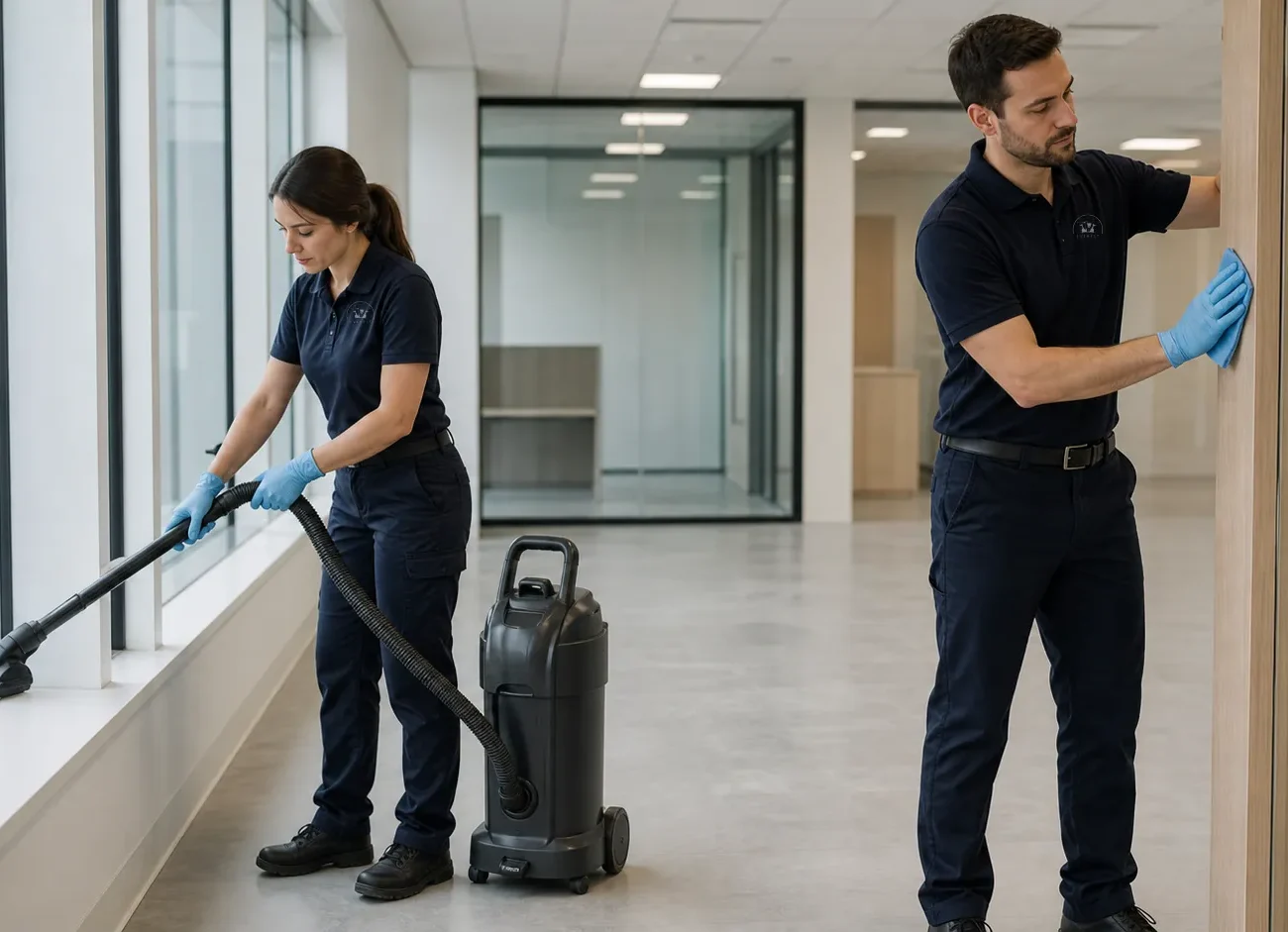
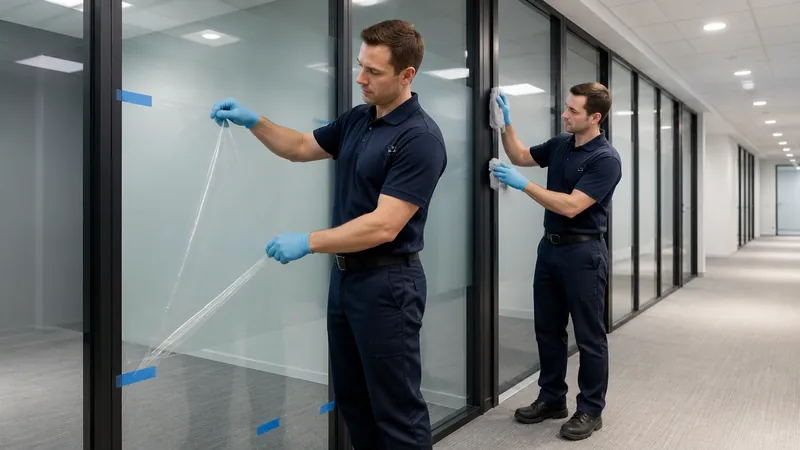
On Everest's service page, walls and trim are wiped and dusted, beams and racking are HEPA-vacuumed, and glass loses sanding film, stickers and painter tape. Method detail and floor-type final passes sit on the checklist. During the build itself, silica and other construction dust sit under WorkSafeBC's silica guidance for the trades; the cleaning crew deals with settled dust after those sources stop.
How do you scope and time each phase on the quote?
Price rough, final and touch-up as separate lines with rooms named. Rough is short when debris is staged for your hauler, or longer when dumpster coordination is in the cleaning quote. Final duration tracks floor area, flooring mix, glass and how far the build has progressed. Touch-up is usually a short crew after painters return, not a second full final.
Vancouver tower and Lower Mainland fit-outs often share the same constraint: access windows are evenings, nights or weekends, and the owner walk lands on a fixed morning. Everest sends a written quote within one business day after the details are clear, or after a free site visit with your contractor when the floor still has to be seen. If every “rush final” is really unfinished punch-list painting, the calendar is wrong, not the crew size.
One open question this page cannot settle from a photo: exact crew-days for your floor plate. That number lives in the punch list, the rooms still under protection, and the walkthrough.
How is post-construction different from routine commercial cleaning?
Post-construction gets a finished commercial space ready for handover after the trades leave. Routine commercial cleaning (and a building janitorial program) keeps an occupied floor clean on a set rotation. Do not buy a nightly suite program when you still need construction dust removed and film pulled from new millwork. After handover, many Vancouver sites move onto office or building cleaning and then decide how often an office should be cleaned; that recurring work is a separate quote.
How do you request a Vancouver post-construction quote?
Send the address, floor area, flooring types, the date the trades finish, the punch list and which rooms open. Ask for rough, final and touch-up priced on separate lines with start windows that match building access.
Everest's Vancouver and post-construction pages state a written quote within one business day once those details are clear, or after a free site assessment. Crews cover Vancouver from the Lower Mainland desk in New Westminster; Burnaby and the rest of the Lower Mainland sit on the same desk for multi-site handovers. On the Vancouver page, Everest states licensed and insured crews with WorkSafeBC coverage, CIMS certification and background checks.
Request the plan through the free estimate form or call 604-844-8984. For commercial cleaning in Vancouver beyond the build clean, use the city page once the space is occupied.
FAQ
No. Rough clears debris and protection so the final pass can work. Owner walks need the final detail pass, and usually a touch-up after painters close the punch list.
Only if no trade returns afterward. Once painters come back for punch-list items, fresh dust and residue land on finished surfaces. Book touch-up as its own short visit.
Yes for commercial renovations and fit-outs. The phases are the same; the punch list is often denser because parts of the floor stay occupied. Scope the open rooms on the quote so live suites stay shut.
Everest's published timing is a written quote within one business day once the details are clear, or after a free site assessment when the floor still needs a walk.