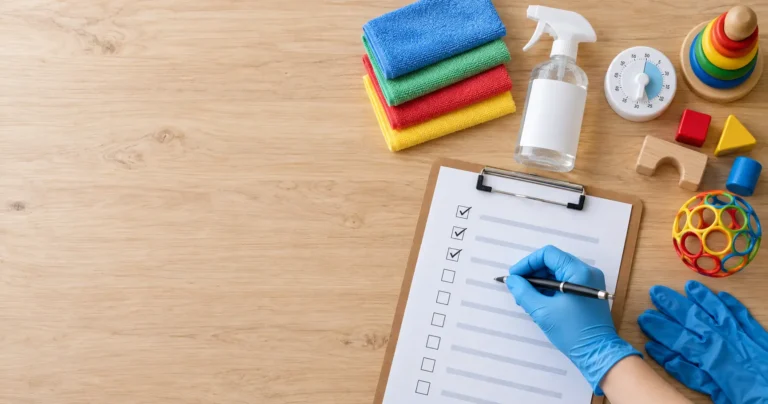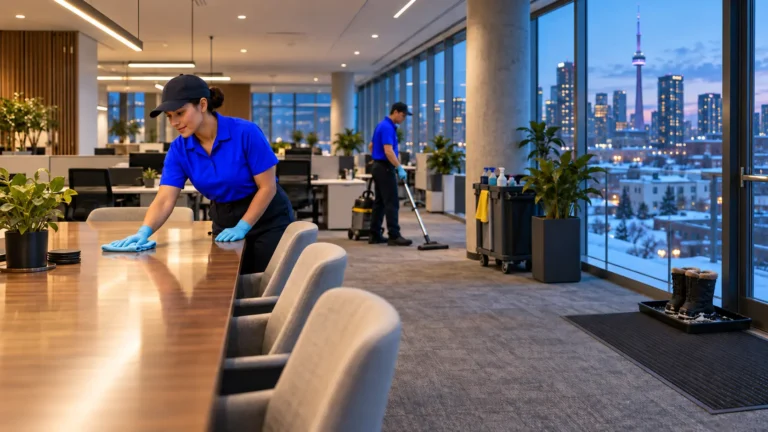
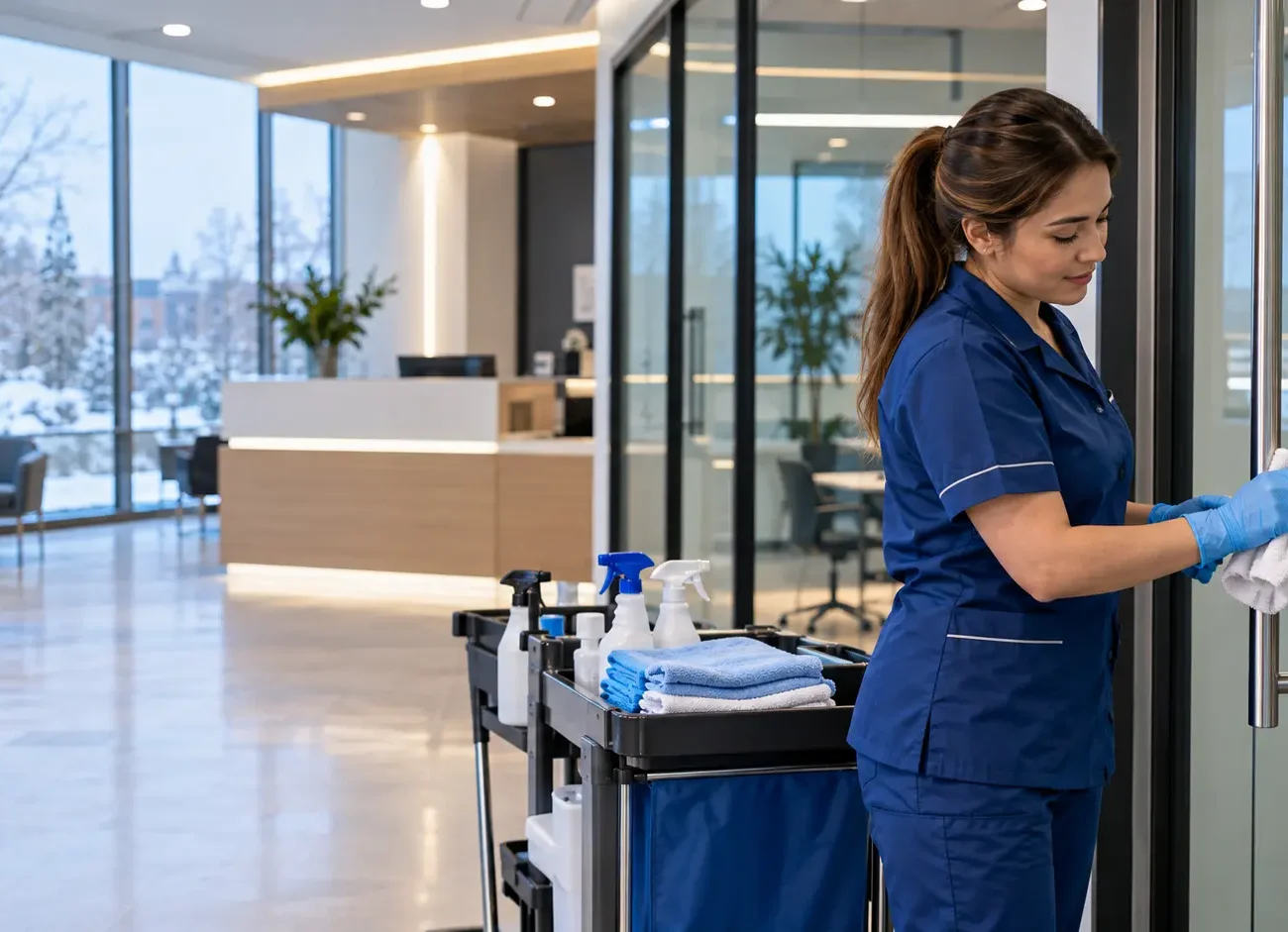
Every October the same thing happens. One person in the office starts sniffling, and two weeks later half the floor is working from home. A solid office disinfecting checklist will not stop every cold, but it cuts down the number of germs on the things everyone touches. That is the point of this guide.
Below, you will find what to disinfect, how often to do it, and the mistakes that make the work pointless. It is written for office managers and business owners across Canada who want a clear routine for cold and flu season.
Cleaning, sanitizing and disinfecting: what is the difference?
People use these three words as if they mean the same thing. They do not, and mixing them up is the most common reason an office still feels germy after a “deep clean.”
- Cleaning removes dirt, dust and grease from a surface. It does not kill germs, but it has to happen first.
- Sanitizing lowers the number of germs to a level considered safe. You see it most often in kitchens and food areas.
- Disinfecting uses a registered product to kill most germs on a surface. It only works on a surface that is already clean.
So the order is simple: clean first, then disinfect. Skipping the first step wastes the product. The Canadian Centre for Occupational Health and Safety gives the same advice in its guide to sanitation and infection control for cleaning staff.
Your office disinfecting checklist for cold and flu season
Offices are sealed up tight from October to April, and people share a lot of objects. Because of that, the biggest wins come from a short list of high-touch spots. Start here.
10 high-touch spots most offices miss
- Door handles and push plates on the main entrance, washrooms and meeting rooms.
- Light switches, especially in shared rooms.
- Kitchen and break room surfaces, including the fridge handle, microwave buttons and coffee machine.
- Shared phones, keyboards and mice at reception and hot desks.
- Meeting room tables, chair arms and remotes.
- Elevator buttons and stair railings.
- Photocopier and printer touchscreens.
- Faucet handles, soap dispensers and paper towel dispensers.
- Reception counters and visitor pens.
- Shared tablets, sign-in screens and card readers.
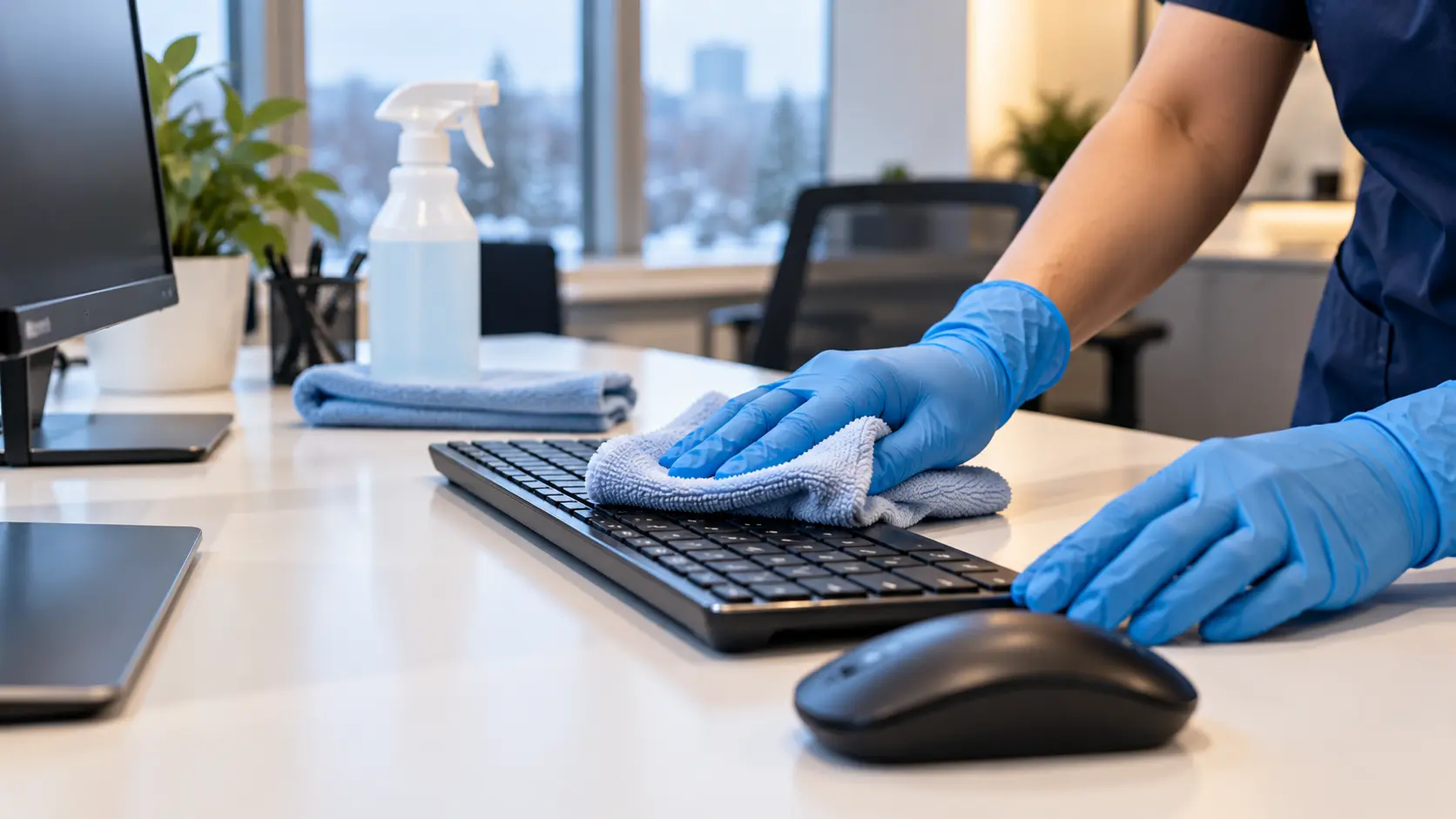
Printer screens and kitchen handles are the two I would never skip. Nobody thinks about them, yet almost everyone touches them every day.
How often should you disinfect an office?
The right schedule depends on foot traffic. A ten-person office needs less than a busy clinic waiting room. Still, this table works as a starting point for most workplaces.
| Frequency | What to disinfect |
|---|---|
| Daily | Door handles, light switches, break room surfaces, washroom touchpoints, reception counter |
| 2 to 3 times a week | Shared keyboards, phones, printer screens, meeting room tables and chair arms |
| Weekly | Elevator buttons, railings, shared tablets, card readers, fridge and microwave interiors |
| During an outbreak | Move everything up one level, and add a second pass on the daily items |
If your team works in shifts, clean between shifts or at least once during each one. Also write down when it happens. A simple sign-off sheet is enough, and it keeps the routine honest.
Winter also brings tracked-in salt and slush, and that dirt ends up on hands and keyboards too. If you want to deal with that side of things, our guide on protecting commercial floors from winter salt covers entrance setup and mats.
Common disinfecting mistakes that waste time and money
Most failed disinfecting routines come down to a handful of habits. Here are the ones we see most.
- Wiping it dry right away. Every disinfectant has a contact time. The surface must stay visibly wet for that long, anywhere from 30 seconds to several minutes depending on the product.
- Skipping the cleaning step. Dirt blocks the product from reaching the germs underneath.
- Using one cloth for the whole floor. That spreads germs from room to room. Switch to a fresh cloth often.
- Disinfecting fabric. These products are made for hard, non-porous surfaces. Cloth chairs and carpet need vacuuming or steam cleaning instead.
- Mixing products. Never combine bleach with other cleaners. The fumes can be dangerous.
How to choose a disinfectant in Canada
In Canada, hard-surface disinfectants are regulated as drugs. A product that legitimately claims to disinfect must carry a Drug Identification Number, or DIN, on its label. The DIN is an eight-digit number issued by Health Canada. If a bottle claims to kill germs and has no DIN, put it back on the shelf.
For the technical details, read Health Canada’s hard surface disinfectants monograph. Also check the label for contact time, the surfaces it is approved for, and whether you need gloves or ventilation.
When to hire a professional cleaning service
Your own staff can handle a light routine in a small office. However, a few situations call for a professional team:
- Your office has more than a couple of dozen people, or visitors come and go all day.
- Nobody has time to follow the checklist consistently.
- You run a medical, dental, school or childcare space with stricter standards.
- There has been an outbreak, and you need a thorough disinfecting pass quickly.
A professional crew brings the right products, the right dwell times and a written record of what was done. That consistency is what keeps a routine from falling apart in week three. If you want help, contact our team for a free quote and we will build a schedule around your space.
Office disinfecting FAQ
Does disinfecting the office prevent the flu?
No routine prevents it completely. Disinfecting reduces germs on shared surfaces, which helps. It works best alongside hand washing, good ventilation and staying home when sick.
Can I use wipes instead of spray?
Yes, if the wipes carry a DIN and you leave the surface wet for the full contact time. One wipe covers a small area, so use a new one when it dries out.
What should I disinfect first?
Start with the surfaces the most people touch: entrance doors, washroom handles, the break room and shared devices.
Is disinfecting safe for staff?
It is when you follow the label. Ventilate the area, wear gloves if directed, and schedule the heaviest work after hours so people are not breathing fumes at their desks.
Print this office disinfecting checklist, tape it inside the supply closet, and assign one person to own it. A routine that belongs to everyone usually belongs to no one.