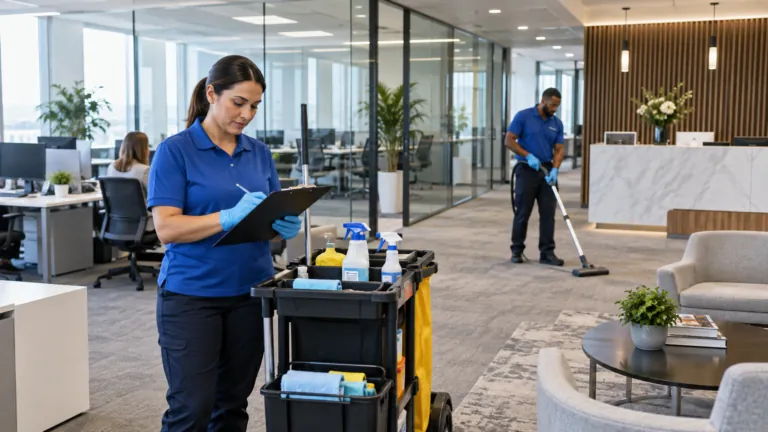
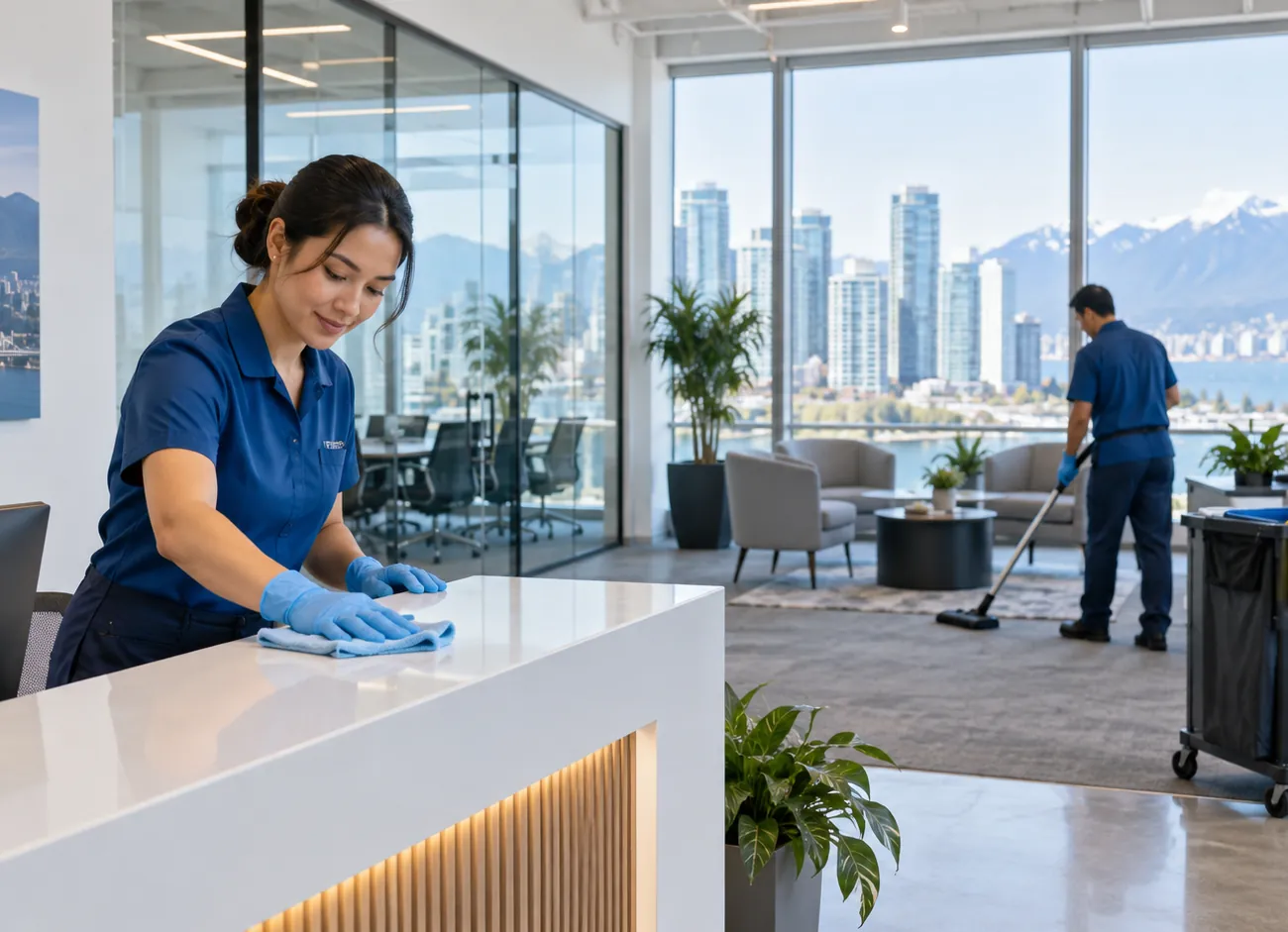
The best office cleaning tips Vancouver teams can use are simple. Set a written daily routine, schedule the work outside office hours, add periodic deep cleaning, and hire a provider who puts the scope in writing. A clean office also affects how often people get sick and what clients think when they walk in.
Below is what a Vancouver office routine should include, how janitorial work differs from deep cleaning, and what to check before you hire.
Why does office cleanliness matter beyond appearances?
Clean offices cut distractions and slow the spread of germs on shared surfaces such as desks, doorknobs and break room counters. That can mean fewer sick days.
Clients notice too. A reception area that looks cared for suggests the business behind it is cared for as well. For the research side, see how a clean office affects productivity and health.
What should a daily office cleaning routine include?
A daily routine starts with the areas that see the most traffic, since they collect dirt fastest. At a minimum it covers:
- Trash and liners: bins emptied and liners swapped before they overflow
- Desks and surfaces: wiped and sanitized, especially shared workstations
- Floors: vacuumed or swept, with extra attention to entryways and hallways
- Restrooms: cleaned and disinfected every day, not just on complaint
- Supplies: tissues, hand sanitizer and paper towels restocked before they run out
Skip it for a few days and it shows. For a room-by-room version, use our commercial cleaning checklist.
What is the best time to clean an office?
Early mornings or evenings, outside your team’s hours, cause the least disruption. Everest cleans offices after hours, overnight and on weekends, so the crew is gone before staff arrive.
Not every area needs the same attention. Break rooms and restrooms usually need daily service, while meeting rooms may need only a few passes a week. Review the schedule every few months. What worked for ten people will not work once the team doubles. Our guide to how often an office should be cleaned gives the frequencies.
How do wet Vancouver months change the schedule?
Rain gets tracked in from October through spring, so entrance mats and lobby floors need extra visits. Ask your cleaner to launder or swap walk-off mats and to scrub entry floors more often in those months. We cover this in rainy-season office cleaning in Vancouver.
What is the difference between janitorial and deep cleaning?
Janitorial is recurring work: trash, surfaces, restrooms, floors and restocking. Deep cleaning is periodic work such as carpet extraction, floor stripping and waxing, and window cleaning. Most offices need both, on different schedules.
Terms vary between companies, so get the scope in writing: which rooms get which service, and on which nights. What commercial cleaning includes explains the difference in plain terms.
What does deep cleaning cover that daily routines miss?
Daily cleaning handles the surface. It does not reach dust inside vents, build-up under furniture or grime in carpet fibres. Quarterly is a common rhythm for these jobs.
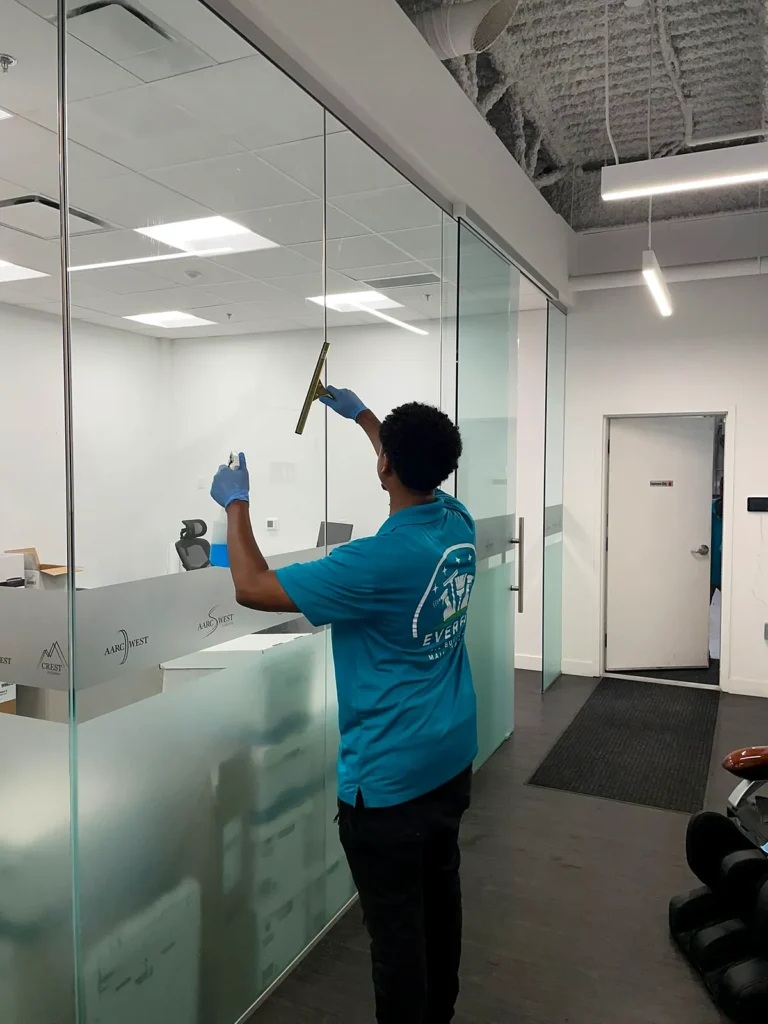
They usually need equipment most offices do not keep. Windows, inside and out, are one example, and we clean them ourselves. If you have both carpet and hard floors, see carpet cleaning vs floor waxing for how to book each.
Is green cleaning worth it?
Yes, for most offices. Eco-friendly products reduce the chemical exposure your staff meets every day, and Vancouver businesses increasingly expect them from a vendor. Look for a third-party ecolabel such as UL ECOLOGO or Green Seal. Ask whether the green products are standard or an upcharge.
Recycling programs help too, but they only work if the whole office takes part.
Where should you look on an office walk-through?
If you only have time to check a few spots, check desks and workstations, restrooms, the reception area, floors and carpets, and windows. Clients and employees touch these most, and they show wear first.
How do you choose an office cleaning company in Vancouver?
- Flexible scheduling: a provider that can only clean at noon will not suit most offices.
- Recent clients: ask for references from the last year, not a five-year-old testimonial.
- Paperwork: ask for a WorkSafeBC clearance letter and proof of insurance.
- Building rules: multi-tenant towers often set rules for after-hours access, elevators and insurance. Check the provider is set up for them.
- A clear scope: ask what is included before you compare prices.
Everest has a New Westminster office and cleans across Vancouver and the wider Lower Mainland. We are CIMS certified, licensed, insured and WorkSafeBC, and our staff are background-checked.
What should you budget for office cleaning?
Cost scales with office size, layout and how often you need service. Get a few quotes and compare what each includes, not only the bottom line.
Watch for charges that appear later, such as supply fees, equipment charges or seasonal deep-clean add-ons missing from the quote. See what affects your office cleaning quote for the main cost drivers.
Frequently asked questions
How often should an office be cleaned? Most offices need daily service for restrooms, break rooms and floors, and less frequent service for meeting rooms. Add periodic deep cleaning, often quarterly, for carpets, vents and windows.
What is the difference between janitorial and deep cleaning? Janitorial is recurring work such as trash, surfaces and restrooms. Deep cleaning is periodic work such as carpet extraction, floor stripping and waxing, and window cleaning.
When is the best time to clean an office? Early mornings or evenings, outside your team’s hours, cause the least disruption.
How fast can I get an office cleaning quote in Vancouver? We send a written quote within 1 business day. If we need to see the space first, we book a free site assessment and quote after it.
Next step
Send us your floor area, closing time and the days you want service. See our office cleaning service for what we cover, or get a free quote.